
Overview
The FLT3 Gene Mutation Test is a specialized genetic test that looks for mutations in the FLT3 (FMS-like Tyrosine Kinase 3) gene. This gene plays an important role in the growth and development of blood cells, especially the early-stage cells that are formed inside the bone marrow. Mutations in this gene are strongly linked with acute myeloid leukemia (AML), a type of blood cancer.
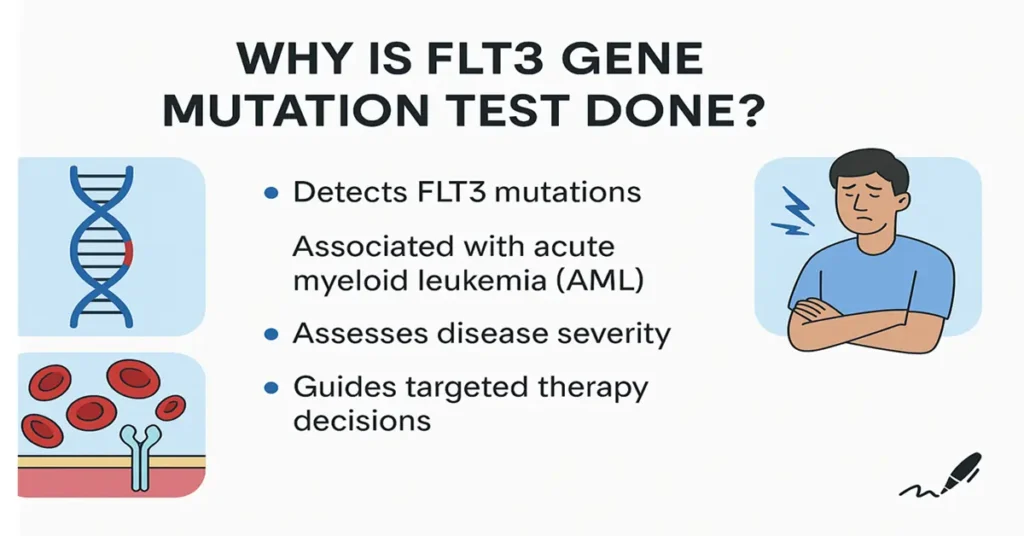
This test helps doctors understand how aggressive the leukemia is, plan targeted treatment, and predict the patient’s response to certain medicines. Because FLT3 mutations can make leukemia grow faster, identifying them early is very important.
Where Is the FLT3 Gene Found in the Body?
The FLT3 gene is located on chromosome 13q12. This gene is mainly active in hematopoietic stem cells, which are found inside the bone marrow. These stem cells are responsible for producing all types of blood cells, including:
- Red blood cells
- White blood cells
- Platelets
The FLT3 gene produces a type of protein known as a receptor tyrosine kinase, which sits on the surface of immature blood-forming cells. This protein sends signals that control how these young cells grow, divide, and mature. Any change (mutation) in this gene disrupts those signals, leading to abnormal blood cell production.
Main Functions and Importance of the FLT3 Gene
The FLT3 gene and its protein perform several essential functions:
1. Controls Growth of Early Blood Cells
FLT3 helps regulate how early blood cells multiply. When the gene functions normally, it ensures that cell production stays balanced.
2. Supports Normal Hematopoiesis
Hematopoiesis means the process of forming new blood cells. FLT3 plays a major part in keeping this process smooth and controlled.
3. Prevents Abnormal Cell Proliferation
When FLT3 works correctly, it stops immature cells from growing uncontrollably. However, when a mutation occurs, this control is lost and cancerous cells start multiplying rapidly.
4. Acts as an Important Biomarker
FLT3 mutations are used in AML management to:
- Understand disease severity
- Predict patient prognosis
- Plan targeted therapy
- Decide whether FLT3 inhibitors are needed
Because of this, the test becomes a key part of AML diagnosis and treatment planning.
What Does a Low/Negative FLT3 Result Mean?
A negative or low FLT3 result means no mutation is found. This is considered the normal or standard-risk condition.
Causes of Low/Negative FLT3 Levels
- The gene is functioning normally.
- No mutation such as ITD or TKD is present.
- AML (if diagnosed) is not driven by FLT3 mutation.
Symptoms of Low/Negative Levels
There are no symptoms caused by a negative result itself.
If a person has AML, their symptoms are due to other reasons like bone marrow failure, not the FLT3 gene.
Common AML symptoms (not FLT3-related) include:
- Fatigue
- Fever
- Weight loss
- Infections
- Bleeding or bruising
What Does a High/Positive FLT3 Result Mean?
A positive FLT3 result means a mutation has been detected. These mutations are strongly linked to more aggressive forms of AML.
Causes of High/Positive FLT3 Levels
There are two main types of FLT3 mutations:
1. FLT3-ITD (Internal Tandem Duplication)
- The most common type
- Causes abnormal duplication of a DNA segment
- Leads to uncontrolled activation of the FLT3 protein
- Associated with a poorer prognosis
2. FLT3-TKD (Tyrosine Kinase Domain Mutation)
- A point mutation affecting the tyrosine kinase domain
- Influences treatment response
- May also cause excessive cell growth
Both mutations lead to excessive signaling, causing leukemia cells to grow rapidly.
Symptoms of High/Positive FLT3 Levels
Positive FLT3 mutation does not cause separate symptoms.
Instead, it makes AML more severe, leading to:
- Extreme fatigue and weakness
- Recurrent infections
- Excessive bruising or bleeding
- Bone pain
- Fever
- Faster disease progression
A positive FLT3 result generally indicates a need for aggressive treatment or FLT3 inhibitor therapy.
Reference Ranges
| FLT3 Test Result | Meaning | Clinical Significance |
|---|---|---|
| Negative | No mutation found | Standard risk AML |
| Positive | Mutation detected | High-risk AML; may require targeted therapy |
Sample Required for the FLT3 Gene Mutation Test
Two main sample types are used:
1. Blood Sample (EDTA Tube)
- Easy to collect
- Often used initially
- May detect FLT3 mutations if circulating blasts are present
2. Bone Marrow Aspirate
- More accurate and commonly preferred
- Provides clearer genetic information
- Used during diagnosis and follow-up
Test Preparation
Most patients do not need special preparation for the FLT3 test.
However:
- Inform the doctor about any medicines taken.
- If a bone marrow sample is required, sedation or local anesthesia will be used.
- Follow any fasting instructions if combined with other tests.
When to Consult a Doctor
Consult a doctor urgently if you notice:
- Persistent fatigue
- Frequent infections
- Unexplained bruising or bleeding
- Fever without reason
- Bone pain or swelling
- Sudden weight loss
Also meet the doctor if:
- Your FLT3 test is positive
- You need guidance on AML treatment options
- You want to know if FLT3 inhibitor therapy is suitable
Important Word Explanations
| Word | Meaning |
|---|---|
| AML | Acute Myeloid Leukemia, a fast-growing blood cancer |
| Hematopoiesis | Formation of new blood cells |
| Receptor Tyrosine Kinase | A protein that sends signals for cell growth |
| Mutation | A change in DNA |
| ITD | Internal Tandem Duplication, a type of FLT3 mutation |
| TKD | Tyrosine Kinase Domain mutation |
| Prognosis | Expected outcome or severity of a disease |
~END~