
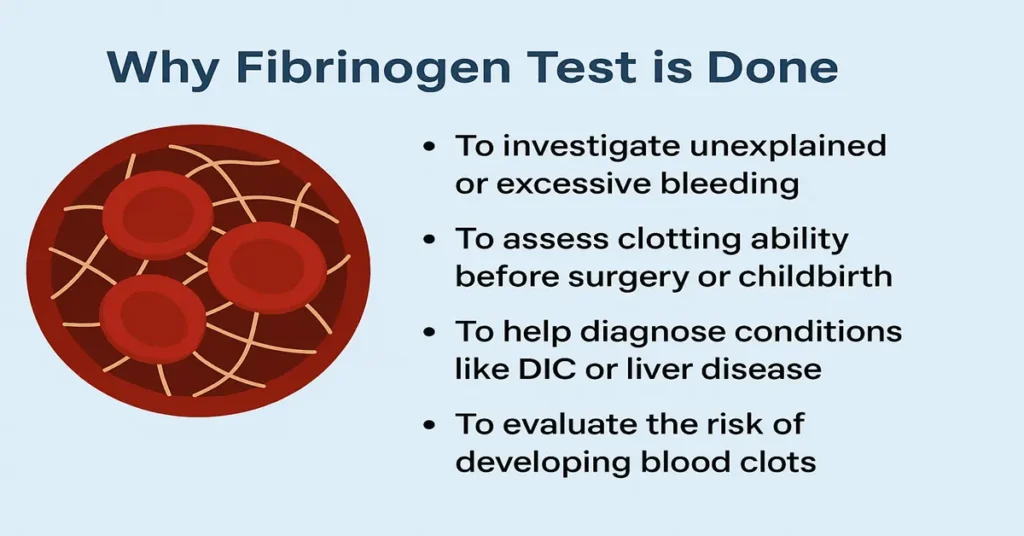
Overview
Fibrinogen, also known as Factor I, is an essential blood-clotting protein produced by the liver. It plays a central role in stopping bleeding. When clotting begins, fibrinogen is converted into fibrin, which forms a strong, mesh-like framework that stabilizes the clot at the site of injury. This structure is what ultimately seals damaged blood vessels and supports healing.
The Fibrinogen Test measures either the amount of fibrinogen in the blood or how well it functions during clot formation. Clinicians commonly use this test when evaluating unexplained bleeding, clotting abnormalities, liver disease, inflammatory states, suspected disseminated intravascular coagulation (DIC), or certain pregnancy-related complications. It is a key investigation when assessing both bleeding risk and thrombotic tendency.
What is Fibrinogen (Factor I) Test?
The fibrinogen test assesses two related aspects of this clotting protein.
The fibrinogen level (antigen test) measures how much fibrinogen is present in the bloodstream. The fibrinogen activity (functional test) evaluates how effectively fibrinogen is converted into fibrin during the clotting process.
Together, these results help clinicians understand whether abnormal bleeding, delayed clot formation, or increased clotting tendency may be linked to fibrinogen quantity or function. In routine practice, this test is also an important part of evaluating suspected DIC, chronic inflammatory conditions, severe liver disease, pregnancy-related concerns, and overall cardiovascular risk.
Where is Fibrinogen Produced in the Body?
Fibrinogen is synthesized in the liver and released into the circulation as a soluble protein. When clotting is triggered, thrombin converts fibrinogen into insoluble fibrin strands that form the backbone of a clot.
Because fibrinogen production depends entirely on liver function, liver health has a direct influence on its levels. Clinicians often keep this relationship in mind when interpreting abnormal results, especially in patients with known liver disease.
Main Functions and Importance of Fibrinogen
Fibrinogen has several important roles in hemostasis and beyond.
1. Forms the Basis of a Stable Blood Clot
By converting into fibrin, fibrinogen creates the structural mesh that holds a clot together.
2. Stops Bleeding
Adequate fibrinogen is essential to control blood loss following injury, surgery, dental procedures, or childbirth.
3. Helps in Wound Healing
The fibrin framework supports tissue repair and healing once bleeding has been controlled.
4. Acts as an Acute Phase Reactant
Fibrinogen levels rise during inflammation, infection, trauma, and some cancers. This behavior makes it useful as a marker of inflammatory activity.
5. Helps Platelets Stick Together
Fibrinogen supports platelet aggregation, strengthening the developing clot and improving stability.
Causes of Low Fibrinogen Levels
Reduced fibrinogen levels indicate impaired clot formation and are clinically significant.
1. Inherited Fibrinogen Disorders
Rare genetic conditions include afibrinogenemia (absence of fibrinogen), hypofibrinogenemia (reduced levels), and dysfibrinogenemia (normal amount with impaired function). These disorders often present early in life.
2. Severe Liver Disease
Conditions such as cirrhosis, chronic hepatitis, or liver failure reduce fibrinogen synthesis.
3. Disseminated Intravascular Coagulation (DIC)
In DIC, widespread clotting rapidly consumes fibrinogen, leading to low circulating levels.
4. Massive Bleeding or Transfusions
Large blood loss or transfusions can dilute clotting factors, including fibrinogen.
5. Certain Cancers or Medications
Some malignancies and drugs may interfere with normal fibrinogen production or function.
Symptoms of Low Fibrinogen Levels
Low fibrinogen activity is associated with bleeding tendencies. Patients may experience excessive or prolonged bleeding after injury or surgery, frequent nosebleeds, gum bleeding, easy bruising, heavy menstrual bleeding, or blood in urine or stool.
In some cases, recurrent pregnancy loss may be noted. Severe inherited deficiencies can lead to significant bleeding early in life, and internal bleeding may occur in rare, advanced cases.
Causes of High Fibrinogen Levels
Elevated fibrinogen levels are commonly linked to inflammation and are associated with increased clotting risk. Levels may rise in acute or chronic inflammatory states, infections, pregnancy, and with use of estrogen-containing medications.
Other associations include obesity, smoking, diabetes, cardiovascular disease, and certain cancers. Because fibrinogen behaves as an acute-phase reactant, elevated levels often reflect an underlying inflammatory or stress response in the body.
Symptoms of High Fibrinogen Levels
High fibrinogen itself usually does not cause symptoms. However, increased levels are associated with a higher risk of thrombotic events.
Clinical concern arises when signs of clotting appear, such as leg pain or swelling suggestive of deep vein thrombosis, chest pain or breathlessness indicating possible pulmonary embolism, or neurological symptoms related to stroke or heart attack. Risk is higher in individuals with existing cardiovascular or metabolic disease.
Reference Ranges
Typical normal fibrinogen levels are:
- Approximately: 200 – 400 mg/dL
Reference ranges may vary slightly between laboratories. Lower levels are associated with bleeding risk, while higher levels are linked to increased clotting tendency.
Sample Type
The test is performed on a venous blood sample.
- Tube: Light blue top
- Additive: Sodium citrate
Sodium citrate binds calcium and prevents clotting inside the tube, allowing accurate laboratory measurement of fibrinogen.
Test Preparation
Fasting is not required. Patients are generally advised to avoid strenuous physical activity before testing.
It is important to inform the doctor about the use of anticoagulants, hormonal medications, or anti-inflammatory drugs. A history of liver disease, pregnancy, recent infection, or symptoms suggestive of DIC should also be shared, as these factors influence interpretation.
When to Consult a Doctor
Bleeding Symptoms
Medical advice should be sought for frequent nosebleeds, heavy menstrual bleeding, bleeding after minor injuries, blood in urine or stool, or prolonged bleeding after surgery or dental procedures.
Signs of Possible Clots
Urgent medical attention is required for sudden leg swelling or pain, sharp chest pain, difficulty breathing, sudden weakness or numbness, vision changes, or severe headache. These symptoms warrant emergency evaluation.
Important Word Explanations
- Fibrinogen (Factor I): A clotting protein converted into fibrin
- Fibrin: The mesh-like structure that stabilizes a blood clot
- Acute-phase reactant: A protein that rises during inflammation or tissue injury
- DIC: A serious condition involving rapid consumption of clotting factors
- Sodium Citrate Tube: A blood collection tube used for coagulation testing
~END~
Related Posts
None found