
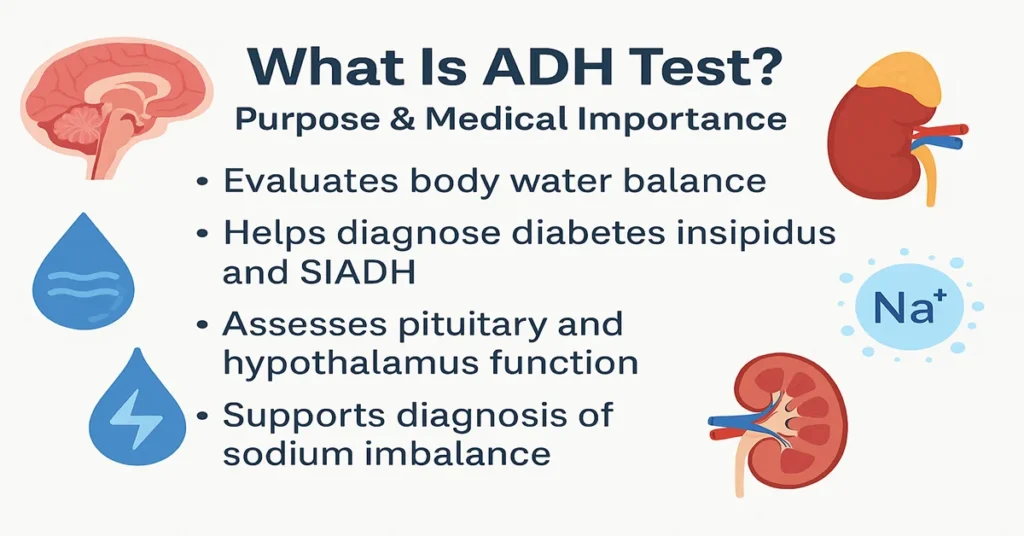
What Is ADH Test
The ADH test, also known as the antidiuretic hormone or vasopressin test, is a specialized blood test used to assess how the body regulates water balance. ADH plays a central role in controlling urine output, maintaining blood concentration, and supporting stable blood pressure. Even small disturbances in ADH levels can lead to noticeable symptoms and, if ignored, serious medical problems.
Clinically, this test is not ordered routinely. It is used when doctors suspect a disturbance in the body’s water regulation system and need biochemical confirmation to support their clinical judgement.
Why This Test Is Done
The ADH test is mainly ordered when a person shows signs of abnormal fluid balance. In OPD practice, this usually starts with complaints such as passing very large volumes of urine, extreme thirst, unexplained dehydration, or unexpectedly low sodium levels in blood reports.
One of the most common reasons for doing an ADH test is to evaluate suspected diabetes insipidus. In this condition, the body fails to conserve water properly. The test helps doctors understand whether the problem is due to low ADH production from the brain or related to how the kidneys respond.
The test is also useful when SIADH (syndrome of inappropriate antidiuretic hormone secretion) is suspected. In such cases, ADH remains high even when the body already has enough or excess water, leading to low sodium levels. ADH testing supports this diagnosis when interpreted alongside sodium and osmolality results.
Doctors may also request this test in patients with unexplained electrolyte imbalance, neurological symptoms, or a history of head injury, brain surgery, or pituitary disorders.
Biological Role and Functions of ADH
ADH is produced in the hypothalamus and released into the bloodstream from the posterior pituitary gland. Its main function is to tell the kidneys how much water to reabsorb back into the body.
When the body senses dehydration or increased blood concentration, ADH release increases. The kidneys respond by conserving water, producing smaller amounts of more concentrated urine. This helps maintain blood volume and circulation.
ADH also contributes to blood pressure regulation. By conserving water and causing mild narrowing of blood vessels, it supports circulation during dehydration, blood loss, or severe illness.
In healthy individuals, ADH secretion is tightly controlled. Once enough water is present, hormone release decreases and excess water is passed out in urine.
Medical Importance of Measuring This Parameter
Measuring ADH gives doctors valuable insight into the body’s fluid control mechanism. Many symptoms of water imbalance are vague, and without lab confirmation, the underlying cause can be missed.
The ADH test helps differentiate whether symptoms are due to hormone deficiency, hormone excess, or resistance at the kidney level. Clinically, this distinction is critical because management differs significantly in each situation.
In hospitalized patients, especially those who are critically ill, ADH testing can explain sudden changes in sodium levels or urine output. It also helps in monitoring disease progression and response to treatment in selected cases.
Because ADH disturbances can affect brain function, kidney health, and cardiovascular stability, timely testing plays an important role in preventing complications.
Conditions Diagnosed Using This Test
The ADH test is most commonly used to support the diagnosis of central diabetes insipidus, where the brain does not produce or release enough ADH. These patients typically pass large amounts of dilute urine and experience constant thirst.
It also supports the diagnosis of SIADH, where excessive ADH activity causes water retention and low blood sodium levels. In routine practice, SIADH is often linked to lung disease, brain disorders, infections, or medication effects.
The test may also be used when evaluating hypothalamic or pituitary disorders such as tumors, inflammation, trauma, or post-surgical complications.
In selected cases, the ADH test helps differentiate endocrine causes from kidney-related causes of abnormal urine output.
Limitations of the Test
While the ADH test is useful, it has clear limitations. ADH levels fluctuate throughout the day and are influenced by hydration status, stress, posture, pain, and medications.
A single ADH value does not always reflect true hormone function. This is why clinicians usually interpret it together with serum sodium, plasma osmolality, and urine osmolality.
From a laboratory perspective, ADH testing is technically sensitive. Improper sample handling or delayed processing can affect results, so testing is often done in specialized labs.
In many cases, repeat testing or dynamic studies are required before a firm diagnosis is made.
Additional Information
The ADH test is rarely used in isolation. Doctors combine it with clinical findings, medical history, imaging studies, and other laboratory results to reach a clear conclusion.
Conditions affecting the brain, lungs, kidneys, and endocrine system can all indirectly alter ADH levels. This broader clinical context is essential for accurate interpretation.
It is also important to understand that a normal ADH level does not always rule out a functional problem, especially if the kidneys are not responding properly to the hormone.
Test Preparation
Preparation for the ADH test depends on the clinical situation. Patients are usually advised to avoid excessive fluid intake before testing, as overhydration can temporarily suppress ADH levels.
Certain medications can interfere with ADH release or action. Doctors may advise temporary adjustments, but medications should never be stopped without professional guidance.
In some cases, fasting or controlled fluid intake under supervision is required. Following instructions carefully helps ensure reliable results.
When to See a Doctor
Medical evaluation is advised if symptoms such as excessive thirst, frequent urination, unexplained fatigue, confusion, or persistent headaches are present.
Immediate medical attention is required for sudden changes in mental status, seizures, or severe electrolyte imbalance symptoms.
People with known pituitary disorders, recent head injury, or chronic lung disease should seek medical advice if fluid balance symptoms appear.
Sample Type
The ADH test is performed on a blood sample drawn from a vein, usually from the arm. To support interpretation, urine samples and additional blood tests are often collected at the same time.
In complex cases, specialized testing protocols may be carried out in hospital settings.
Important Word Explanations
ADH (Antidiuretic Hormone): A hormone that helps the body control water balance by regulating urine output.
Vasopressin: Another name for ADH.
Hypothalamus: A part of the brain that regulates hormone production and body balance.
Pituitary Gland: A small gland that releases hormones affecting many organs.
Osmolality: A measure of how concentrated blood or urine is.
People Also Ask
Is the ADH test a routine blood test?
No. It is ordered only when there is a strong suspicion of fluid balance or hormone-related problems.
Can ADH levels change from day to day?
Yes. Hydration, stress, illness, and medications can cause temporary fluctuations.
Does an abnormal ADH result always mean disease?
Not always. Results must be interpreted with symptoms and other laboratory findings.
When do doctors usually recommend this test?
When there is unexplained excessive urination, persistent thirst, or abnormal sodium levels.
Is repeat testing common with ADH?
Yes. Repeat or supportive tests are often needed for accurate diagnosis.
Can kidney problems affect ADH interpretation?
Yes. Sometimes ADH is normal, but the kidneys do not respond properly, which changes the clinical meaning.
~END~