
WBC Test: Meaning, Normal Range, Low & High WBC Causes, Symptoms, and Complete Medical Guide
What Is the WBC Test?
The WBC test, also called the White Blood Cell Count test, measures the number of white blood cells present in the blood at the time of testing. White blood cells are a core part of the immune system. They help the body recognize and respond to infections, control inflammation, and monitor for abnormal or damaged cells.
This test is routinely included in a Complete Blood Count (CBC). In clinical settings, doctors review WBC levels to understand how the immune system is responding to illness, stress, or inflammation. Because white blood cells react quickly to changes inside the body, their count often serves as an early signal that something needs closer attention. The value itself is not a diagnosis but a guide that helps shape further evaluation.
Where Are WBCs Produced?
White blood cells are mainly produced in the bone marrow. After formation, certain types move through lymphatic organs such as the thymus, lymph nodes, and spleen, where they mature and take on specialized immune roles.
Different white blood cells serve different purposes, but they work together as a coordinated system. From a clinical point of view, this is why problems affecting bone marrow or lymphatic organs often show up as changes in WBC count.
Types of White Blood Cells and Their Roles
Neutrophils
Neutrophils act as rapid responders, especially in bacterial infections. They are usually the first cells to arrive at sites of infection or tissue injury.
Lymphocytes
Lymphocytes include B cells and T cells. B cells are involved in antibody production, while T cells help control immune responses and target infected or abnormal cells.
Monocytes
Monocytes circulate briefly in the blood and then move into tissues, where they become macrophages. These cells help clear debris, support tissue repair, and provide longer-term immune defense.
Eosinophils
Eosinophils are involved in responses to parasites and play a role in allergic and inflammatory conditions.
Basophils
Basophils release substances such as histamine that contribute to allergic reactions and inflammatory signaling.
Each cell type offers clues about immune activity when viewed as part of the full blood picture.
Functions and Importance of WBCs
White blood cells are essential for protecting the body and maintaining internal balance.
They help identify and destroy infectious organisms, support immune memory after previous infections, and regulate inflammation during healing. Certain white blood cells also assist in recognizing abnormal or damaged cells, contributing to early defense mechanisms.
Clinically, changes in white blood cell levels often reflect how the body is responding to infection, stress, or inflammation rather than pointing to a single condition.
Causes of Low WBC Count (Leukopenia)
A low white blood cell count is known as leukopenia. This finding suggests that the immune system may be temporarily or persistently less capable of responding to infection.
Viral illnesses can suppress WBC production for a short period. Bone marrow suppression due to medications, treatments, or marrow-related disorders may also reduce white cell numbers. Autoimmune conditions can lead to increased destruction of white blood cells.
In some situations, severe infections may consume white blood cells faster than they are produced. Nutritional deficiencies and certain blood disorders can also influence counts. Clinicians assess the trend and clinical context rather than relying on a single value.
Symptoms of Low WBC Count
Symptoms of low WBC levels usually relate to reduced immune protection. People may experience frequent infections, fever, persistent sore throat, or slow wound healing. Fatigue can also occur.
From a clinical standpoint, the concern is not the number alone but the increased vulnerability to infection when levels remain low.
Causes of High WBC Count (Leukocytosis)
An elevated white blood cell count is called leukocytosis. This often reflects the body’s response to infection, inflammation, stress, or tissue injury.
Bacterial infections commonly raise WBC levels. Physical stress, surgery, trauma, and inflammatory conditions can also cause temporary increases. Allergic conditions may raise specific white cell types.
Less commonly, disorders affecting blood cell production can result in persistently high counts. Doctors distinguish short-term reactive changes from more serious causes by reviewing patterns over time and associated findings.
Symptoms of High WBC Count
Many individuals with high WBC counts have no direct symptoms. When symptoms are present, they usually relate to the underlying condition rather than the elevated count itself.
These may include fever, fatigue, body aches, swollen lymph nodes, or signs of infection or inflammation. In certain blood-related conditions, additional symptoms may be observed.
Clinically, leukocytosis is viewed as a response signal rather than a disease.
Normal WBC Reference Range
Reference ranges may vary slightly between laboratories, but commonly used values include:
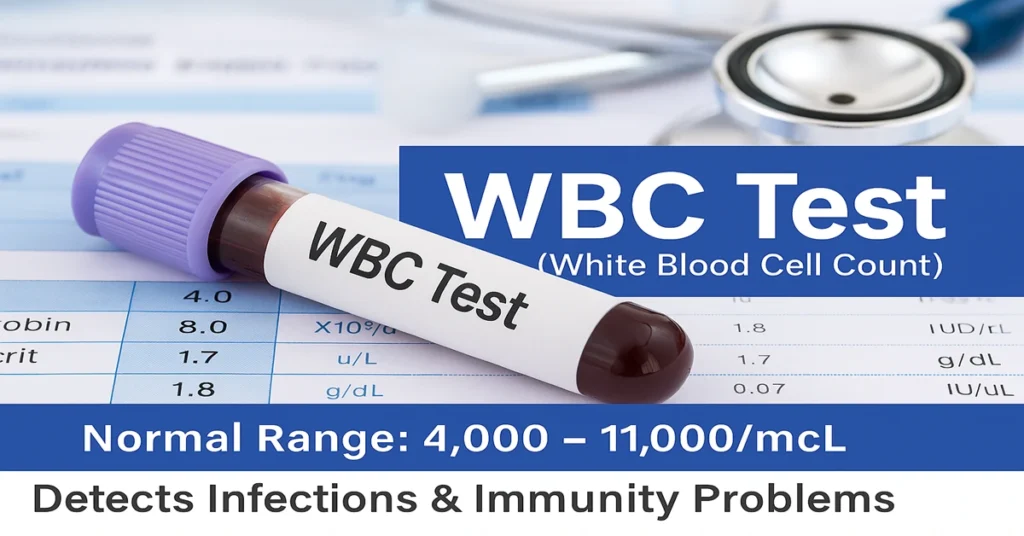
- Normal WBC Count: 4,000 – 11,000 cells/mcL
- Low WBC: Below 4,000 cells/mcL
- High WBC: Above 11,000 cells/mcL
Doctors often review the total WBC count together with the differential count, which shows the distribution of different white blood cell types.
Sample Type and Collection
- Sample Required: Whole blood
- Collection Tube: Lavender-top EDTA tube
Blood is drawn from a vein, usually in the arm. The test is routine and performed as part of a CBC. Results are often available the same day.
Test Preparation
No fasting is required for a WBC test. Hydration status and recent physical or emotional stress may influence results and are considered during interpretation. Doctors also review medications and recent illnesses when assessing WBC values.
The WBC count is rarely interpreted on its own and is usually reviewed alongside other CBC parameters.
When to Consult a Doctor
Medical advice is recommended if there are repeated infections, persistent fever, unexplained fatigue, or slow healing of wounds. Follow-up is also important when WBC levels remain consistently above or below the normal range.
People with chronic illnesses, known immune disorders, or a family history of blood conditions are often monitored more closely. Early evaluation helps clarify whether changes are temporary or require further assessment.
Important Word Explanations
- Leukopenia: A condition where white blood cell count is lower than normal.
- Leukocytosis: A condition where white blood cell count is higher than normal.
- Differential Count: The breakdown of different types of white blood cells in the blood.
- Bone Marrow: The soft tissue inside bones where blood cells are produced.
- Lymphocytes: White blood cells involved in immune memory and targeted immune responses.
~END~