
WBC (White Blood Cells): Functions, Importance & Normal Ranges Explained
White Blood Cells (WBCs), also called leukocytes, are a core part of the body’s immune defense. In day-to-day OPD and laboratory practice, WBC count is one of the most frequently checked parameters because it gives an early idea about how the body is responding to infection, inflammation, stress, or illness. When WBC levels are balanced, the immune system works smoothly. When they are too low or too high, the body’s ability to protect and repair itself can be affected.
This article explains what WBCs are, what they do, why their levels matter, the normal ranges across different age groups, and what doctors usually think when the count goes outside the normal range. The explanation is practical, experience-based, and easy to understand.
Short Overview: What Are WBCs?
White Blood Cells are produced in the bone marrow and travel through the blood and tissues. Their job is to identify harmful organisms such as bacteria and viruses, attack them, and support healing.
There are five main types of WBCs, each with a specific role:
Neutrophils, lymphocytes, monocytes, eosinophils, and basophils. In routine lab reports, doctors often look not only at the total WBC count but also at the differential count to understand which type is increased or decreased.
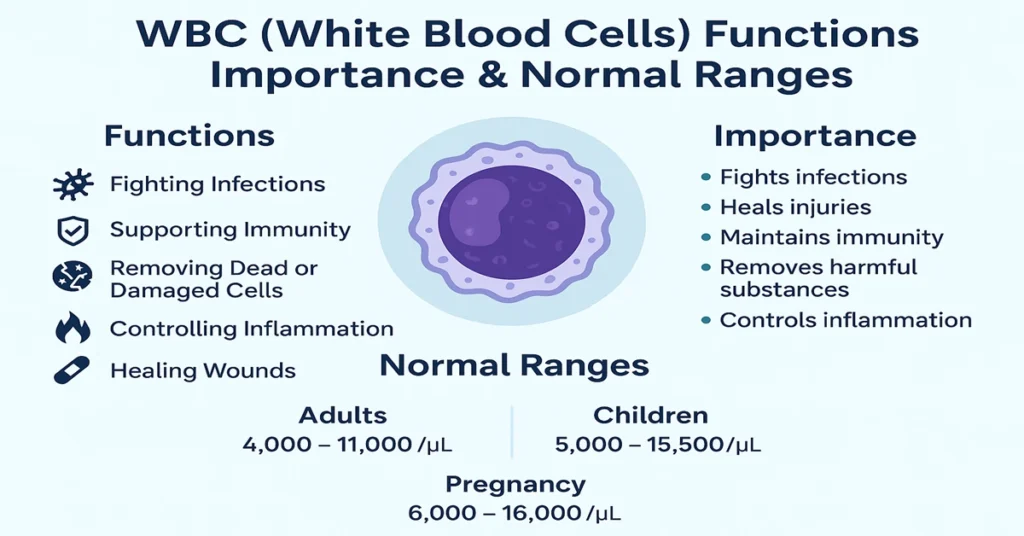
For most adults, the normal WBC range is about 4,000 to 11,000 cells per microliter of blood. Values below or above this range act as clinical signals rather than a diagnosis by themselves.
Functions of WBC (White Blood Cells)
White Blood Cells perform several essential tasks that keep the body protected and stable.
Fighting infections
This is the primary role of WBCs. When bacteria, viruses, or fungi enter the body, WBCs move quickly to the affected area. They attack and destroy these organisms and help prevent the infection from spreading. In routine practice, a raised WBC count is often seen during active infections.
Supporting immunity
WBCs help the immune system recognize harmful organisms and remember them. This immune memory is why the body can respond faster when exposed to the same infection again. Lymphocytes play a major role here.
Removing dead or damaged cells
During illness or injury, damaged cells need to be cleared so healing can begin. Certain WBCs act like cleaners, removing dead tissue and waste material from the affected area.
Controlling inflammation
Inflammation is a natural response to injury or infection. WBCs help start inflammation when needed and also help reduce it once healing begins. Clinically, this balance is important, because uncontrolled inflammation can cause tissue damage.
Managing allergic responses
Basophils and eosinophils are involved in allergic reactions. They release substances like histamine, which cause symptoms such as itching or swelling. Mild elevation of these cells is commonly seen in allergic conditions.
Supporting wound healing
After an injury or surgery, WBCs help prevent infection, clean damaged tissue, and support the formation of new healthy tissue. This is why WBC levels may rise temporarily after trauma or surgery.
Importance of WBC Level for Overall Health
A stable WBC count allows the body to respond effectively to everyday infections and stress. When WBC levels are within the normal range, the body can fight infections, heal wounds, and control inflammation efficiently.
Low WBC levels can make a person more prone to infections, while high WBC levels usually indicate that the body is under some form of stress. In clinical practice, doctors always interpret WBC values along with symptoms, medical history, and other test results.
Normal WBC Ranges (By Age and Category)
WBC levels vary naturally with age and certain physiological states.
Adults (men and women)
Most laboratories use a reference range of 4,000 to 11,000 cells per microliter.
Children
Children, especially newborns, normally have higher WBC counts because their immune system is still developing. Newborns may have values as high as 9,000 to 30,000 cells per microliter, which gradually decrease as they grow.
Pregnancy
During pregnancy, especially in later trimesters, WBC levels may rise slightly. This is a normal physiological change and helps support the mother’s immune needs.
When WBC Levels Become Risky
Both low and high WBC levels deserve attention, but context matters.
Low WBC (leukopenia)
A WBC count below about 4,000 cells per microliter is considered low. Common causes seen in practice include viral infections, nutritional deficiencies such as vitamin B12 or folate deficiency, autoimmune conditions, bone marrow suppression, chemotherapy, and poor nutrition. Persistently low levels increase the risk of infections and slow recovery.
High WBC (leukocytosis)
A WBC count above about 11,000 cells per microliter is considered high. This is often seen in infections, inflammation, stress, smoking, allergies, dehydration, or due to certain medications like steroids. Very high or persistent elevations may require further evaluation to rule out serious underlying conditions.
How to Maintain Healthy WBC Levels
Maintaining a healthy immune system helps keep WBC levels balanced. In routine advice, doctors emphasize adequate nutrition, proper sleep, hydration, stress management, regular physical activity, avoiding smoking, limiting alcohol, maintaining hygiene, and treating infections early. These measures support immune stability rather than targeting WBC numbers directly.
Test Preparation (WBC / CBC Test)
No fasting is required for a WBC or complete blood count test. Normal water intake is recommended. Heavy physical activity and smoking just before the test should be avoided. Always inform the doctor or lab about ongoing medications, as some drugs can temporarily alter WBC levels.
When to Consult a Doctor
Medical consultation is important if WBC levels are very low (below about 3,000 cells per microliter), very high (above about 15,000 cells per microliter without a clear reason), or if there are repeated infections, persistent fever, unexplained weakness, weight loss, or other concerning symptoms. In pregnancy or chronic illness, abnormal WBC values should always be discussed with a doctor.
Important Word Explanations
| Term | Simple Explanation |
|---|---|
| White Blood Cells (WBC) | Blood cells that protect the body from infections and help immunity work properly. |
| Leukocytes | Another medical name for white blood cells. |
| Neutrophils | The most common type of WBC, mainly responsible for fighting bacterial infections. |
| Lymphocytes | WBCs that help produce antibodies and support immune memory. |
| Bone Marrow | Soft tissue inside bones where blood cells are produced. |
| Inflammation | The body’s natural response to infection or injury, causing redness, swelling, or pain. |
| Leukopenia | A condition where the WBC count is lower than normal. |
| Leukocytosis | A condition where the WBC count is higher than normal. |
People Also Ask
Is an abnormal WBC count always serious?
Not always. Mild changes are common and often temporary.
Can WBC levels change during illness or stress?
Yes. Infections, stress, and recent illness can temporarily raise or lower WBC counts.
Does a high WBC always mean infection?
No. Inflammation, stress, smoking, or medications can also increase WBC levels.
When do doctors usually worry about WBC values?
Concern increases when values are very high or low, persistent, or linked with symptoms.
Is repeat testing common for WBC abnormalities?
Yes. Doctors often repeat CBC tests to see trends rather than rely on a single report.
Can someone feel normal with abnormal WBC levels?
Yes. Many people have no symptoms, especially when changes are mild or temporary.
~END~
Saved as a favorite, I like your web site!