
Vitamin K Blood Test – Complete Guide to Deficiency, Normal Levels, and Health Impact
Overview
The Vitamin K blood test measures the level of Vitamin K in the blood, most commonly Vitamin K₁ (phylloquinone). Vitamin K is a fat-soluble nutrient that plays a critical role in blood clotting, bone metabolism, and regulation of calcium within the body. Adequate Vitamin K levels allow the blood to clot normally, which helps prevent excessive bleeding and supports proper wound healing.
In clinical settings, this test is often requested when there are concerns related to unexplained bleeding, abnormal clotting test results, liver function issues, or disorders affecting fat absorption. It is also used in specific situations such as newborn care, malnutrition, chronic digestive disease, or when monitoring individuals taking anticoagulant medications. Measuring Vitamin K provides useful insight into clotting balance and overall nutritional status.
What Is Vitamin K?
Vitamin K refers to a group of fat-soluble vitamins required for the activation of proteins involved in blood clotting and bone health. The body depends on external sources for most of its Vitamin K needs, as internal production alone is not sufficient.
There are two main naturally occurring forms. Vitamin K₁ (phylloquinone) is obtained primarily from plant sources, while Vitamin K₂ (menaquinone) is produced in small amounts by intestinal bacteria and is also present in fermented foods. Laboratory testing typically focuses on Vitamin K₁, as it reflects recent intake and circulating Vitamin K status.
Where Is Vitamin K Produced or Stored in the Body?
Although the body does not manufacture Vitamin K in large quantities, it relies on both dietary intake and limited internal production.
Dietary Sources
Vitamin K₁ is derived mainly from green leafy vegetables and other plant foods. Vitamin K₂ is obtained in smaller amounts from fermented foods.
Gut Bacteria
Certain beneficial intestinal bacteria synthesize Vitamin K₂. While this contributes to overall Vitamin K availability, it is usually not sufficient to meet the body’s full requirement.
After absorption, Vitamin K is transported to the liver, where it is stored in modest amounts and used for the production of clotting factors. Smaller quantities circulate in the bloodstream to support bone and tissue functions.
Types and Sources of Vitamin K
Vitamin K exists in two principal forms that work together to support normal physiological processes.
Vitamin K₁ (Phylloquinone)
This plant-derived form is the primary type measured in blood tests and plays a central role in blood clotting.
Vitamin K₂ (Menaquinone)
This form is produced by gut bacteria and contributes to bone and vascular health. Although not routinely measured, it supports overall Vitamin K activity in the body.
Main Functions and Importance of Vitamin K
Vitamin K is essential for several interconnected systems.
Blood Clotting
Vitamin K enables the liver to produce clotting factors that help stop bleeding following injury or surgery. Without adequate Vitamin K, clot formation becomes inefficient.
Bone Strength
Vitamin K activates proteins that bind calcium to bone tissue, supporting bone density and structural integrity.
Heart and Artery Health
By regulating calcium placement, Vitamin K helps limit unwanted calcium deposits in blood vessels, which supports normal vascular flexibility.
Wound Healing
Normal clotting and tissue repair processes rely on sufficient Vitamin K availability.
Newborn Health
Newborns naturally have low Vitamin K levels. For this reason, Vitamin K status is carefully monitored in early life to reduce the risk of bleeding complications.
Causes of Low Vitamin K Levels
Reduced Vitamin K levels can result from several clinical situations rather than a single cause.
Common Causes
Low intake over time, malnutrition, and conditions that interfere with fat absorption are frequent contributors. Chronic liver disease may affect clotting factor production, while prolonged antibiotic use can reduce gut bacteria involved in Vitamin K₂ synthesis. Certain medications, particularly anticoagulants, alter Vitamin K activity rather than its absolute level.
From a laboratory standpoint, low Vitamin K results are usually reviewed alongside clotting tests to understand functional impact.
Symptoms of Low Vitamin K Levels
Vitamin K deficiency primarily affects blood clotting and, over time, bone health.
Common Symptoms
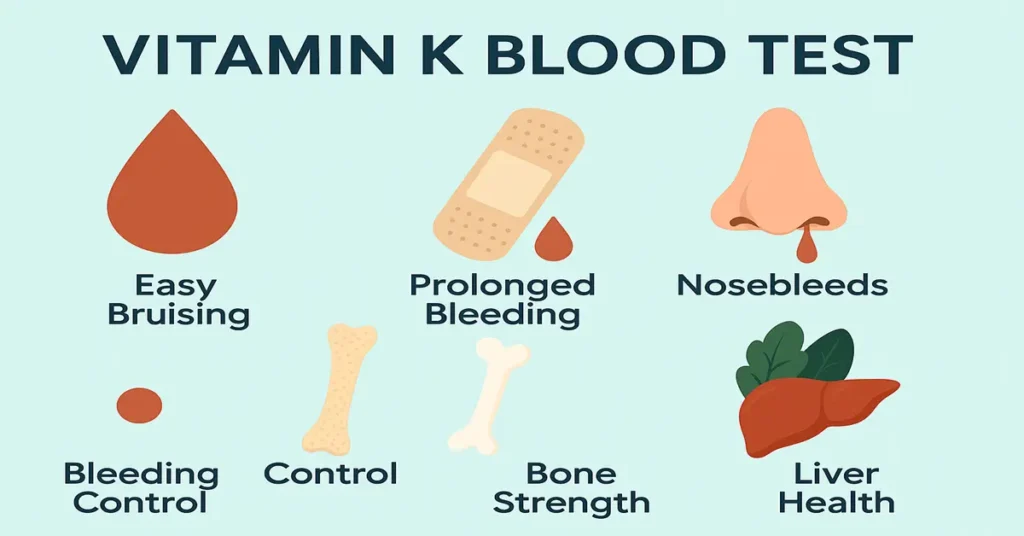
Individuals may notice easy bruising, prolonged bleeding from minor cuts, gum or nose bleeding, or heavier menstrual bleeding. Slower wound healing can also occur, and long-term deficiency may contribute to bone weakness.
Newborn Symptoms
In infants, deficiency can present with internal or external bleeding and requires prompt medical attention.
Causes of High Vitamin K Levels
High Vitamin K levels are uncommon, as excess amounts are generally excreted by the body.
Situations associated with elevated levels typically involve high-dose supplementation or injections, particularly in individuals with underlying liver disease. Normal dietary intake rarely leads to excessive levels.
Symptoms of High Vitamin K Levels
Excess Vitamin K is usually well tolerated but may interfere with anticoagulant medications. In rare cases, liver-related effects or clotting disturbances may be observed. For this reason, elevated results are interpreted cautiously, especially in patients on blood-thinning therapy.
Reference (Normal) Ranges
Vitamin K₁ reference ranges may vary slightly by laboratory.
Typical adult values generally fall within established limits when measured in nanograms per milliliter. Clinicians often interpret Vitamin K results together with Prothrombin Time (PT) and INR values to assess clotting efficiency rather than relying on Vitamin K levels alone.
Sample Type and Test Details
Sample Type: Serum or plasma from venous blood
Tube Used: Red-top (plain) tube
Fasting: Sometimes required, particularly if lipid testing is included
Testing Method: High-performance laboratory methods such as HPLC or immunoassay
Blood collection is routine, and results are usually available within one to two days.
How to Maintain Healthy Vitamin K Levels
From a diagnostic perspective, maintaining healthy Vitamin K levels involves avoiding both deficiency and unnecessary excess. Monitoring becomes especially important in individuals with digestive disorders, liver disease, or long-term medication use that affects clotting pathways.
Health Conditions Related to Vitamin K Deficiency
Low Vitamin K status has been associated with bleeding tendencies, reduced bone density, delayed wound healing, and vascular calcification. These associations are most clinically significant in people with underlying absorption or liver disorders and are evaluated as part of a broader clinical assessment.
When Should You Get a Vitamin K Test?
A Vitamin K test may be recommended when unexplained bleeding occurs, when clotting tests are abnormal, or when liver or digestive disorders are present. It is also considered in individuals using anticoagulant medications or in newborns with suspected deficiency.
Test Preparation
Patients may be asked to fast if additional tests are planned. Informing the healthcare provider about all medications, especially blood thinners or antibiotics, helps ensure accurate interpretation. Blood sampling follows standard laboratory procedures.
When to Consult a Doctor
Medical consultation is advised if prolonged bleeding, unexplained bruising, or abnormal clotting results occur. Individuals with liver disease, digestive disorders, or those using anticoagulant therapy may require closer monitoring to maintain safe clotting balance.
Important Word Explanations
- Phylloquinone (Vitamin K₁): Plant-based form commonly measured in blood
- Menaquinone (Vitamin K₂): Bacteria-derived form contributing to bone and vascular health
- Anticoagulant: Medication that reduces blood clot formation
- Malabsorption: Impaired absorption of nutrients in the intestines
- Hemorrhagic Disease: Severe bleeding condition, particularly in newborns
- Serum/Plasma: Liquid portions of blood used for laboratory analysis
~END~
Related Posts
None found