
Vitamin E Test – Complete Guide to Deficiency, Normal Levels & Toxicity
Overview
The Vitamin E Test measures the level of Vitamin E in the blood, primarily in the form of alpha-tocopherol, which is the most biologically active form in humans. Vitamin E is a fat-soluble antioxidant that helps protect cells from oxidative damage caused by free radicals. This protective role is especially important for nerve tissue, muscle cells, immune function, and red blood cell stability.
In clinical practice, this test is used to assess whether Vitamin E levels are lower or higher than expected, particularly in people with symptoms affecting nerves, muscles, or vision, or in those with conditions that interfere with fat absorption. It may also be used to evaluate nutritional status in chronic illness or to monitor individuals using supplements.
What Is Vitamin E?
Vitamin E is not a single substance but a group of eight related fat-soluble compounds. Among these, alpha-tocopherol is the form preferentially maintained in the human bloodstream and the one measured in laboratory testing.
Its primary biological role is antioxidant protection. By stabilizing cell membranes and limiting oxidative stress, Vitamin E helps preserve the structure and function of many tissues. Because oxidative processes occur continuously in the body, adequate Vitamin E levels contribute to long-term cellular health, particularly in the nervous and muscular systems.
Where Is Vitamin E Produced in the Body?
The human body does not synthesize Vitamin E. It must be obtained from external sources and then processed internally.
Dietary Sources
Vitamin E is naturally present in foods that contain fats and oils. Once consumed, it becomes available for absorption alongside dietary fat.
Storage and Transport
After absorption in the small intestine, Vitamin E is transported through the bloodstream by lipoproteins. A portion is stored in the liver and fatty tissues, creating a reserve that can be used when intake is reduced. Because this process depends on normal fat digestion and transport, disorders affecting these pathways can influence Vitamin E levels.
Main Functions and Importance of Vitamin E
Vitamin E supports several essential physiological functions, many of which are related to its antioxidant properties.
Antioxidant Protection
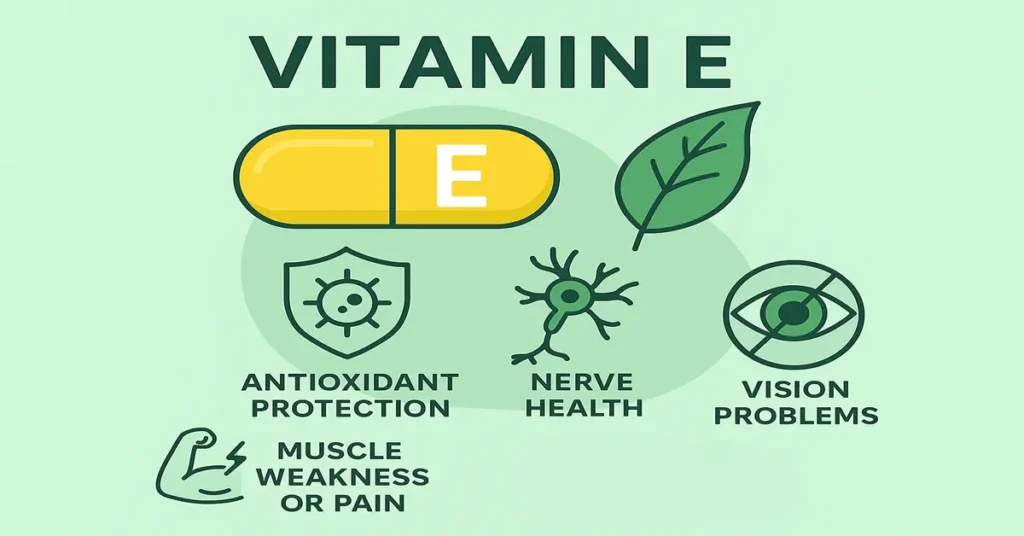
Vitamin E helps neutralize free radicals, limiting damage to cell membranes. This protective role is particularly important for nerve cells, muscle fibers, and red blood cells.
Immune System Support
Adequate Vitamin E levels contribute to normal immune response and help immune cells function effectively, especially in older adults or those with chronic conditions.
Healthy Skin and Eyes
By protecting cells from oxidative stress, Vitamin E supports skin integrity and contributes to normal retinal function.
Nerve and Muscle Function
Vitamin E plays a role in maintaining nerve conduction and muscle coordination. When levels are low, these systems may be among the first to show changes.
Blood Circulation
Vitamin E influences platelet activity and red blood cell stability, helping maintain normal blood flow characteristics.
Causes of Low Vitamin E (Deficiency)
Vitamin E deficiency is uncommon in individuals with normal digestion and balanced nutrition but may occur in specific clinical settings.
Common Causes
Conditions that interfere with fat absorption are the most frequent contributors. These include chronic pancreatic, intestinal, or liver disorders, as well as rare genetic conditions that affect lipid transport. Premature infants may also have lower Vitamin E stores due to limited transfer before birth.
From a laboratory perspective, low Vitamin E levels are usually interpreted in the context of digestive health and lipid metabolism rather than in isolation.
Symptoms of Low Vitamin E
Low Vitamin E primarily affects tissues that are highly sensitive to oxidative stress.
Patients may experience changes related to nerve and muscle function, such as weakness, altered sensation, or coordination difficulties. Visual changes and reduced immune resilience may also be observed. In infants, deficiency can present differently and may involve blood cell instability.
When detected early, laboratory findings often prompt further evaluation before severe complications develop.
Causes of High Vitamin E (Toxicity)
Vitamin E toxicity is rare and is almost never related to food intake alone.
Main Causes
Elevated levels are typically associated with prolonged or excessive supplementation or combined intake from multiple fortified sources. Because Vitamin E is stored in fat tissue, accumulation can occur gradually over time.
Symptoms of High Vitamin E Levels
Excess Vitamin E may interfere with normal blood clotting mechanisms.
Some individuals may experience gastrointestinal discomfort, headache, or visual changes. Easy bruising or bleeding tendencies can occur, particularly in those using anticoagulant medications. For this reason, unexpectedly high levels are evaluated carefully rather than managed based on symptoms alone.
Reference (Normal) Ranges
Vitamin E reference ranges may vary slightly depending on laboratory methodology.
In adults, values typically fall within established concentration ranges when measured as alpha-tocopherol. Clinicians often interpret Vitamin E levels alongside lipid measurements, as Vitamin E circulates in the blood attached to fats.
Sample Type and Test Details
Sample Type: Serum (blood sample)
Tube Used: Red-top (plain) tube
Fasting: Not routinely required unless combined with other tests
Test Method: High-performance laboratory techniques such as HPLC or immunoassay
Blood is drawn from a vein, and results are usually available within 24–48 hours.
How to Maintain Healthy Vitamin E Levels
From a diagnostic perspective, maintaining appropriate Vitamin E levels is about balance rather than excess. Monitoring becomes particularly relevant in people with absorption disorders, chronic illness, or long-term supplement use. Test results help clinicians decide whether levels appear stable or require closer observation.
Health Conditions Related to Vitamin E Deficiency
Chronic low Vitamin E levels have been associated with nerve dysfunction, muscle weakness, visual disturbances, and reduced immune response. These associations are most significant in individuals with underlying digestive or metabolic conditions and are typically evaluated as part of a broader clinical picture.
When Should You Get a Vitamin E Test?
Doctors may request this test when neurological symptoms, unexplained muscle weakness, or signs of fat malabsorption are present. It may also be included in nutritional assessments for chronic disease, premature infants, or individuals using supplements over extended periods.
In many cases, the Vitamin E Test is reviewed alongside other fat-soluble vitamins and lipid studies.
Test Preparation
No special preparation is usually required unless advised otherwise. Informing the healthcare provider about current supplements or medications helps ensure accurate interpretation. Blood collection follows standard laboratory procedures.
When to Consult a Doctor
Medical review is appropriate if symptoms affecting nerves, muscles, balance, or vision persist, or if test results fall outside the expected range. Individuals with digestive or liver conditions, or those using high-dose supplements, may require periodic monitoring to ensure levels remain appropriate.
Important Word Explanations
- Antioxidant: A substance that protects cells from damage caused by free radicals
- Fat-soluble: A vitamin that is stored in fat tissue rather than excreted quickly
- Ataxia: Loss of coordination due to nervous system involvement
- Hemolytic anemia: Breakdown of red blood cells faster than they are replaced
- µmol/L: A unit used to measure concentration in laboratory tests
- Serum: The clear liquid portion of blood used for biochemical analysis
~END~
Related Posts
None found
I liked how simply everything is explained. No complicated terms. Thank you for making diagnostics easy.