
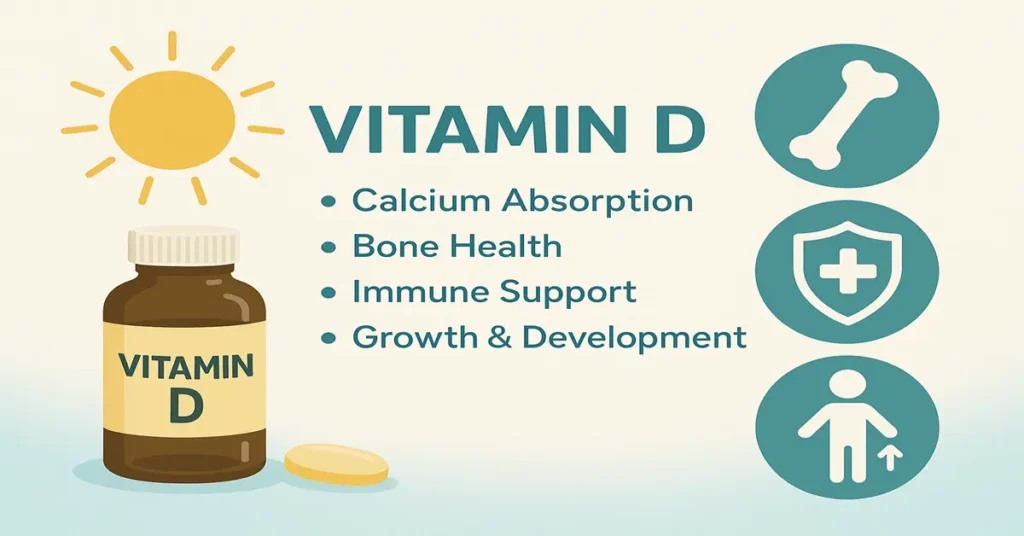
Vitamin D Test – Complete Guide for Deficiency, Normal Levels & Toxicity
Overview
The Vitamin D Test measures the level of Vitamin D circulating in the blood, primarily in the form of 25-hydroxyvitamin D [25(OH)D]. This form reflects the body’s Vitamin D stores and is considered the most reliable indicator for assessing overall Vitamin D status. Adequate levels are important for bone health, muscle function, immune balance, and several metabolic processes.
In routine medical practice, this test is commonly ordered because Vitamin D deficiency is widespread across many populations. It is used to identify low levels, to monitor previously detected deficiency, or to check for unexpectedly high levels in people using supplements or injections. The result helps clinicians understand whether Vitamin D status is within a safe and expected range.
What Is Vitamin D?
Vitamin D is often described as both a vitamin and a hormone. Unlike most vitamins, it can be produced within the body when the skin is exposed to sunlight. This unique feature makes Vitamin D status dependent on environmental exposure as well as dietary intake.
Vitamin D exists mainly in two forms. Vitamin D₂ (ergocalciferol) is derived from plant sources, while Vitamin D₃ (cholecalciferol) is produced in the skin and obtained from animal sources. Regardless of origin, both forms are converted in the body into 25(OH)D, which is the form measured during testing.
Where Is Vitamin D Produced in the Body?
Vitamin D production and activation involve several organs working together.
Skin
With exposure to ultraviolet B (UVB) rays from sunlight, a cholesterol-derived compound in the skin is converted into Vitamin D₃.
Liver
The liver converts Vitamin D₃ into 25-hydroxyvitamin D [25(OH)D]. This circulating form represents Vitamin D storage and is used to assess deficiency or excess.
Kidneys
The kidneys further convert 25(OH)D into 1,25-dihydroxyvitamin D [1,25(OH)₂D], the biologically active form that acts on bones, intestines, and other tissues.
Because of this pathway, liver or kidney disorders can influence Vitamin D levels and interpretation.
Main Functions and Importance of Vitamin D
Vitamin D supports several essential body systems, and its effects are often gradual rather than immediate.
Supports Bone Strength
Vitamin D plays a key role in calcium and phosphorus absorption, which are necessary for maintaining bone density and structural strength.
Prevents Bone Disorders
Insufficient Vitamin D is linked with bone softening conditions in both children and adults, as well as long-term bone thinning.
Boosts Immunity
Vitamin D contributes to normal immune regulation and helps the body respond effectively to infections.
Improves Muscle Strength
Adequate levels support muscle function and coordination, particularly in older adults.
Supports Mood and Mental Health
Lower Vitamin D levels are often observed in people reporting fatigue or low mood, although this relationship is usually interpreted alongside other clinical factors.
Helps Reduce Inflammation
Vitamin D is involved in regulating inflammatory pathways, which is why it is often reviewed in chronic or autoimmune conditions.
Causes of Low Vitamin D (Deficiency)
Vitamin D deficiency is common and usually develops over time rather than suddenly.
Common Causes
Limited sunlight exposure, reduced skin production, dietary insufficiency, and conditions affecting absorption or activation can all contribute. Increased body fat, aging, and chronic liver or kidney disease may also lower circulating levels. In clinical practice, deficiency often reflects a combination of these factors rather than a single cause.
Symptoms of Low Vitamin D
Symptoms tend to be subtle initially and may overlap with other conditions.
Mild to Moderate Signs
People may report tiredness, muscle discomfort, bone aches, frequent infections, or changes in mood and concentration.
Severe Deficiency
With prolonged deficiency, bone softening, skeletal pain, or growth-related concerns in children may occur. These findings usually prompt further evaluation rather than relying on symptoms alone.
Causes of High Vitamin D Levels (Toxicity)
Vitamin D toxicity is uncommon and is rarely related to sunlight or normal food intake.
Main Causes
Most cases are linked to excessive supplementation, high-dose injections without monitoring, or combined intake from multiple fortified sources. Rare metabolic conditions may also alter Vitamin D handling in the body.
Symptoms of High Vitamin D Levels
Excess Vitamin D raises calcium levels in the blood, which can lead to noticeable symptoms.
People may experience digestive discomfort, increased thirst or urination, muscle weakness, or mental confusion. Persistently high levels can strain kidney function, which is why elevated results are interpreted carefully and followed up.
Reference (Normal) Ranges
The Vitamin D Test measures 25-hydroxyvitamin D [25(OH)D].
Values below the reference range suggest reduced Vitamin D stores, while values above the upper limit may indicate excess. Most laboratories and clinicians consider levels within the mid-range to reflect adequate status, though interpretation always depends on clinical context.
Sample Type and Test Details
Sample Type: Serum (blood)
Tube Used: Red-top (plain) tube
Fasting: Usually not required
Test Method: Immunoassay or chemiluminescence
Blood is drawn from a vein, and results are typically available within 24 hours.
How to Maintain Healthy Vitamin D Levels
From a laboratory perspective, maintaining healthy Vitamin D levels involves balance rather than extremes. Monitoring becomes especially relevant in individuals with limited sun exposure, chronic medical conditions, or long-term supplement use. Test results help guide whether current levels appear appropriate or require further review.
Health Conditions Linked to Vitamin D Deficiency
Low Vitamin D levels are often observed in people with bone disorders, recurrent infections, muscle weakness, chronic fatigue, or slower healing. Associations have also been noted with certain hormonal and metabolic conditions. These links are usually considered supportive findings rather than diagnostic on their own.
When Should You Get a Vitamin D Test?
Doctors may suggest testing when symptoms persist without a clear cause, when sun exposure is limited, or when underlying medical conditions affect absorption or metabolism. Testing is also common in older adults and in individuals using Vitamin D supplements for extended periods.
Test Preparation
No special preparation is usually required unless other tests are being done at the same time. Some clinicians may advise pausing supplements briefly before testing. Informing the doctor about current medications helps ensure accurate interpretation.
When to Consult a Doctor
Medical consultation is appropriate if symptoms such as ongoing bone pain, muscle weakness, or unexplained fatigue are present, or if Vitamin D levels fall well outside the expected range. Individuals with kidney or liver disease, or those using supplements long term, often benefit from periodic monitoring.
Important Word Explanations
- 25(OH)D: The storage form of Vitamin D measured in blood tests
- 1,25(OH)₂D: The active form produced mainly by the kidneys
- Osteomalacia: Softening of adult bones due to low mineralization
- Rickets: A bone disorder in children related to Vitamin D deficiency
- Toxicity: Excessive accumulation of Vitamin D in the body
- Serum: The liquid portion of blood used for laboratory testing
~END~