
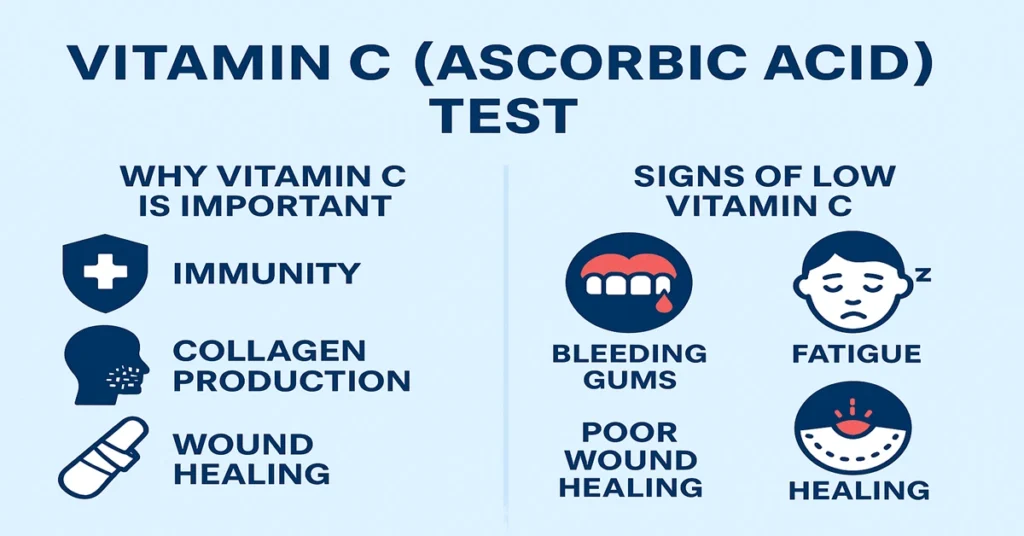
Vitamin C Test: Functions, Deficiency Symptoms, Normal Range, Toxicity & Preparation
What is Vitamin B12?
Vitamin B12, also known as cobalamin, is a water-soluble vitamin belonging to the B-complex family. It plays a critical role in red blood cell production, nervous system maintenance, DNA synthesis, and normal brain function. Although required only in small amounts, its physiological importance is substantial, particularly for blood and nerve health.
A distinctive feature of Vitamin B12 is that it is found almost exclusively in animal-derived foods such as meat, fish, eggs, and dairy products. Because of this, individuals who follow vegetarian or vegan diets are more likely to develop reduced levels over time if intake is not adequate.
Vitamin B12 is stored in the liver, and these reserves can last for several years. This storage capacity explains why deficiency often develops slowly and may remain unnoticed until blood or neurological changes become evident.
Where is Vitamin B12 Produced or Synthesized in the Body?
The human body cannot synthesize Vitamin B12. Only certain bacteria are capable of producing it. While some of these bacteria are present in the large intestine, the Vitamin B12 formed there cannot be absorbed effectively because absorption occurs earlier in the digestive tract, mainly in the terminal ileum.
For absorption to occur, Vitamin B12 must bind to a protein called intrinsic factor, which is produced in the stomach. Without intrinsic factor, even adequate dietary intake cannot prevent deficiency. This explains why absorption disorders are a common cause of low Vitamin B12 levels.
In practical terms, usable Vitamin B12 must come from external sources, and proper digestion and absorption are essential for maintaining normal levels.
Main Functions and Importance of Vitamin B12
Vitamin B12 supports several essential biological systems simultaneously, which is why deficiency often presents with varied and overlapping symptoms.
Red Blood Cell Formation
Vitamin B12 is required for the production of normally shaped, functional red blood cells. When levels are reduced, the bone marrow produces large, immature cells that carry oxygen inefficiently. This pattern, known as megaloblastic anemia, commonly explains symptoms such as fatigue, weakness, and reduced exercise tolerance.
Nervous System Health
Vitamin B12 is vital for maintaining the myelin sheath, the protective covering around nerves. Adequate myelin ensures efficient nerve signal transmission. Reduced levels may lead to sensory changes, coordination problems, or balance disturbances, reflecting underlying nerve involvement.
DNA and Cell Division
Every dividing cell depends on Vitamin B12 for proper DNA synthesis. Tissues with rapid turnover—such as blood cells, skin, and the digestive tract lining—are particularly sensitive to low levels, which can impair normal regeneration.
Brain and Mental Function
Vitamin B12 contributes to cognitive processes including memory, concentration, and mood regulation. Subtle mental changes may appear early in deficiency, especially in older adults, before more obvious neurological signs develop.
Energy Production
Vitamin B12 participates in metabolic pathways that convert nutrients into usable cellular energy. Reduced levels often correlate with persistent tiredness or low stamina, even when sleep and calorie intake are adequate.
Homocysteine Regulation
Together with Vitamin B9 (folate), Vitamin B12 helps regulate homocysteine levels. Elevated homocysteine is associated with cardiovascular and neurological risk, making balanced B12 levels important for long-term vascular and nerve health.
Causes of Low Vitamin B12 Levels (Deficiency Causes)
Vitamin B12 deficiency may develop due to impaired absorption, reduced intake, or increased physiological demand.
Pernicious Anemia
An autoimmune condition in which the stomach fails to produce intrinsic factor, preventing proper absorption of Vitamin B12 despite adequate dietary intake.
Vegetarian or Vegan Diet
Plant-based diets do not naturally contain Vitamin B12, increasing the likelihood of gradual deficiency over time.
Malabsorption Disorders
Conditions affecting the stomach or intestines—such as celiac disease, Crohn’s disease, chronic gastritis, or previous gastric surgery—may interfere with absorption.
Chronic Alcohol Consumption
Alcohol can damage the stomach lining and disrupt nutrient absorption, contributing to declining B12 levels.
Medications
Long-term use of certain medications, including metformin and acid-suppressing drugs, may reduce Vitamin B12 absorption.
Advancing Age
Age-related reduction in stomach acid can make absorption less efficient, even with adequate dietary intake.
Symptoms of Vitamin B12 Deficiency
Vitamin B12 deficiency commonly affects both hematological and neurological systems.
Blood and Energy-Related Symptoms
Fatigue, weakness, dizziness, pallor, and shortness of breath are frequently reported findings.
Neurological Symptoms
Tingling or numbness in the hands and feet, balance difficulties, memory changes, irritability, and reduced concentration may indicate nerve involvement.
Oral and Digestive Signs
Inflammation of the tongue, mouth ulcers, and reduced appetite are sometimes observed.
When deficiency persists untreated, nerve changes may become long-standing, which is why early identification through testing is clinically important.
Causes of High Vitamin B12 Levels
Elevated Vitamin B12 levels are less common and are usually associated with non-dietary factors.
Higher values may be seen with frequent supplementation or injections. Certain liver conditions can release stored Vitamin B12 into the bloodstream, and reduced kidney clearance may also contribute to elevated results.
Symptoms of High Vitamin B12 (Toxicity)
Vitamin B12 toxicity is rare, as excess amounts are generally excreted in urine. When levels are markedly elevated, some individuals may notice mild, nonspecific symptoms such as skin changes, headache, or digestive discomfort. These findings are typically interpreted in clinical context rather than viewed as direct toxicity.
Reference Range (Normal Blood Levels)
Vitamin B12 reference ranges may vary slightly between laboratories.
- Normal Vitamin B12: 200 – 900 pg/mL
- Deficiency: < 200 pg/mL
- Borderline: 200 – 300 pg/mL
Borderline values are often evaluated further using markers such as methylmalonic acid or homocysteine to assess early deficiency.
Sample Type and Testing
Sample Type: Blood (serum or plasma)
Additional Test: Methylmalonic acid (MMA) for early deficiency assessment
Fasting: Usually not required unless combined with other investigations
Blood collection follows routine laboratory procedures.
Test Preparation
Preparation is minimal. Temporary avoidance of Vitamin B12 supplements before testing may be advised. Informing the healthcare provider about medications that affect absorption helps ensure accurate interpretation.
When to Consult a Doctor
Medical consultation is appropriate if symptoms such as persistent fatigue, numbness, balance problems, memory changes, or recurrent mouth ulcers are present. Testing is also important for individuals following vegan diets, older adults, or those with known digestive disorders. Abnormal results may lead to further evaluation of absorption or related nutritional markers.
Important Word Explanations
- Cobalamin: Scientific name for Vitamin B12
- Intrinsic Factor: A stomach protein required for Vitamin B12 absorption
- Megaloblastic Anemia: Anemia caused by large, immature red blood cells
- Peripheral Neuropathy: Nerve damage causing tingling or numbness
- Homocysteine: An amino acid that rises when Vitamin B12 or folate is low
- Methylmalonic Acid (MMA): A test used to detect early Vitamin B12 deficiency
~END~
Related Posts
None found