
Vitamin B9 (Folate) Blood Test: Functions, Deficiency, Normal Range & Health Importance
Introduction
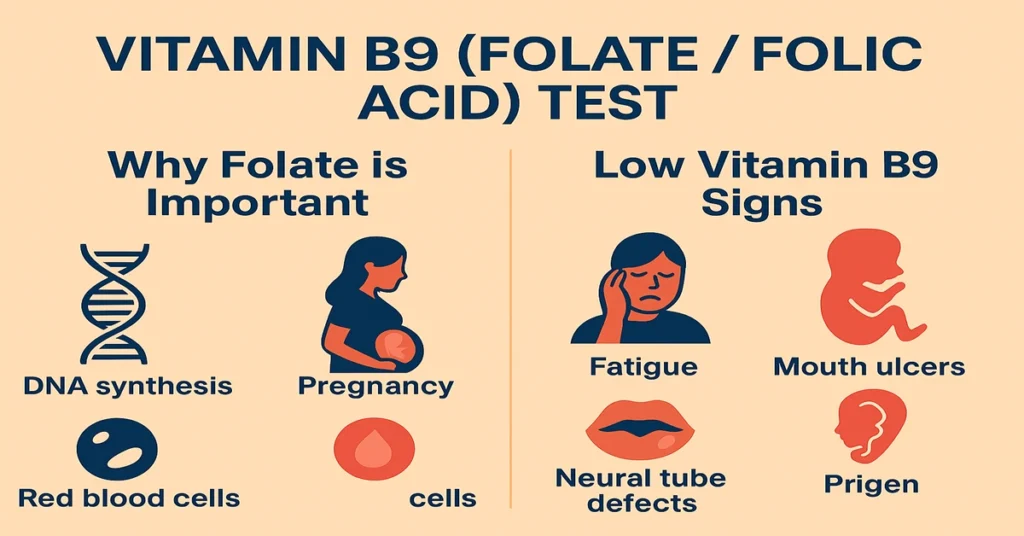
The Vitamin B9 blood test measures the level of folate (the natural form) or folic acid (the synthetic form) circulating in the bloodstream. Vitamin B9 is a water-soluble B-complex vitamin that plays a key role in DNA synthesis, red blood cell formation, brain function, and normal nervous system development. Because it supports continuous cell growth and repair, it is required throughout life and becomes especially important during pregnancy.
In routine laboratory practice, low folate levels are commonly associated with anemia, persistent fatigue, and reduced cellular turnover. During pregnancy, inadequate folate availability is clinically significant because it is linked with abnormal development of the fetal nervous system. A Vitamin B9 blood test helps identify reduced levels early and supports timely clinical evaluation.
What is Vitamin B9?
Vitamin B9 exists in two main forms. Folate is the naturally occurring form found in foods, while folic acid is the synthetic form used in supplements and fortified products. Both forms participate in the production of DNA, RNA, and healthy red blood cells and are essential for tissues that divide rapidly.
Because Vitamin B9 is water-soluble, the body does not maintain large reserves. Excess amounts are eliminated through urine, which means levels depend on regular availability. When intake or absorption is reduced, deficiency may develop over time.
Where is Vitamin B9 Produced in the Body?
The human body cannot produce sufficient Vitamin B9 on its own. Small amounts may be generated by intestinal bacteria, but this contribution is minimal and does not meet physiological needs.
Most folate must therefore be obtained from external sources. After absorption, it circulates in the blood and is taken up by tissues with high demand, particularly the bone marrow, gastrointestinal tract, and developing fetal tissues.
Main Functions and Importance of Vitamin B9
DNA and RNA Formation
Vitamin B9 is essential for the synthesis of DNA and RNA, the genetic material required for cell division and growth. This function is particularly important during pregnancy, childhood, periods of rapid growth, and tissue repair.
Red Blood Cell Production
Folate works closely with Vitamin B12 in the production of red blood cells. When folate levels are low, red blood cells may become abnormally large and ineffective, a pattern seen in megaloblastic anemia.
Neural Tube Development During Pregnancy
Adequate folate availability is critical during early pregnancy, when the brain and spinal cord are forming. Reduced levels at this stage are associated with neural tube defects, making folate status a key focus in prenatal care.
Brain and Nervous System Health
Vitamin B9 supports neurotransmitter activity and normal nerve function. It also contributes to the regulation of homocysteine, an amino acid that, when elevated, is associated with neurological and cardiovascular concerns.
Amino Acid Metabolism and Heart Health
Folate participates in amino acid metabolism, particularly the conversion of homocysteine to methionine. Balanced folate levels support cardiovascular health by helping maintain normal homocysteine concentrations.
Causes of Low Vitamin B9 Levels
Folate deficiency may occur when intake is reduced, absorption is impaired, or demand is increased.
Common Causes
Low dietary intake, chronic alcohol use, pregnancy-related increased requirements, gastrointestinal disorders affecting absorption, and certain medications are frequent contributors. Genetic variations affecting folate metabolism may also influence circulating levels. In clinical practice, deficiency is often seen alongside other nutritional deficiencies rather than in isolation.
Symptoms of Vitamin B9 Deficiency
Low Vitamin B9 levels primarily affect tissues with rapid cell turnover.
Common findings include fatigue, weakness, pallor, difficulty concentrating, oral or tongue discomfort, and laboratory evidence of megaloblastic anemia. In children, poor growth may be observed. During pregnancy, deficiency is associated with increased risk of fetal complications, which is why early testing and monitoring are important.
Causes of High Vitamin B9 Levels
Elevated Vitamin B9 levels are uncommon and usually related to external intake rather than dietary sources.
Higher values are most often seen in individuals using folic acid supplements or consuming multiple fortified products. Natural food sources rarely cause excessive levels because surplus folate is readily excreted.
Symptoms of High Vitamin B9 (Toxicity)
Vitamin B9 itself has a wide safety margin. However, persistently high levels from supplementation may obscure the detection of Vitamin B12 deficiency, which is clinically important because untreated B12 deficiency can lead to neurological damage.
Some individuals may report mild, nonspecific symptoms such as sleep disturbance or gastrointestinal discomfort at very high intake levels, though these are uncommon.
Normal Range (Reference Values)
Reference ranges for folate may vary slightly depending on laboratory method.
Values within the established range are considered adequate. Levels below the lower limit suggest reduced folate availability, while higher values are typically interpreted in the context of supplementation history.
Sample Type and Testing Method
Sample Type: Blood sample (serum or plasma)
Purpose: Measurement of circulating folate concentration
Fasting: Not usually required unless combined with other tests
Testing Method: Common laboratory techniques include chemiluminescence, immunoassay, or microbiological assays
Results are generally available within one to two days.
Test Preparation
Preparation is usually minimal. Temporary avoidance of vitamin supplements before testing may be advised to prevent artificially elevated readings. Informing the healthcare provider about medications and supplements helps ensure accurate interpretation.
When to Consult a Doctor
Medical consultation is appropriate if symptoms such as persistent fatigue, pallor, oral discomfort, or cognitive changes are present. Testing is also important during pregnancy or when planning pregnancy, in individuals with poor nutrition, digestive disorders, or known anemia. Abnormal results may prompt further evaluation, including assessment of Vitamin B12 status.
Important Word Explanations
- Folate: The natural form of Vitamin B9 found in foods
- Folic Acid: The synthetic form of Vitamin B9 used in supplements and fortified foods
- Megaloblastic Anemia: A form of anemia characterized by large, immature red blood cells
- Neural Tube Defect: A birth defect affecting development of the brain or spinal cord
- Homocysteine: An amino acid associated with cardiovascular and neurological risk when elevated
- MTHFR Mutation: A genetic variation that affects folate metabolism
~END~
Related Posts
None found
Pingback: Hemoglobin (Hb) Test: Normal Range, Causes & Symptoms of Low and High Levels - ALL ABOUT TESTS
Pingback: MCV Test (Mean Corpuscular Volume): Normal Range, Causes, Symptoms & Preparation - ALL ABOUT TESTS
Pingback: Neutrophils Test: Normal Range, Low & High Causes, Symptoms and Guide - ALL ABOUT TESTS
Pingback: RBC Test (Red Blood Cell Count): Normal Range, Causes, Symptoms & Preparation