
Vitamin B6 (Pyridoxine) Blood Test – Functions, Deficiency, Symptoms & Normal Levels
Introduction
The Vitamin B6 (Pyridoxine) blood test measures the amount of Vitamin B6 present in the bloodstream. Vitamin B6 is a water-soluble member of the B-complex family and plays an important role in protein metabolism, brain function, neurotransmitter activity, red blood cell production, and immune regulation. In the body, it exists in several related forms—pyridoxine, pyridoxal, and pyridoxamine—which are converted into the biologically active form known as pyridoxal-5-phosphate (PLP).
Because the body cannot produce Vitamin B6 and does not store large reserves, levels depend on regular availability. Both deficiency and excess—most often related to supplementation—can affect nerve function, mood, metabolism, and blood health. This blood test helps assess whether Vitamin B6 levels are within a range that supports normal metabolic and neurological processes.
What is Vitamin B6 (Pyridoxine)?
Vitamin B6 refers to a group of chemically related compounds that the body converts into pyridoxal-5-phosphate (PLP), the active coenzyme form. PLP is involved in more than 100 enzymatic reactions, primarily those related to amino acid metabolism. Through these reactions, Vitamin B6 supports muscle maintenance, energy release, cognitive function, emotional regulation, and immune activity.
As a water-soluble vitamin, excess Vitamin B6 is eliminated through urine. When intake or absorption is reduced, levels may decline, while prolonged high intake from supplements can lead to accumulation and neurological effects.
Where is Vitamin B6 Produced in the Body?
The human body does not synthesize Vitamin B6 in meaningful amounts. Small quantities may be generated by intestinal bacteria, but this contribution is insufficient to meet physiological needs.
Most Vitamin B6 is obtained from external sources. After absorption, it circulates in the blood and is taken up by tissues with high metabolic demand, particularly the brain, muscles, and liver. With regular intake and normal metabolism, levels are usually maintained within the expected range.
Main Functions and Importance of Vitamin B6
Vitamin B6 supports a wide range of metabolic and neurological functions.
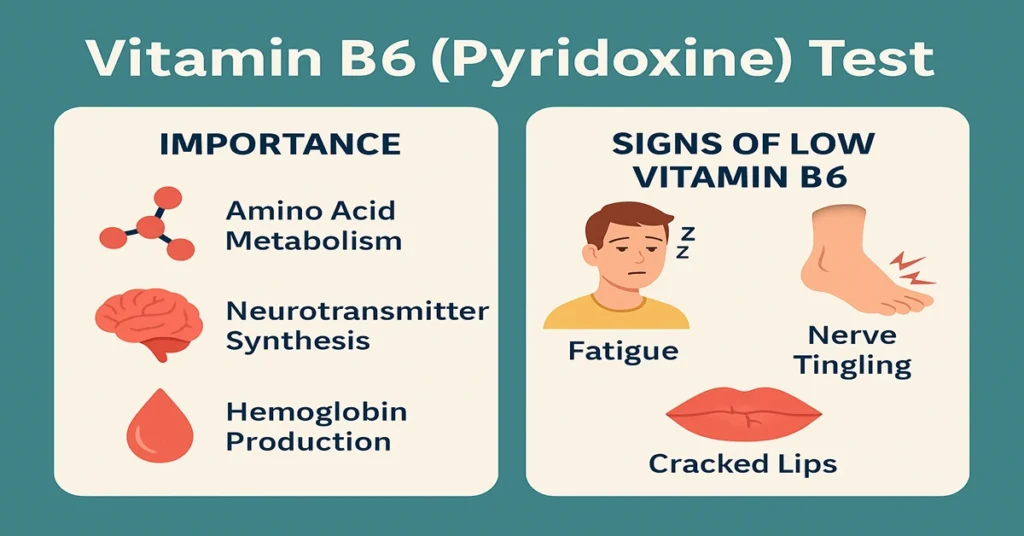
Amino Acid and Protein Metabolism
Vitamin B6 is essential for breaking down and utilizing amino acids. This supports muscle repair, tissue growth, and efficient energy production, particularly in individuals with higher protein intake.
Neurotransmitter Synthesis
PLP is required for the production of several neurotransmitters involved in mood, sleep, and nerve signaling. When levels are reduced, subtle changes in emotional balance or sleep patterns may occur.
Red Blood Cell and Hemoglobin Formation
Vitamin B6 contributes to hemoglobin synthesis and normal red blood cell development. Low levels may be reflected in certain forms of anemia or reduced oxygen delivery.
Immune System Support
The vitamin plays a role in antibody production and immune cell function, supporting the body’s ability to respond to infection and inflammation.
Blood Sugar Regulation
Vitamin B6 assists in the release of glucose from stored glycogen, helping maintain energy availability during fasting or increased physical demand.
Hormonal Balance
Through its involvement in neurotransmitter and hormone metabolism, Vitamin B6 contributes to overall hormonal regulation.
Causes of Low Vitamin B6 Levels
Vitamin B6 deficiency typically develops due to reduced intake, impaired absorption, or altered metabolism rather than a single cause.
Common Causes
Poor nutritional intake, chronic alcohol use, long-term use of certain medications, kidney disease, and malabsorption disorders are frequent contributors. Older adults and individuals with chronic medical conditions are more likely to have reduced levels.
Symptoms of Vitamin B6 Deficiency
Low Vitamin B6 levels can affect the nervous system, blood cells, and skin.
Common findings include fatigue, mood changes, irritability, oral or tongue discomfort, and sensory symptoms such as tingling or numbness. In some cases, laboratory evidence of anemia may be present. Symptoms often overlap with other B-vitamin deficiencies and are interpreted alongside clinical history.
Causes of High Vitamin B6 Levels
Elevated Vitamin B6 levels are rarely caused by diet alone. Most cases are related to external intake.
Common Causes
High-dose Vitamin B6 supplements, prolonged use of multiple overlapping supplements, or long-term intake above recommended amounts can lead to elevated blood levels.
Symptoms of Vitamin B6 Toxicity
Excess Vitamin B6 primarily affects sensory nerves.
Reported symptoms include numbness, tingling, burning sensations, imbalance, or coordination difficulty. These effects are usually associated with prolonged high intake and are evaluated carefully in clinical practice.
Reference Range (Normal Levels)
Vitamin B6 levels are typically assessed by measuring pyridoxal-5-phosphate (PLP).
Values within the established laboratory range are considered adequate. Levels below the lower limit suggest reduced availability, while higher values are most often associated with supplementation history.
Sample Type and Test Method
Sample Type: Blood (serum or plasma)
Measured Form: Pyridoxal-5-phosphate (PLP)
Fasting: Usually not required
Testing Method: High-performance laboratory techniques such as HPLC or immunoassay
Results are generally available within 24–48 hours.
Test Preparation
Special preparation is usually minimal. Temporary avoidance of vitamin supplements may be advised before testing. Informing the healthcare provider about current medications helps ensure accurate interpretation.
When to Consult a Doctor
Medical review is appropriate if symptoms such as persistent fatigue, mood changes, sensory discomfort, oral changes, or unexplained anemia are present. Individuals using long-term supplements or experiencing neurological symptoms should also seek evaluation to determine whether Vitamin B6 levels are contributing.
Important Word Explanations
- Pyridoxine: The scientific name for Vitamin B6
- Neurotransmitters: Chemical messengers that transmit signals between nerve cells
- Cheilitis: Cracking or soreness at the corners of the mouth
- Glossitis: Inflammation or swelling of the tongue
- Peripheral Neuropathy: Nerve damage causing tingling or numbness in the limbs
- Microcytic Anemia: A form of anemia characterized by smaller-than-normal red blood cells
~END~
Related Posts
None found