
Vitamin B5 (Pantothenic Acid) Blood Test – Deficiency, Symptoms, Functions & Normal Levels
Introduction
The Vitamin B5 (Pantothenic Acid) test is a blood test that measures the level of Vitamin B5 circulating in the bloodstream. Vitamin B5 is a water-soluble member of the B-complex family and plays a central role in energy metabolism, hormone synthesis, fat processing, red blood cell support, and normal nerve function. It is an essential component of Coenzyme A (CoA), a molecule involved in nearly all metabolic pathways that convert nutrients into usable energy.
Because Vitamin B5 is not stored in large quantities, levels depend on regular availability. In most individuals, deficiency is uncommon, but it may be seen in specific clinical situations such as poor nutritional intake, chronic illness, or impaired absorption. This test helps clarify Vitamin B5 status when symptoms are nonspecific or when broader nutritional assessment is required.
What is Vitamin B5?
Vitamin B5, also known as pantothenic acid, is an essential nutrient required for normal metabolic activity in all cells. Its primary role is the formation of Coenzyme A, which is necessary for the metabolism of carbohydrates, fats, and proteins.
Through this role, Vitamin B5 supports energy production, hormone synthesis, and cellular maintenance. Because it is water-soluble, excess amounts are eliminated, and the body relies on consistent intake to maintain normal levels. When availability is reduced, energy-dependent tissues such as muscles, nerves, and endocrine organs may be affected.
Where is Vitamin B5 Produced in the Body?
The human body does not produce Vitamin B5 in sufficient amounts. Small quantities may be synthesized by intestinal bacteria, but this contribution is minimal and does not meet physiological needs.
Vitamin B5 is therefore obtained primarily from external sources. After absorption in the intestine, it circulates in the blood and is taken up by tissues with high metabolic activity. Under normal conditions, a varied diet supports stable levels, while absorption or nutritional issues may lead to reduced availability.
Main Functions and Importance of Vitamin B5
Vitamin B5 supports multiple interrelated biological processes that are essential for normal cellular function.
Energy Metabolism
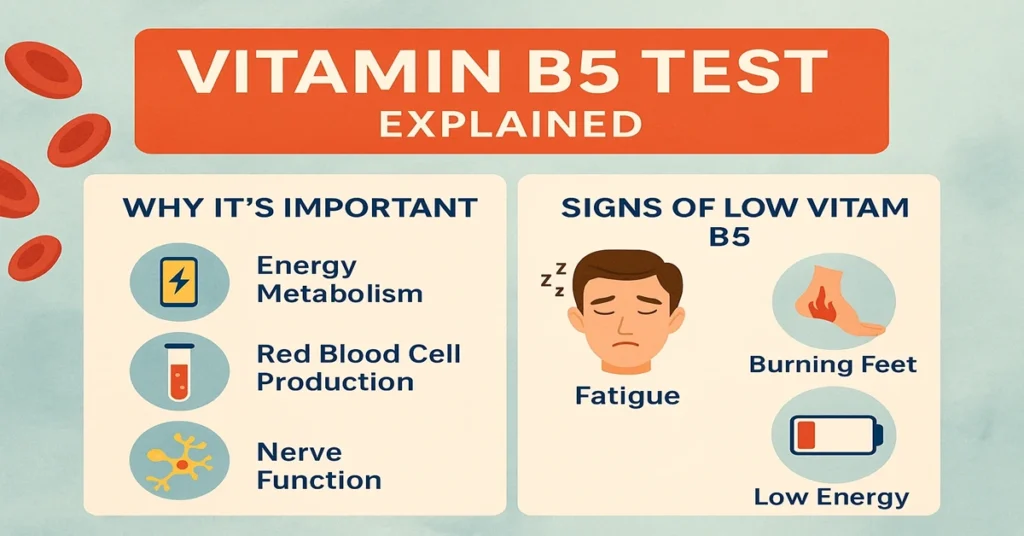
Pantothenic acid is required for the production of Coenzyme A, which enables the conversion of fats, carbohydrates, and proteins into cellular energy. Reduced availability may be reflected as lower stamina or generalized fatigue.
Hormone Production
Vitamin B5 participates in the synthesis of several hormones, including those produced by the adrenal glands. Through this role, it contributes to hormonal balance and metabolic regulation.
Fatty Acid Processing
The vitamin supports both the synthesis and breakdown of fatty acids, which are necessary for cell membrane integrity and normal lipid metabolism.
Red Blood Cell Support
Pantothenic acid contributes to processes involved in red blood cell formation and oxygen transport, indirectly supporting energy levels and tissue oxygenation.
Skin Healing and Tissue Repair
Vitamin B5 is involved in normal tissue repair and cellular regeneration, which is why it is frequently associated with skin integrity and recovery processes.
Nervous System Support
Through its role in neurotransmitter synthesis and energy metabolism, Vitamin B5 supports normal nerve signaling, cognitive function, and mood stability.
Causes of Low Vitamin B5 Levels (Deficiency)
Vitamin B5 deficiency is uncommon but may occur under specific circumstances.
Common Causes
Reduced intake over time, chronic alcohol use, prolonged fasting, and certain digestive disorders may lower Vitamin B5 availability. Conditions that increase metabolic demand or urinary loss may also contribute. In clinical practice, low levels are often seen alongside other B-vitamin deficiencies rather than in isolation.
Symptoms of Vitamin B5 Deficiency
Symptoms associated with low Vitamin B5 levels are often nonspecific and may overlap with other nutritional or metabolic conditions.
Individuals may report persistent tiredness, sensory changes such as burning or tingling sensations, headaches, sleep disturbance, digestive discomfort, muscle weakness, or mood changes. Because these findings are not unique to Vitamin B5 deficiency, laboratory testing helps support clinical assessment.
Causes of High Vitamin B5 Levels
Elevated Vitamin B5 levels are rare. As a water-soluble vitamin, excess pantothenic acid is generally eliminated through urine.
Higher levels are most often associated with recent intake of high-dose supplements or parenteral nutrition. Dietary intake alone does not lead to accumulation.
Symptoms of High Vitamin B5 (Toxicity)
Vitamin B5 toxicity is uncommon and typically mild when it occurs. Reported effects are usually limited to gastrointestinal discomfort. Serious adverse effects are not expected from dietary sources, and elevated laboratory values are usually interpreted in the context of supplementation history.
Reference Range (Normal Levels)
Vitamin B5 (Pantothenic Acid) reference ranges may vary slightly by laboratory.
Values within the established range are considered adequate. Levels below the lower limit suggest reduced availability and are interpreted alongside clinical findings and other nutritional markers.
Sample Type and Test Method
Sample Type: Blood (serum or plasma)
Test Type: Measurement of circulating pantothenic acid
Fasting: Usually not required
Method Used: High-performance laboratory techniques such as HPLC or immunoassay
Blood collection is routine, and results are typically available within 24 hours.
Test Preparation
Special preparation is usually minimal. Temporary discontinuation of vitamin supplements may be advised prior to testing. Informing the clinician about current medications or nutritional products helps ensure accurate interpretation.
When to Consult a Doctor
Medical consultation is appropriate if symptoms such as persistent fatigue, sensory discomfort, slow recovery from minor injuries, mood changes, or digestive concerns continue without a clear explanation. Individuals with chronic illness, nutritional risk factors, or abnormal test results may require further evaluation to assess overall vitamin status.
Important Word Explanations
- Pantothenic Acid: The scientific name for Vitamin B5
- Coenzyme A (CoA): A molecule required for energy production and metabolism
- Adrenal Glands: Hormone-producing glands located above the kidneys
- Neurotransmitters: Chemical messengers that allow nerve cells to communicate
- Paresthesia: A sensation of tingling or burning, often in the hands or feet
~END~
Related Posts
None found