
Vitamin B2 (Riboflavin) Test – Deficiency, Symptoms, Causes & Normal Levels
Introduction
The Vitamin B2 test, also known as the riboflavin test, measures the level of riboflavin in the blood. Vitamin B2 is a water-soluble member of the B-complex group and plays a steady, behind-the-scenes role in energy production, cellular metabolism, and tissue maintenance. It is particularly important for the health of the skin, eyes, nervous system, and mucous membranes.
Because riboflavin is not stored in significant amounts, the body depends on regular intake to maintain adequate levels. In clinical practice, deficiency is most often seen in people with poor nutritional intake, chronic illness, alcohol use, or digestive conditions that interfere with absorption. This test helps determine whether current riboflavin levels are sufficient to support normal metabolic and cellular function.
Doctors may request this test when symptoms such as ongoing fatigue, mouth or tongue changes, eye irritation, or signs of multiple B-vitamin deficiencies are present. Identifying low levels early helps guide further evaluation before more persistent metabolic or neurological effects develop.
What is Vitamin B2 (Riboflavin)?
Vitamin B2, or riboflavin, is an essential nutrient involved in cellular energy production and growth. It acts as a building block for enzyme systems that regulate oxidation–reduction reactions inside cells. These reactions are fundamental to how the body converts carbohydrates, fats, and proteins into usable energy.
Because riboflavin is used continuously in daily metabolism and is water-soluble, it is cleared from the body relatively quickly. When intake or absorption is reduced, levels can fall within a short period. Adequate riboflavin supports healthy skin, eye function, hormone balance, and efficient energy metabolism.
Where is Vitamin B2 Obtained or Synthesized in the Body?
The body does not synthesize Vitamin B2 in meaningful amounts. Although intestinal bacteria may produce very small quantities, this contribution is not sufficient to meet physiological needs.
Most riboflavin comes from dietary sources. After absorption in the intestine, it circulates in the bloodstream and is taken up by tissues with high metabolic demand. With regular intake and normal absorption, levels are usually well maintained.
Main Functions and Importance of Vitamin B2
Vitamin B2 supports several interconnected metabolic and cellular processes.
Energy Production
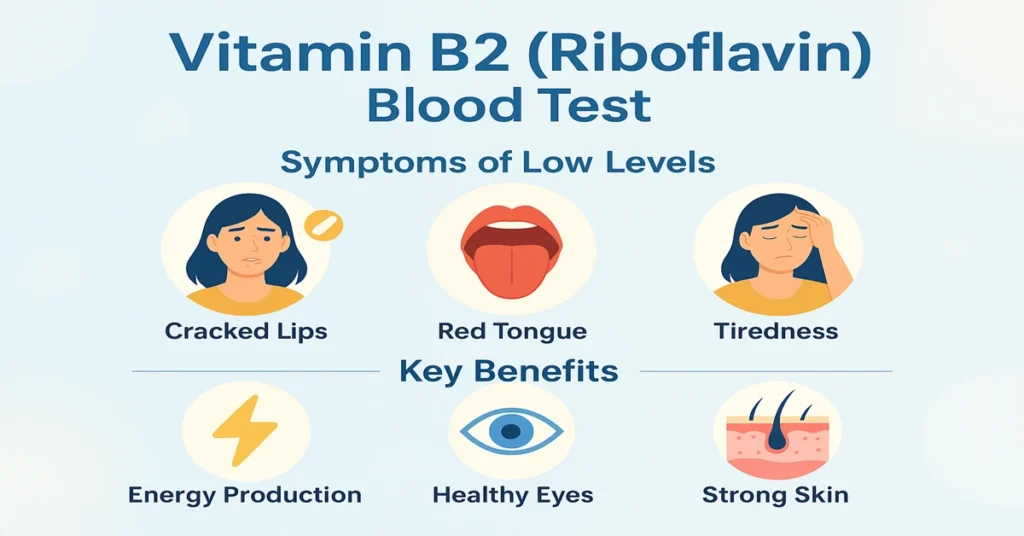
Riboflavin is required for the formation of key coenzymes that drive cellular energy generation. When levels are low, energy production becomes less efficient, which may be reflected as fatigue or reduced stamina.
Metabolism of Nutrients
Vitamin B2 helps the body process carbohydrates, proteins, and fats. This supports stable energy availability and effective nutrient utilization.
Antioxidant Support
Riboflavin plays a role in maintaining antioxidant systems within cells, helping protect tissues from oxidative stress and cellular damage.
Skin, Hair, and Eye Health
Adequate levels support the integrity of skin and mucous membranes and help maintain normal eye comfort and visual adaptation.
Red Blood Cell Formation
Vitamin B2 supports red blood cell production and assists normal iron metabolism, contributing to oxygen delivery throughout the body.
Nervous System Support
Riboflavin contributes to normal nerve function. When levels are reduced, symptoms involving sensory discomfort or nerve irritation may appear.
Causes of Low Vitamin B2 Levels (Deficiency)
Riboflavin deficiency, sometimes referred to as ariboflavinosis, usually develops due to reduced intake, impaired absorption, or increased metabolic demand.
Common Causes
Low dietary intake, chronic alcohol use, and digestive disorders that impair absorption are frequent contributors. Certain endocrine or metabolic conditions may alter nutrient handling, while long-term illness or increased physiological demand can further reduce levels. Riboflavin deficiency often occurs alongside other B-vitamin deficiencies because of shared dietary sources.
Symptoms of Low Vitamin B2 Levels
Vitamin B2 deficiency tends to affect tissues with rapid cell turnover and high metabolic activity.
Common findings include changes around the mouth and tongue, skin dryness or irritation, eye discomfort, and reduced energy levels. Some individuals may also notice sensory changes such as tingling or burning sensations. Symptoms often develop gradually and may overlap with those of other nutrient deficiencies.
Causes of High Vitamin B2 Levels
High riboflavin levels are uncommon. Because Vitamin B2 is water-soluble, excess amounts are readily excreted through urine.
Elevated levels are usually related to recent supplement use or high-dose multivitamin intake rather than underlying disease. Dietary intake alone does not lead to toxic accumulation.
Symptoms of High Vitamin B2 Levels
Vitamin B2 is considered non-toxic. The most noticeable effect of excess intake is a bright yellow discoloration of urine, which reflects normal excretion of unused riboflavin. This finding is harmless and not associated with adverse health effects.
Reference (Normal) Ranges
Reference ranges for riboflavin may vary slightly between laboratories depending on testing method.
Vitamin B2 (Riboflavin) levels are typically interpreted within established laboratory limits. Values below the lower range suggest reduced availability, particularly when consistent with clinical symptoms.
Sample Type and Test Information
Sample Type: Plasma or serum
Collection Tube: EDTA or plain tube (as per laboratory protocol)
Fasting Required: Usually not required
Testing Method: High-performance laboratory techniques such as HPLC or fluorometric assays
Blood collection follows standard procedures, and results are generally available within 24–48 hours.
Test Preparation
Special preparation is usually not necessary. Patients may be advised to pause vitamin supplements briefly before testing. Informing the healthcare provider about current medications, alcohol use, or chronic conditions helps ensure accurate interpretation.
When to Consult a Doctor
Medical review is appropriate if symptoms such as persistent mouth or tongue changes, eye irritation, fatigue, skin discomfort, or sensory symptoms continue. Individuals with digestive disorders, chronic illness, or restricted diets may also benefit from evaluation. Abnormal results may prompt further assessment of other B-vitamins or related nutritional markers.
Important Word Explanations
- Riboflavin: The scientific name for Vitamin B2
- Water-soluble: A vitamin that dissolves in water and is not stored long-term
- Ariboflavinosis: A condition caused by Vitamin B2 deficiency
- Glossitis: Inflammation or swelling of the tongue
- Photophobia: Increased sensitivity to light
- HPLC: A laboratory technique used for precise nutrient measurement
~END~
Related Posts
None found