
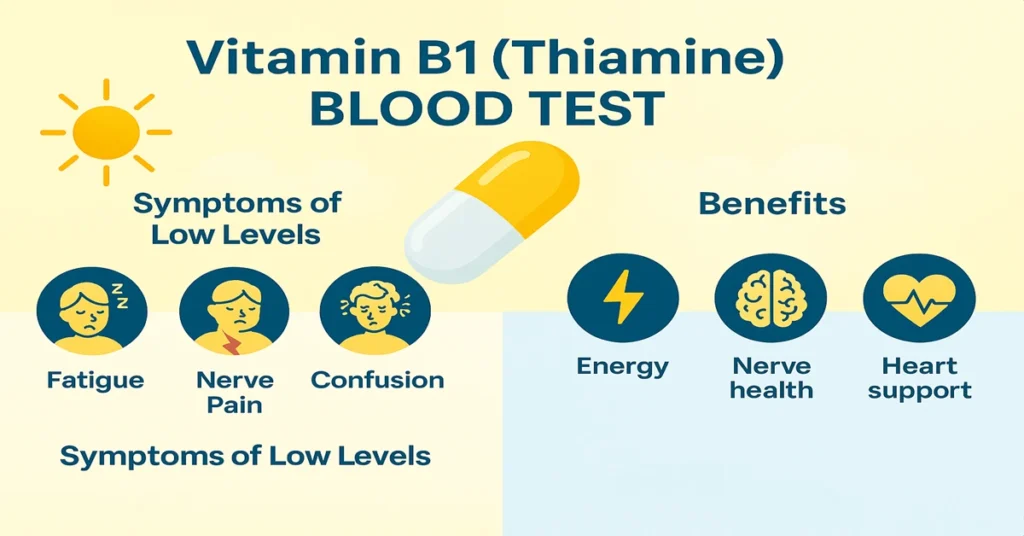
Vitamin B1 (Thiamine) Test – Full Guide for Deficiency, Causes, Symptoms & Normal Ranges
Introduction
The Vitamin B1 test, also called the thiamine test, measures the level of Vitamin B1 in the blood. Thiamine is a water-soluble vitamin that plays a central role in energy metabolism, nerve function, brain activity, and muscle performance. Because the body stores only small amounts, a regular supply is required to maintain normal function.
In clinical practice, this test is often requested when symptoms such as persistent fatigue, nerve discomfort, muscle weakness, poor nutrition, or long-standing illness are present. It is also commonly used when alcohol use, digestive disorders, or absorption problems are suspected. Measuring Vitamin B1 helps identify deficiencies early, before neurological or cardiovascular complications become more pronounced.
What is Vitamin B1 (Thiamine)?
Vitamin B1 is part of the B-complex family and is essential for converting carbohydrates into usable energy. It acts as a cofactor for enzymes involved in glucose metabolism, making it particularly important for organs with high energy demands, such as the brain, heart, and muscles.
Because thiamine is water-soluble, excess amounts are not stored for long periods and are excreted through urine. This limited storage capacity explains why deficiency can develop relatively quickly when intake or absorption is reduced. Adequate levels support nerve signaling, muscle coordination, and overall metabolic balance.
Where is Vitamin B1 Obtained or Produced in the Body?
The human body does not produce Vitamin B1 in meaningful amounts. While intestinal bacteria may synthesize very small quantities, this contribution is not sufficient to meet daily requirements.
Most thiamine comes from dietary sources. After absorption in the intestine, it is transported through the bloodstream to tissues with high energy needs, particularly the nervous system and heart. Because thiamine turnover is continuous, consistent intake is important to maintain stable levels.
Main Functions and Importance of Vitamin B1
Vitamin B1 supports several key physiological processes that are closely linked to energy use and nerve health.
Energy Production
Thiamine is required for efficient conversion of carbohydrates into energy. When levels are low, cells struggle to generate adequate energy, which can present as generalized weakness or fatigue.
Nervous System Protection
Vitamin B1 supports normal nerve conduction and communication between nerve cells. It helps maintain nerve structure and function, which is why deficiency often affects sensation, coordination, and reflexes.
Muscle and Heart Support
Adequate thiamine levels are important for muscle contraction and cardiac function. Reduced availability can affect muscle strength and, in more advanced cases, cardiac performance.
Brain and Cognitive Health
The brain relies heavily on glucose metabolism. Thiamine supports concentration, memory, and mental clarity, and deficiency may lead to confusion or slowed thinking.
Digestive and Appetite Regulation
Vitamin B1 contributes to normal digestive function and appetite regulation, supporting effective nutrient utilization.
Causes of Low Vitamin B1 Levels (Deficiency)
Vitamin B1 deficiency usually develops due to reduced intake, impaired absorption, or increased demand.
Common Causes
Poor nutrition, chronic alcohol use, and prolonged gastrointestinal conditions are frequent contributors. Alcohol interferes with thiamine absorption and storage, making deficiency more likely over time. Long-term diarrhea, malabsorption disorders, and increased physiological demand during illness or pregnancy can also lower levels.
From a laboratory perspective, deficiency is often suspected when symptoms align with risk factors rather than from diet history alone.
Symptoms of Low Vitamin B1 Levels
Because thiamine supports the brain, nerves, and muscles, symptoms may involve multiple systems.
Early or Moderate Deficiency
Individuals may notice tiredness, reduced appetite, sensory changes such as tingling or numbness, muscle weakness, or subtle cognitive changes.
Severe Thiamine Deficiency
More advanced deficiency can lead to recognized clinical syndromes affecting the nerves or heart. Neurological involvement may present with coordination difficulties, confusion, or memory disturbance, while cardiac involvement can affect circulation and fluid balance.
Untreated, severe deficiency may result in lasting neurological effects, which is why early identification is important.
Causes of High Vitamin B1 Levels
Elevated Vitamin B1 levels are uncommon. Because thiamine is water-soluble, excess amounts are typically eliminated through urine.
Higher levels may be observed in individuals using high-dose supplements or injectable forms. In most cases, elevated results reflect recent intake rather than toxicity.
Symptoms of High Vitamin B1 Levels
Vitamin B1 toxicity is rare. When symptoms occur, they are usually mild and nonspecific, such as restlessness, headache, or skin reactions. These findings are uncommon and generally associated with excessive supplementation rather than dietary intake.
Reference (Normal) Ranges
Reference ranges may vary slightly between laboratories depending on testing method.
Vitamin B1 (Thiamine) levels are generally interpreted within established laboratory ranges. Values below the lower limit suggest reduced availability, while higher values are most often linked to supplementation rather than disease.
Sample Type and Test Information
Sample Type: Plasma (blood)
Tube Used: EDTA whole blood tube
Fasting Required: Usually not required
Test Method: High-performance laboratory techniques such as HPLC or immunoassay
Blood collection follows standard procedures, and results are typically available within 24–48 hours.
Test Preparation
Special preparation is usually not required. Patients may be advised to pause vitamin supplements briefly before testing. Informing the clinician about medication use, alcohol intake, or ongoing illness helps ensure accurate interpretation of results.
When to Consult a Doctor
Medical consultation is appropriate if symptoms such as persistent fatigue, muscle weakness, sensory changes, confusion, or heart-related complaints occur, particularly in individuals with nutritional risk factors or alcohol use. Abnormal results may prompt evaluation of other B-vitamins or related metabolic factors to provide a complete picture.
Important Word Explanations
- Thiamine: The scientific name for Vitamin B1, essential for energy and nerve function
- Water-soluble: A vitamin that dissolves in water and is not stored long-term
- Peripheral Neuropathy: Nerve damage causing tingling, numbness, or pain in the limbs
- Beriberi: A condition caused by severe thiamine deficiency affecting nerves or the heart
- Wernicke–Korsakoff Syndrome: A neurological disorder linked to prolonged thiamine deficiency, often associated with alcohol misuse
- EDTA Tube: A blood collection tube that prevents clotting during plasma testing
~END~
Related Posts
None found
I like your blog.