
Uric Acid Test: Meaning, Causes, Symptoms, Normal Range, and Complete Guide
Introduction
Uric acid is a natural waste substance produced during normal metabolism in the body. It forms when compounds called purines break down. Purines are present in body cells and also enter the body through certain foods. Once formed, uric acid is carried in the blood and removed mainly by the kidneys through urine.
Most of the time, this process stays well balanced. Problems begin only when uric acid levels rise above normal or fall unusually low. Such imbalances can affect joints, kidneys, and overall metabolic health. Because of this, the Uric Acid Test is commonly used in routine checkups and in the evaluation of joint pain, kidney problems, and metabolic conditions. This article explains the test in a calm, practical way, similar to how it is discussed in clinical settings.
What is Uric Acid?
Uric acid is a waste product formed during the breakdown of purines from food intake and normal cell turnover. After formation, it enters the bloodstream and is transported to the kidneys. Healthy kidneys filter uric acid efficiently and remove it through urine, while a small portion is eliminated through the intestines.
In healthy individuals, production and removal remain balanced. When this balance is disturbed—either due to increased production or reduced excretion—uric acid levels may change. Persistently high levels are clinically important because they can be associated with joint and kidney complications, which is why monitoring uric acid plays an important role in medical evaluation.
Where is Uric Acid Produced in the Body?
Uric acid is produced mainly in the liver as part of normal metabolic activity. The process occurs in a sequence:
Purines from food and damaged or aging cells are broken down.
Uric acid is formed as a final byproduct.
It enters the bloodstream and circulates throughout the body.
The kidneys filter it from the blood and remove it through urine.
If the liver produces excess uric acid or the kidneys are unable to eliminate it efficiently, blood levels rise. Understanding this pathway helps doctors determine whether an abnormal result is more likely related to production or excretion.
Main Functions and Importance of Uric Acid
Uric acid does not serve a major functional role in the body. In small amounts, it has mild antioxidant properties and may contribute modestly to cellular protection. However, these effects are limited.
From a clinical perspective, the importance of uric acid lies in what happens when levels become elevated. Excess uric acid can form crystals, particularly in joints and kidneys, leading to inflammation and structural damage over time. Because of this, maintaining uric acid within the normal range is important for joint comfort, kidney health, and long-term metabolic stability.
Causes of Low Uric Acid Levels (Hypouricemia)
Low uric acid levels are relatively uncommon and are usually discovered incidentally during blood testing. In most cases, they are not harmful by themselves but may reflect underlying medical or metabolic factors.
Lower levels may be seen in certain liver conditions, nutritional deficiencies, or situations where blood dilution occurs. Some kidney-related disorders affect how uric acid is handled, and certain medications can also reduce levels. Low uric acid rarely causes problems on its own but can provide useful clues when interpreted alongside other clinical findings.
Symptoms of Low Uric Acid Levels
Low uric acid typically does not cause specific symptoms. When symptoms are present, they usually relate to the underlying condition rather than the uric acid level itself.
These may include general fatigue, weakness, or signs related to liver or metabolic disorders. In many people, low uric acid is found only during routine testing and does not require direct intervention.
Causes of High Uric Acid Levels (Hyperuricemia)
High uric acid levels are far more common and usually occur when production exceeds the body’s ability to remove it, or when kidney excretion is reduced. This imbalance can develop gradually and remain unnoticed for long periods.
Common contributing factors include reduced kidney filtration, increased cell turnover, dehydration, and metabolic conditions. Dietary patterns, body weight, and certain medical conditions also influence uric acid levels. Persistent elevation is clinically important because it increases the risk of joint and kidney-related complications over time.
Symptoms of High Uric Acid Levels
Many individuals with high uric acid have no symptoms initially. Problems usually arise when uric acid crystals begin to deposit in tissues.
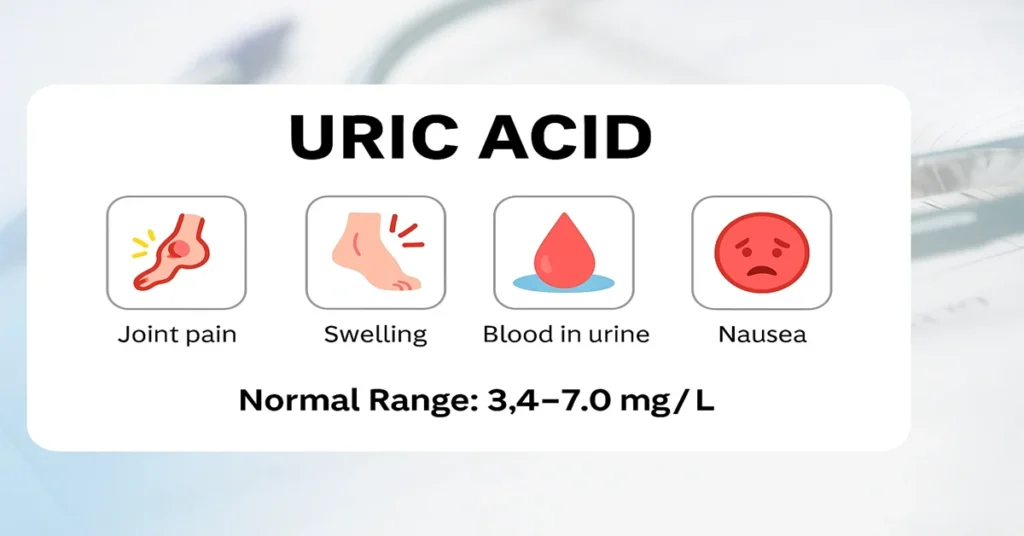
Joint involvement may present as sudden, intense pain, swelling, redness, and warmth, most often affecting a single joint. Kidney involvement may cause pain related to stone formation or changes in urination. Long-standing elevation can silently affect kidney function even before symptoms become obvious.
Reference (Normal) Ranges
Normal uric acid values vary slightly by age, sex, and laboratory method. Common reference ranges include:
Men: 3.4 – 7.0 mg/dL
Women: 2.4 – 6.0 mg/dL
Children: 2.0 – 5.5 mg/dL
Men generally have slightly higher levels due to differences in muscle mass and hormonal influences. Results are always interpreted in clinical context rather than in isolation.
Sample Type
Sample Type: Serum (blood)
Tube Used: Red Top (Plain Tube)
The test is frequently included in routine health checkups, kidney panels, and joint-related evaluations.
Test Preparation
Preparation for a uric acid test is usually simple. Normal hydration is important, as dehydration can temporarily raise levels. Doctors may advise avoiding alcohol before testing and reviewing current medications that could influence results.
Fasting is not always required, but consistency in routine and diet before testing helps produce more reliable results. Any specific preparation instructions should be followed as advised by the healthcare provider.
When to Consult a Doctor
Medical consultation is recommended if uric acid levels remain persistently high, if joint pain or swelling develops, or if there are symptoms suggestive of kidney involvement.
People with metabolic conditions, kidney disease, or a history of gout often require periodic monitoring. Early evaluation helps reduce the risk of long-term joint damage and kidney complications.
Important Word Explanations
- Purines: Natural compounds found in body cells and certain foods that break down into uric acid.
- Hyperuricemia: Higher-than-normal uric acid levels in the blood.
- Hypouricemia: Lower-than-normal uric acid levels.
- Gout: A form of arthritis caused by uric acid crystal deposition in joints.
- Serum: The clear liquid portion of blood used for laboratory testing.
- Metabolic Disorder: A condition affecting how the body processes nutrients, energy, or waste products.
~END~