
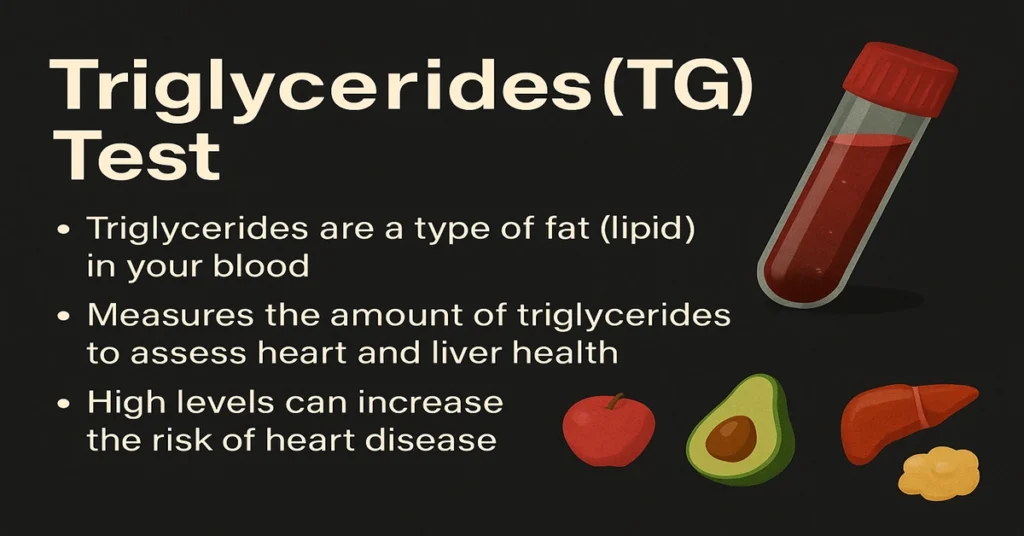
Triglycerides (TG) Test: Meaning, Functions, Normal Range, High & Low Levels, Causes, Symptoms, and Complete Medical Guide
Introduction
Triglycerides (TG) are one of the main forms of fat present in the bloodstream and serve as the body’s primary energy reserve. Whenever the body receives more energy than it immediately needs, the excess is converted into triglycerides and stored in fat tissue. Between meals, during fasting, or when energy demand increases, these stored triglycerides are released and used as fuel.
From a clinical perspective, triglycerides are essential, but their balance is important. Persistently high levels are associated with cardiovascular strain, fatty liver changes, and pancreatic stress, while unusually low levels may point toward metabolic, hormonal, or absorption-related concerns.
The Triglycerides Test is commonly included in a lipid profile and helps doctors understand how the body handles fat and energy over time.
What Are Triglycerides?
Triglycerides are lipid molecules made up of three fatty acids attached to a glycerol backbone. They circulate in the blood and reflect how the body processes excess calories and stores energy.
In routine practice, triglyceride levels are reviewed alongside cholesterol values. Elevated triglycerides, particularly when seen with other lipid abnormalities, can signal an increased metabolic or cardiovascular risk rather than an isolated problem.
Where Are Triglycerides Produced in the Body?
Triglycerides originate from both internal production and dietary absorption.
The liver plays a central role by converting excess energy into triglycerides and releasing them into the bloodstream packaged within lipoproteins. Fat tissue acts as the main storage site, holding triglycerides until the body requires energy.
Dietary fats are also absorbed after meals and transported through the bloodstream before being stored or used. In healthy metabolism, these processes remain balanced. When regulation is disturbed, triglyceride levels may rise or fall beyond the normal range.
Main Functions and Importance of Triglycerides
Triglycerides support several essential physiological functions. They provide long-term energy storage and supply fuel when glucose availability is reduced. They also assist in the absorption and transport of fat-soluble vitamins and contribute to normal hormonal and metabolic balance.
Clinically, triglyceride measurement does not assess energy alone. Instead, it offers insight into how efficiently the body manages fat, sugar, and overall metabolism.
Causes of Low Triglyceride Levels (Hypotriglyceridemia)
Low triglyceride levels are uncommon and often discovered incidentally. When present, they usually reflect increased energy use, reduced production, or impaired absorption rather than a primary disease of fat metabolism.
Such findings may be seen in conditions associated with high metabolic activity, reduced nutrient intake, chronic digestive disorders, liver dysfunction, or certain inherited metabolic patterns. Medication effects can also contribute. Doctors interpret low values cautiously and in relation to the full clinical picture.
Symptoms of Low Triglycerides
Low triglycerides typically do not cause direct symptoms. If levels are markedly reduced, symptoms usually relate to the underlying condition rather than the triglyceride value itself. These may include low energy, weight changes, or signs of nutrient imbalance, depending on the cause.
Causes of High Triglycerides (Hypertriglyceridemia)
High triglycerides are frequently encountered in clinical practice. They often reflect excess energy availability, reduced fat clearance, or altered metabolic regulation.
Elevated levels may be seen in association with metabolic disorders, hormonal imbalances, organ dysfunction, inherited lipid conditions, or medication effects. In many cases, triglycerides rise gradually and remain unnoticed unless tested.
Doctors focus on patterns rather than a single value, especially when triglycerides are elevated along with other lipid or glucose abnormalities.
Symptoms of High Triglycerides
Moderately elevated triglycerides usually cause no symptoms. This is why they are often detected during routine screening.
Very high levels, however, may place stress on organs such as the pancreas or liver. In such situations, symptoms arise from organ involvement rather than from triglycerides themselves. These findings require prompt clinical evaluation.
Reference (Normal) Ranges for Triglycerides
Triglyceride values are generally interpreted as:
- Below 150 mg/dL: Normal
- 150–199 mg/dL: Borderline high
- 200–499 mg/dL: High
- Above 500 mg/dL: Very high
Doctors assess these values in combination with cholesterol levels, blood sugar status, age, and overall risk profile rather than in isolation.
Sample Type and Collection
Sample Type: Serum
Tube Used: Red-top (plain) tube
Triglyceride testing is usually performed as part of a complete lipid profile using a routine venous blood sample.
Test Preparation
Fasting is typically required to obtain accurate triglyceride measurements, as levels can rise temporarily after meals. Alcohol intake and certain medications may influence results, so doctors review these factors when interpreting values.
Preparation instructions are usually provided when the test is scheduled, especially if it is part of a broader metabolic assessment.
When to Consult a Doctor
Medical review is advised when triglyceride levels remain elevated or unusually low on repeated testing, or when they are seen alongside other metabolic abnormalities. Individuals with diabetes, thyroid disorders, liver conditions, or a strong family history of cardiovascular disease often benefit from regular monitoring.
Doctors focus on trends over time and the overall metabolic context rather than reacting to a single result.
Important Word Explanations
- Lipid: A group of fat-based substances used for energy storage and cell structure.
- Pancreatitis: Inflammation of the pancreas, which may occur with very high triglyceride levels.
- Xanthomas: Fat-rich deposits under the skin associated with severe lipid disorders.
- Hypertriglyceridemia: Persistently elevated triglyceride levels.
- Hypotriglyceridemia: Lower-than-normal triglyceride levels.
~END~
whoah this weblog is fantastic i like studying your posts.
Stay up the great work! You know, lots of people are hunting round for this info, you can
help them greatly.