
Transferrin Test: Meaning, High & Low Levels, Normal Range, Symptoms, and Complete Guide
Overview
The Transferrin Test is a blood test that measures the level of transferrin, a protein produced by the liver that plays a central role in iron transport. Transferrin acts as a controlled carrier, binding iron absorbed from the intestine and delivering it safely to tissues such as the bone marrow, liver, and muscles, where iron is either used or stored.
Because transferrin responds directly to changes in iron availability and liver function, this test is particularly useful when evaluating iron deficiency, iron overload, anemia, chronic inflammatory states, and liver-related conditions. In routine practice, transferrin is rarely assessed in isolation and is commonly interpreted alongside serum iron, ferritin, TIBC, and transferrin saturation to build a complete picture of iron metabolism.
What is Transferrin?
Transferrin is the main iron-binding protein circulating in the blood. Its primary function is to bind iron securely and transport it to tissues that require it for essential processes such as red blood cell production and energy metabolism.
Free iron in the bloodstream can be harmful, as it promotes oxidative damage. Transferrin prevents this by tightly regulating iron transport. When iron levels are low, transferrin production increases to improve iron delivery. When iron levels are high, production decreases to limit further iron transport. This adaptive response makes transferrin a sensitive indicator of iron balance.
Where is Transferrin Produced in the Body?
Transferrin is synthesized exclusively by the liver. Its production is influenced by both iron status and overall protein metabolism.
When iron stores are reduced, the liver increases transferrin synthesis to maximize iron transport. When iron stores are excessive or liver function is impaired, transferrin production may fall. As a result, liver disorders, nutritional status, and chronic illness can all influence transferrin levels.
Main Functions and Importance of Transferrin
Binds and Transports Iron
Transferrin binds iron absorbed from the intestine and transports it safely through the bloodstream. This controlled transport prevents iron from circulating freely, where it could damage tissues.
Delivers Iron to Essential Organs
Iron carried by transferrin is delivered to the bone marrow for hemoglobin production, to the liver for storage, and to muscles and other tissues where iron supports metabolic activity.
Maintains Iron Balance
By adjusting its concentration in response to iron availability, transferrin helps maintain a stable iron balance, reducing the risk of both deficiency and overload.
Prevents Iron Toxicity
Transferrin limits the presence of unbound iron, thereby reducing oxidative stress and protecting cells from iron-related damage.
Supports Red Blood Cell Production
Adequate transferrin is necessary for efficient hemoglobin synthesis. Reduced transferrin availability can impair red blood cell formation, contributing to anemia.
Overall, transferrin functions as a regulated transport system that ensures iron reaches the right tissues in the right amount.
Causes of Low Transferrin Levels
Low transferrin levels usually reflect reduced protein production or a state in which iron transport demand is low.
Common Causes
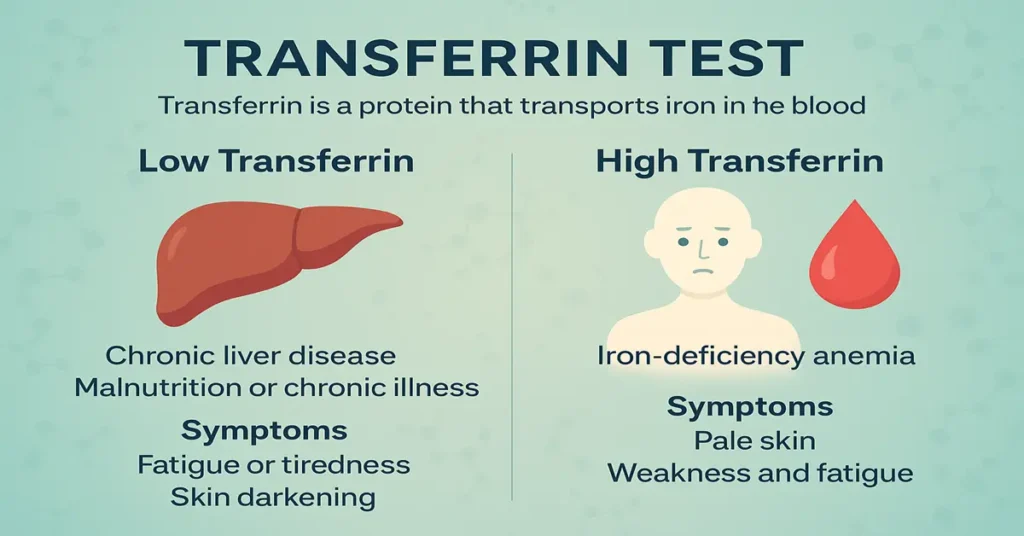
Low transferrin is commonly seen in chronic liver disease, where protein synthesis is impaired, and in conditions associated with iron overload, where the body reduces transferrin production. Chronic inflammation, kidney-related protein loss, malnutrition, and certain malignancies may also lower transferrin levels.
Symptoms of Low Transferrin
Low transferrin itself does not cause symptoms. Any symptoms present are typically related to the underlying condition rather than the transferrin level alone.
Patients may experience fatigue, joint discomfort, abdominal symptoms, or signs of liver dysfunction. In chronic inflammatory states, symptoms may be subtle or nonspecific, and laboratory testing often provides the first indication of abnormality.
Causes of High Transferrin Levels
High transferrin levels usually indicate that the body is responding to reduced iron availability. In this situation, the liver increases transferrin production to enhance iron transport efficiency.
Common Causes
High transferrin is most frequently associated with iron deficiency, increased iron requirements, or ongoing blood loss. It may also be seen in certain hormonal states or during recovery from nutritional deficiency.
Symptoms of High Transferrin
High transferrin generally reflects low iron availability, and symptoms tend to mirror those seen in iron deficiency states.
These may include persistent tiredness, reduced exercise tolerance, pale appearance, breathlessness with mild activity, and other nonspecific symptoms related to reduced oxygen delivery. Symptoms typically develop gradually rather than suddenly.
Reference Ranges for Transferrin
Reference ranges may vary slightly between laboratories, but commonly used values include:
- Transferrin: 200 – 360 mg/dL
- High Transferrin: Above 360 mg/dL
- Low Transferrin: Below 200 mg/dL
Results are always interpreted in conjunction with serum iron, ferritin, and transferrin saturation to avoid misclassification.
Sample Type and Test Information
- Sample Type: Serum (blood sample)
- Tube Used: Red Top (Plain Tube)
- Fasting: 8–12 hours recommended when combined with iron studies
The test requires a small blood sample and is commonly included as part of a broader iron evaluation panel.
Test Preparation
For optimal accuracy, fasting is usually recommended when transferrin is tested alongside iron studies. Temporary avoidance of iron-containing supplements may also be advised.
Morning samples are preferred, as iron-related markers can fluctuate throughout the day. Hormonal status and pregnancy should be communicated to the healthcare provider, as these can influence transferrin levels.
When to Consult a Doctor
Medical review is recommended if transferrin levels are persistently abnormal or if symptoms such as ongoing fatigue, weakness, breathlessness, joint discomfort, or signs of liver dysfunction are present.
Abnormal transferrin values often point toward iron deficiency, iron overload disorders, chronic inflammatory states, liver disease, or nutritional imbalance. Further testing is usually required to clarify the underlying cause.
Important Word Explanations
Transferrin
A liver-produced protein responsible for transporting iron in the bloodstream.
Iron Deficiency Anemia
A condition caused by insufficient iron, leading to reduced hemoglobin and impaired oxygen delivery.
Hemochromatosis
A genetic disorder characterized by excessive absorption and storage of iron.
Ferritin
A protein that stores iron and reflects total body iron reserves.
Pica
Craving for non-food substances, often associated with iron deficiency.
Serum
The liquid portion of blood used for laboratory testing after clotting.
~END~
Related Posts
None found