
Total Protein Test: Meaning, Normal Range, High & Low Levels, Causes, Symptoms, and Complete Medical Guide
Introduction
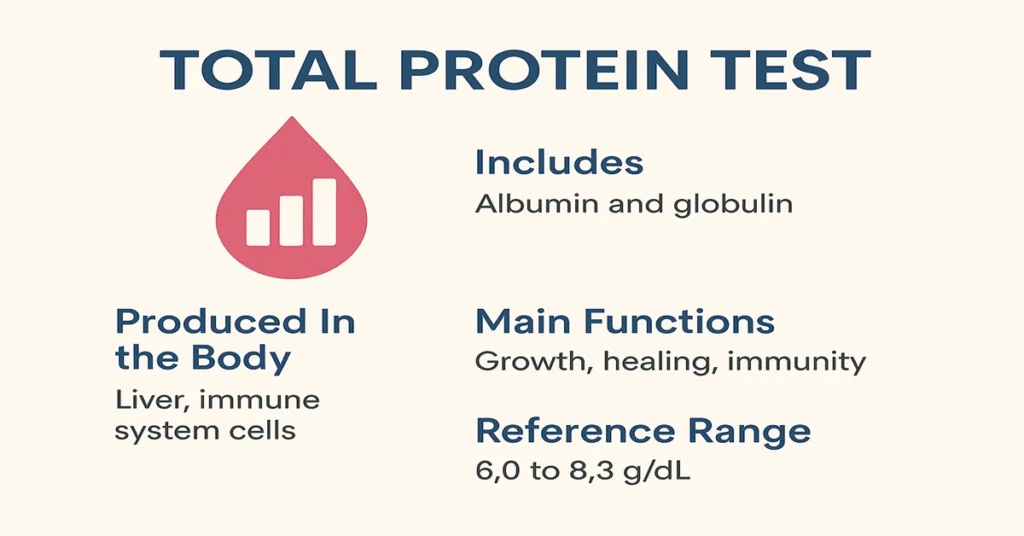
Proteins are fundamental to how the body functions on a daily basis. They support muscle structure, immunity, fluid balance, healing, and many metabolic activities that usually go unnoticed until something goes wrong. The Total Protein Test is a simple blood test that gives an overall picture of how well the body is maintaining this balance.
Rather than looking at a single protein, this test measures the combined level of all major proteins circulating in the blood, mainly albumin and globulins. Changes in total protein levels often reflect issues related to the liver, kidneys, immune system, long-term illness, or nutritional status. For this reason, the test is commonly included in routine health checkups and broader panels.
What Is Total Protein?
Total protein represents the sum of all proteins present in the blood plasma. In clinical practice, the value mainly reflects two broad groups of proteins that serve different but complementary roles.
Albumin is the most abundant protein in the bloodstream. It helps maintain fluid balance inside blood vessels and acts as a carrier for hormones, vitamins, medications, and various small molecules. Because albumin is produced by the liver, its level also gives indirect information about liver function and overall nutritional state.
Globulins include a wide range of proteins, such as antibodies and transport proteins. These are closely linked to immune function and inflammation. Together, albumin and globulins keep the internal environment stable and responsive to illness or stress.
When total protein moves outside the normal range, doctors usually look deeper into which component is responsible for the change.
Where Is Total Protein Produced in the Body?
Proteins in the blood are produced and maintained by different organs, depending on their type and function.
Albumin Production
Albumin is synthesized almost entirely in the liver. Because of this, reduced albumin levels often raise questions about liver health, long-term illness, or nutritional adequacy.
Globulin Production
Globulins are partly produced in the liver, but many are formed by cells of the immune system, especially plasma cells and lymphocytes. These proteins increase or decrease depending on immune activity and inflammation.
The body constantly breaks down and replaces proteins, maintaining a dynamic balance that adapts to health and disease.
Functions and Importance of Total Protein
Proteins are active participants in nearly every biological process, not just passive building blocks. Measuring total protein provides a broad overview of several key functions.
Maintaining Fluid Balance
Albumin helps keep fluid within blood vessels. When protein levels fall, fluid can leak into surrounding tissues, leading to swelling.
Transport of Essential Substances
Many substances in the blood rely on proteins for transport, including hormones, vitamins, minerals, fatty acids, medications, and metabolic waste.
Immune Support
Globulins include antibodies that protect the body against infections and help regulate immune responses.
Tissue Repair and Healing
Proteins are essential for rebuilding tissues after injury, surgery, or illness.
Enzyme and Hormone Activity
A large number of enzymes and hormones are protein-based, making proteins central to metabolism and regulation.
Because these roles overlap with many organ systems, total protein serves as a useful general indicator of health.
Why Doctors Check Total Protein
Doctors use the total protein test as a screening and monitoring tool. Abnormal values may point toward liver or kidney problems, chronic inflammation, immune disorders, nutritional deficiencies, or certain blood-related conditions. It often helps guide decisions about further testing rather than standing alone as a diagnosis.
Causes of Low Total Protein (Hypoproteinemia)
Low total protein usually reflects an imbalance between protein production, loss, or absorption.
Liver Conditions
Since the liver produces albumin, chronic liver disease can reduce protein synthesis over time.
Kidney Disorders
Damaged kidneys may allow proteins to leak into urine, lowering blood protein levels.
Poor Nutritional Intake
Long-term inadequate protein intake can gradually reduce total protein levels.
Digestive and Absorption Disorders
Conditions affecting the gut can interfere with protein absorption, leading to lower circulating levels.
Severe Illness or Injury
Major burns, prolonged illness, or significant blood loss can increase protein loss and breakdown.
In most cases, doctors look at trends and associated findings rather than a single value.
Symptoms of Low Protein Levels
Symptoms depend on how low the protein level is and how long it has been low. Common clinical features may include swelling in the legs or face, fatigue, reduced muscle strength, slow healing, and increased susceptibility to infections. These symptoms usually reflect the underlying condition rather than the protein level alone.
Causes of High Total Protein (Hyperproteinemia)
High total protein is often related to changes in blood concentration or increased production of certain proteins.
Dehydration
Reduced fluid volume can concentrate proteins, making levels appear higher.
Chronic Inflammation or Infection
Long-standing immune activation can increase globulin levels.
Blood and Immune-Related Conditions
Some disorders lead to excessive production of specific proteins, raising total protein levels.
Because total protein is a combined value, further testing is usually required to identify the exact cause.
Symptoms of High Protein Levels
High protein itself does not cause symptoms. Any symptoms present are related to the underlying condition, such as fatigue, bone discomfort, frequent infections, or weight changes. Doctors focus on identifying the source rather than the number alone.
Reference Range (Normal Values)
In most laboratories, the typical adult reference range for total protein is:
6.0 – 8.3 g/dL
Ranges may vary slightly depending on the laboratory and testing method. Results are always interpreted alongside albumin levels, globulin levels, and clinical findings.
Sample Type and Collection
The test is performed on a routine blood sample.
Sample Type: Serum
Tube Used: Red-top (plain) tube
Blood is drawn from a vein, allowed to clot, and the serum is analyzed in the laboratory.
Test Preparation
For most individuals, no special preparation is required.
- Fasting is usually not necessary
- Normal fluid intake is encouraged
- Medications should be disclosed to the doctor, as some can influence protein levels
If the test is part of a larger liver or kidney panel, short fasting may be advised.
When to Consult a Doctor
Medical advice should be sought if total protein levels remain abnormal on repeat testing or if they are accompanied by symptoms such as persistent swelling, fatigue, frequent infections, unexplained weight loss, or signs of dehydration. Early evaluation helps clarify whether the change is temporary or linked to an underlying condition.
Important Word Explanations
- Albumin: The main blood protein produced by the liver; helps maintain fluid balance and transport substances.
- Globulins: A group of proteins, including antibodies, involved in immune function and transport.
- Hypoproteinemia: Lower-than-normal total protein levels in the blood.
- Hyperproteinemia: Higher-than-normal total protein levels, often related to dehydration or increased protein production.
- Multiple Myeloma: A blood disorder associated with abnormal protein production.
- Edema: Swelling caused by fluid accumulation in body tissues.
~END~