
Total Cholesterol (TC) Test: Meaning, Production, Functions, High & Low Levels, Causes, Symptoms, and Complete Guide
Introduction
Cholesterol is a natural fat-like substance that the body needs to function normally. Although it is often discussed in the context of heart disease, cholesterol itself is not harmful. In fact, every cell in the body depends on it for structure and stability. Problems arise only when cholesterol levels move outside the healthy range and remain there over time.
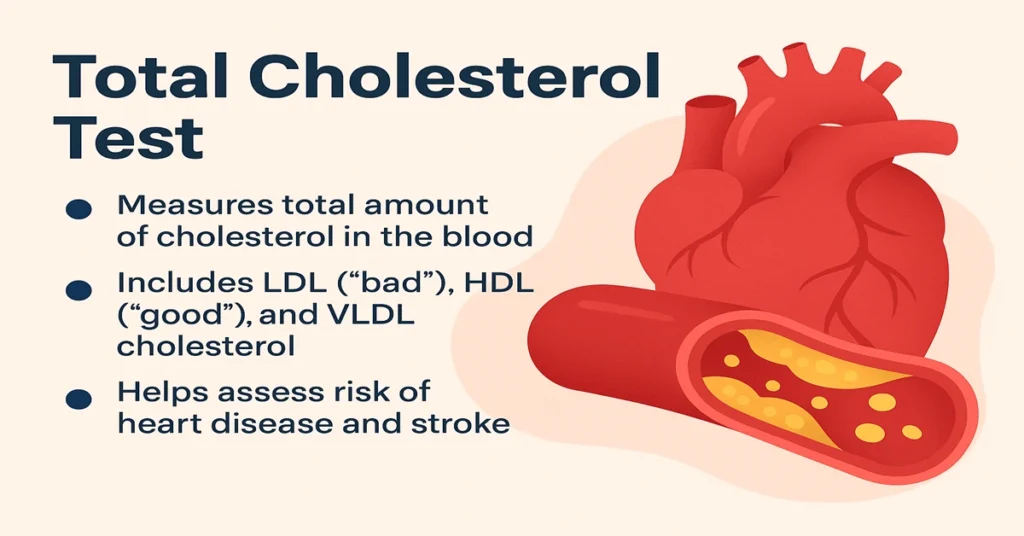
The Total Cholesterol (TC) Test measures the overall amount of cholesterol circulating in the blood. It is commonly included in a lipid profile and is used as an initial screening tool to assess cardiovascular risk. In clinical practice, this test helps doctors decide whether further evaluation of individual cholesterol components is needed.
This guide explains the Total Cholesterol test in a clear, practical way, similar to how it is reviewed during routine consultations.
What Is Total Cholesterol (TC)?
Total Cholesterol represents the combined amount of cholesterol carried by different lipoproteins in the blood. Cholesterol cannot circulate freely, so it travels attached to proteins, forming lipoprotein particles.
These include low-density lipoproteins (LDL), high-density lipoproteins (HDL), very-low-density lipoproteins (VLDL), and smaller remnant particles. The TC value provides a broad snapshot rather than detailed risk assessment on its own.
Clinically, doctors use total cholesterol as a starting point. If the value is abnormal, attention then shifts to LDL, HDL, and triglycerides to understand the pattern behind the number.
Where Is Cholesterol Produced in the Body?
Cholesterol comes from both internal production and external intake, but the body tightly controls this balance.
Most cholesterol is produced internally, mainly by the liver. Smaller amounts are also made by the intestines, adrenal glands, and reproductive organs. The liver acts as the main regulator, adjusting production based on the body’s needs.
A smaller portion of cholesterol comes from food sources. While diet contributes, genetics, liver function, hormonal balance, and metabolism usually play a much larger role in determining overall cholesterol levels.
Functions and Importance of Cholesterol
Cholesterol serves several essential roles that are often overlooked when it is discussed only as a risk factor.
It is a key structural component of cell membranes, helping cells maintain flexibility and integrity. Cholesterol is also the raw material for many hormones that regulate metabolism, stress responses, and reproductive health.
In addition, cholesterol is required for vitamin D formation and for the production of bile acids, which are necessary for fat digestion and absorption of fat-soluble vitamins. Because of these roles, cholesterol is vital for survival. The goal is balance, not elimination.
Causes of Low Total Cholesterol (Hypocholesterolemia)
Low total cholesterol is less common and is usually discovered incidentally during testing for other reasons. When present, it may signal reduced production or increased breakdown rather than a primary cholesterol disorder.
It can be seen in situations such as poor nutritional intake, overactive thyroid function, chronic liver conditions, prolonged infections, or certain inherited metabolic patterns. Occasionally, cholesterol levels may fall too low during intensive cholesterol-lowering therapy.
Doctors interpret low values carefully, especially if the patient has symptoms or other abnormal test results.
Symptoms of Low Cholesterol
Low cholesterol often causes no clear symptoms. When levels are significantly reduced for long periods, some individuals may experience low energy, mood changes, or hormonal disturbances. These effects are usually related to the underlying condition rather than the cholesterol level itself.
Because cholesterol plays a role in brain and nerve cell function, very low levels are evaluated in the context of overall health rather than treated as an isolated finding.
Causes of High Total Cholesterol (Hypercholesterolemia)
Elevated total cholesterol is far more common and is a major focus of cardiovascular risk assessment.
It often reflects increased LDL cholesterol, reduced HDL cholesterol, or a combination of both. Factors such as genetic predisposition, reduced metabolic clearance, hormonal imbalances, and certain medical conditions contribute significantly.
In clinical settings, doctors pay close attention to patterns. A mildly high total cholesterol may carry very different meaning depending on HDL levels, triglycerides, age, and other risk factors.
Symptoms of High Cholesterol
High cholesterol itself does not cause symptoms. This is why it is often referred to as a silent risk factor.
Physical signs usually appear only after years of elevated levels, when blood vessels are already affected. These may include chest discomfort, reduced blood flow to limbs, or visible cholesterol deposits in rare cases. Because symptoms appear late, routine testing plays a key preventive role.
Reference Ranges for Total Cholesterol
Total cholesterol values are generally interpreted as:
- Below 200 mg/dL: Desirable
- 200–239 mg/dL: Borderline high
- 240 mg/dL and above: High
Doctors do not rely on total cholesterol alone. It is always assessed alongside LDL, HDL, triglycerides, and individual risk factors to guide further evaluation.
Sample Type and Collection
Sample Type: Serum
Tube Used: Red-top (plain) tube
Blood is collected from a vein, usually as part of a lipid profile panel.
Test Preparation
For accurate results, fasting for several hours is often advised when total cholesterol is measured along with triglycerides. Alcohol intake before testing may affect lipid values.
Doctors also review medications that can influence cholesterol levels, as these may alter interpretation rather than reflect a true metabolic change.
When to Consult a Doctor
Medical consultation is recommended if total cholesterol is repeatedly elevated or unusually low, or if there is a strong family history of heart disease. Individuals with diabetes, hypertension, or other metabolic conditions benefit from regular lipid monitoring.
Rather than reacting to a single value, doctors focus on trends over time and the overall cardiovascular risk profile.
Important Word Explanations
- LDL: Cholesterol-carrying particle linked to plaque buildup in arteries.
- HDL: Cholesterol-carrying particle involved in removing excess cholesterol from circulation.
- VLDL: Lipoprotein primarily associated with triglyceride transport.
- Atherosclerosis: Gradual narrowing and stiffening of arteries due to plaque formation.
- Xanthomas: Cholesterol-rich deposits under the skin seen in severe lipid disorders.
- Xanthelasma: Yellowish cholesterol deposits around the eyelids.
~END~