
TIBC (Total Iron Binding Capacity) Test: Meaning, High & Low Levels, Symptoms, Normal Range, and Complete Guide
Overview
TIBC (Total Iron Binding Capacity) is a blood test that helps evaluate how efficiently iron is being transported in the bloodstream. Rather than measuring iron directly, this test looks at the blood’s capacity to bind iron, which depends mainly on a protein called transferrin produced by the liver.
In routine clinical practice, TIBC is rarely interpreted alone. It is used alongside serum iron, ferritin, and transferrin saturation to understand whether iron availability is adequate, reduced, or excessive. Together, these values help clarify conditions such as iron deficiency, iron overload, chronic inflammatory states, and liver-related disorders.
What Is TIBC?
TIBC stands for Total Iron Binding Capacity. It represents the maximum amount of iron that transferrin in the blood could bind if every binding site were filled.
From a practical viewpoint, TIBC reflects how “hungry” the blood is for iron:
- When iron is low, the body produces more transferrin, increasing TIBC.
- When iron is abundant or transferrin production is reduced, TIBC falls.
Because of this inverse relationship with iron stores, TIBC is a useful indicator of iron balance when interpreted in context.
Why TIBC Matters
TIBC helps clinicians understand how the body is responding to iron availability rather than just how much iron is present at a single moment.
When TIBC Is High
A high TIBC usually indicates that iron availability is low. In response, the liver increases transferrin production to capture as much iron as possible. This pattern is commonly seen in iron deficiency states.
When TIBC Is Low
A low TIBC suggests that transferrin production is reduced or that iron stores are already high. This is often observed in chronic illness, liver disorders, or iron overload conditions.
Main Functions and Importance of TIBC
Measures the Blood’s Iron-Carrying Capacity
TIBC reflects the total capacity of transferrin to carry iron. It does not measure stored iron but shows how much iron the bloodstream could transport if available.
Helps Assess Transferrin Availability
Because transferrin is made in the liver, TIBC also gives indirect information about liver protein production and nutritional status.
Diagnoses Iron-Related Disorders
When reviewed alongside serum iron and ferritin, TIBC helps distinguish between different causes of anemia and iron imbalance, such as iron deficiency, chronic disease–related anemia, or iron overload.
Gives a Complete Picture of Iron Metabolism
TIBC is a core part of iron studies and helps explain how iron is absorbed, transported, and regulated within the body rather than focusing on a single value.
Causes of Low TIBC
Low TIBC indicates a reduced ability of blood to bind additional iron. This usually reflects either excess circulating iron or decreased transferrin production.
Common Causes of Low TIBC
Conditions associated with reduced transferrin levels or high iron availability commonly show low TIBC. These include chronic liver disease, long-standing inflammatory conditions, protein loss through the kidneys, and iron overload states.
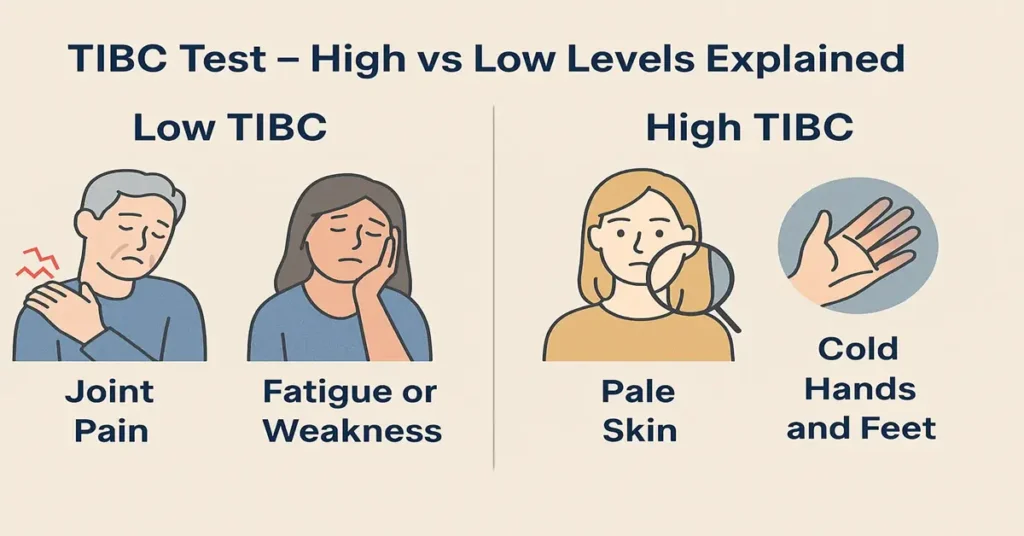
Symptoms of Low TIBC
Low TIBC itself does not cause symptoms. Any symptoms present are usually related to the underlying condition, such as chronic inflammation, liver dysfunction, or iron overload.
Patients may experience general tiredness, joint discomfort, abdominal symptoms, or may have no symptoms at all, particularly when changes develop slowly over time.
Causes of High TIBC
High TIBC typically reflects reduced iron availability. In this situation, the liver increases transferrin production in an effort to improve iron transport.
Common Causes of High TIBC
High TIBC is most often associated with iron deficiency, increased iron requirements, or ongoing blood loss. It may also be seen during recovery from poor nutrition or in certain hormonal states.
Symptoms of High TIBC
As high TIBC usually reflects low iron availability, symptoms tend to mirror those of iron deficiency. These may include fatigue, reduced exercise tolerance, breathlessness on exertion, and paleness.
Symptoms usually develop gradually, and laboratory testing often detects abnormalities before severe clinical signs appear.
Reference Ranges for TIBC
TIBC reference ranges may vary slightly between laboratories, but commonly used values are:
- Normal Range: 250 – 450 µg/dL
- High TIBC: Above 450 µg/dL
- Low TIBC: Below 250 µg/dL
These values are always interpreted together with serum iron, ferritin, and transferrin saturation for accurate clinical assessment.
Sample Type and Test Details
- Sample Type: Serum
- Tube Used: Red Top (Plain Tube)
- Fasting: Usually recommended for best accuracy
TIBC testing is commonly performed as part of a complete iron profile rather than as a standalone investigation.
How the Test Works
A blood sample is drawn from a vein and processed in the laboratory. The analysis determines how much iron is bound to transferrin and calculates the total binding capacity.
The result reflects transferrin activity rather than iron storage and is therefore interpreted alongside other iron markers.
Test Preparation
Fasting helps reduce short-term fluctuations in iron levels. Patients are usually advised to temporarily avoid iron supplements and inform the healthcare provider about ongoing medications, as some drugs can influence iron-related measurements.
Morning samples are preferred because iron levels can vary throughout the day.
When to Consult a Doctor
Medical review is advised if TIBC results are persistently abnormal or if symptoms such as ongoing fatigue, breathlessness, weakness, or joint discomfort are present.
Doctors may recommend additional tests, including ferritin, transferrin saturation, liver function tests, or further evaluation, depending on the overall clinical picture.
Important Word Explanations
Transferrin
A liver-produced protein that transports iron in the bloodstream.
TIBC
Total Iron Binding Capacity, representing the maximum amount of iron transferrin can carry.
Ferritin
A protein that stores iron and reflects total body iron reserves.
Hemochromatosis
A genetic condition leading to excessive iron absorption.
Nephrotic Syndrome
A kidney disorder causing loss of proteins, including transferrin, in urine.
Anemia
A condition characterized by reduced oxygen-carrying capacity of the blood.
Serum
The liquid portion of blood used for most laboratory measurements.
~END~
Related Posts
None found
Excellent site. Plenty of useful info here. I’m sending it to several pals ans additionally sharing in delicious.
And obviously, thank you to your sweat!