
Sodium (Na⁺) Test: Meaning, Functions, Disorders, Causes, Symptoms, Normal Range & Complete Guide
Introduction
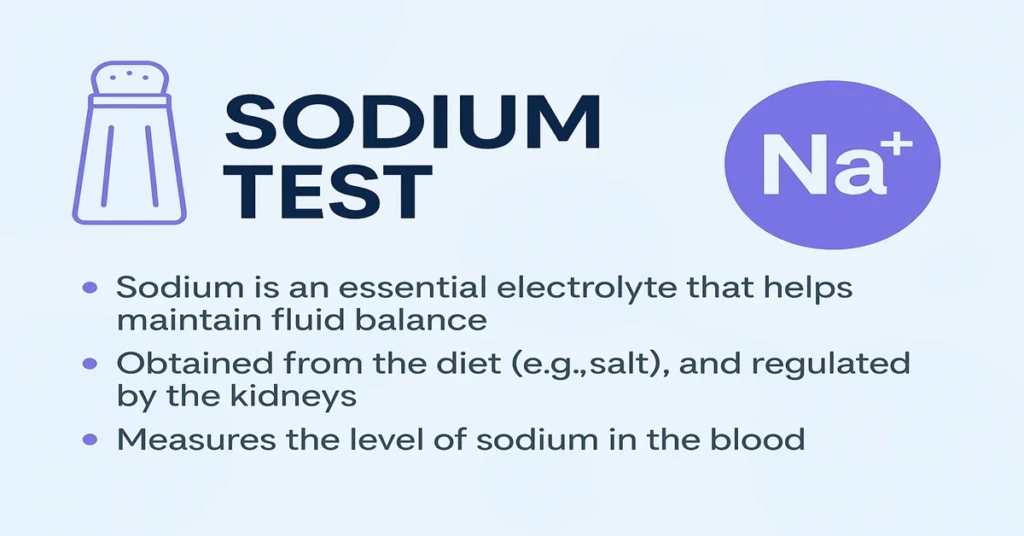
Sodium is one of the most tightly regulated electrolytes in the human body. Although required only in small amounts, it plays a central role in maintaining fluid balance, supporting nerve signaling, enabling muscle contraction, and stabilizing blood pressure. The Sodium (Na⁺) Test measures the concentration of sodium in the blood and is commonly included in an Electrolyte Panel or a Basic Metabolic Panel (BMP).
Because sodium levels can shift quickly in response to illness, dehydration, kidney function, or hormonal changes, this test is frequently used in both routine evaluations and acute medical settings. Even modest deviations from the normal range can affect the brain and muscles, which is why sodium results are always interpreted with careful clinical attention.
What is Sodium (Na⁺)?
Sodium is a mineral that functions as an electrolyte, meaning it carries an electrical charge in body fluids. This charge is essential for maintaining the movement of water between cells and the bloodstream, transmitting nerve impulses, and allowing muscles to contract normally.
Blood sodium levels offer insight into the body’s overall fluid status and how well the kidneys and regulatory hormones are maintaining balance. Because sodium regulation is precise, abnormal values often reflect an underlying disturbance rather than a simple dietary issue.
Where is Sodium Obtained and Regulated?
The body does not produce sodium internally. All sodium comes from external intake, primarily through salt and foods that naturally contain or are prepared with sodium.
After intake, sodium is absorbed through the intestines and enters the bloodstream. From there, the kidneys play the primary role in controlling how much sodium is retained or excreted. Hormones such as aldosterone and antidiuretic hormone (ADH) fine-tune this process by adjusting kidney handling of sodium and water.
This coordinated system allows the body to keep sodium levels within a narrow and stable range under most conditions.
Main Functions and Importance of Sodium
Sodium supports several core physiological processes that are essential for daily functioning.
Fluid balance
Sodium controls how water moves between the inside and outside of cells. This balance helps maintain normal cell size and organ function.
Blood pressure and circulation
By influencing blood volume, sodium plays an indirect but important role in stabilizing blood pressure and ensuring adequate circulation.
Nerve and muscle activity
Electrical signals in nerves depend on sodium movement. This same mechanism allows muscles, including the heart, to contract in a coordinated manner.
Acid–base balance
Sodium works alongside other electrolytes to help maintain the body’s pH within a healthy range.
Nutrient absorption
Certain nutrients, including glucose and amino acids, rely on sodium-dependent transport mechanisms in the intestines.
Because these functions are interconnected, disturbances in sodium levels often affect multiple body systems at the same time.
Causes of Low Sodium (Hyponatremia)
Hyponatremia refers to a blood sodium level below the normal range, typically under 135 mEq/L. It most often reflects an imbalance between sodium and body water rather than an absolute lack of sodium.
Situations commonly associated with low sodium include conditions that cause excess water retention, impaired kidney handling of fluids, or loss of sodium through illness. Hormonal disorders, heart or liver conditions, gastrointestinal fluid loss, and certain medications can also influence sodium balance.
In clinical practice, doctors focus on identifying whether low sodium is due to dilution, loss, or impaired regulation, rather than viewing it as an isolated finding.
Symptoms of Low Sodium
When sodium levels fall, water shifts into cells, leading to cellular swelling. The brain is particularly sensitive to these changes.
Symptoms may begin subtly, such as nausea, headache, or difficulty concentrating, and can progress to confusion, muscle cramps, or marked fatigue. More pronounced reductions may affect coordination, awareness, or consciousness.
The severity of symptoms often depends on how quickly sodium levels change rather than the absolute value alone.
Causes of High Sodium (Hypernatremia)
Hypernatremia occurs when sodium levels rise above the normal range, usually above 145 mEq/L. In most cases, this reflects a relative loss of water rather than an excess of sodium.
Common clinical situations include inadequate fluid intake, increased fluid loss through fever or sweating, hormonal conditions affecting water balance, or reduced kidney ability to concentrate urine. Certain medications and severe systemic illnesses may also contribute.
As with low sodium, understanding the underlying mechanism is essential for proper interpretation.
Symptoms of High Sodium
When sodium levels are elevated, water shifts out of cells, causing them to shrink. Brain cells are especially affected by this process.
People may experience intense thirst, dryness of the mouth, restlessness, or difficulty focusing. As levels rise further, confusion or changes in alertness may develop. In more significant imbalances, neurological symptoms become more pronounced.
Symptoms often reflect both the sodium level and the degree of dehydration present.
Reference (Normal) Range
The standard reference range for blood sodium is:
135 – 145 mEq/L
Values significantly outside this range are considered abnormal and are evaluated in the context of symptoms, medical history, and other laboratory findings.
Extremes at either end of the spectrum may require closer monitoring and prompt clinical assessment.
Sample Type
Sample Type: Serum (blood sample)
Tube Used: Red Top (Plain Tube)
Sodium is typically measured alongside other electrolytes such as potassium, chloride, and bicarbonate, as well as kidney function markers.
Test Preparation
In most cases, no fasting is required for a sodium test. For consistent results, patients are usually advised to maintain usual hydration and inform their healthcare provider about any medications that may affect fluid or electrolyte balance.
If abnormalities are detected, additional tests—such as urine sodium or osmolality—may be used to better understand the cause.
When to Consult a Doctor
Medical evaluation is recommended when sodium levels are abnormal or when symptoms suggest a fluid or electrolyte imbalance.
Situations that commonly prompt further assessment include unexplained fatigue, confusion, muscle cramps, persistent vomiting or diarrhea, excessive thirst, or changes in urination. Sodium abnormalities often point to broader issues involving the kidneys, hormones, heart, or fluid regulation and are best addressed with timely medical review.
Important Word Explanations
Electrolyte
A charged mineral in body fluids that supports nerve signaling and muscle activity.
Hyponatremia
A condition in which blood sodium levels are lower than normal.
Hypernatremia
A condition in which blood sodium levels are higher than normal.
SIADH
A hormonal disorder causing excessive water retention and dilution of blood sodium.
~END~
Related Posts
None found