
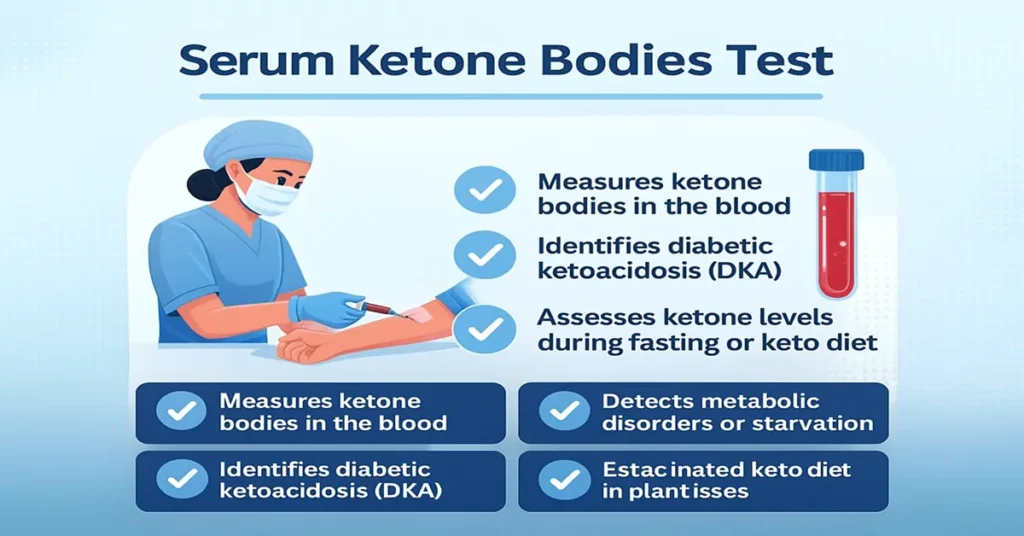
Serum Ketone Bodies Test: Purpose, High–Low Levels, Symptoms & Diagnosis Guide
Overview
Glucose is the body’s preferred source of energy. Under normal conditions, most tissues rely on glucose to meet their daily energy needs. When glucose availability is reduced, or when the body is unable to use glucose effectively—as can happen in uncontrolled diabetes—the body shifts to using fat as an alternative fuel. During this process, the liver produces substances known as ketone bodies.
In small amounts, ketones are a normal part of metabolism and usually cause no harm. Problems arise when ketone production becomes excessive. High ketone levels can disturb the body’s acid–base balance and signal a serious metabolic imbalance. The Serum Ketone Bodies Test measures the amount of ketones present in the blood and helps doctors understand how the body is handling energy at that moment.
This test is commonly used in people with diabetes, in patients who have been fasting or unwell, and in emergency settings where conditions such as diabetic ketoacidosis (DKA) need to be identified quickly. In clinical practice, it often provides clarity when symptoms and routine blood sugar values alone do not tell the full story.
What Is the Serum Ketone Bodies Test?
The Serum Ketone Bodies Test is a blood test that measures ketones circulating in the bloodstream. There are three main ketone bodies produced during fat metabolism: acetoacetate, beta-hydroxybutyrate, and acetone.
Acetoacetate is one of the earliest ketones formed during fat breakdown. Beta-hydroxybutyrate (BHB) is the most abundant ketone in the blood and is considered the most reliable marker, especially in diabetic emergencies. Acetone is a volatile ketone that can sometimes be noticed as a fruity odor on the breath when ketone levels are high.
In routine clinical care, most laboratories focus on measuring beta-hydroxybutyrate because it reflects metabolic severity more accurately and changes quickly as the patient’s condition evolves. In simple terms, low ketone levels suggest normal energy use, while elevated levels indicate that the body is relying heavily on fat instead of glucose. Doctors use this test to support the diagnosis and monitoring of conditions such as diabetic ketoacidosis, alcohol-related metabolic disturbances, prolonged fasting, and other states where carbohydrate use is impaired.
Where Are Ketone Bodies Produced?
Ketone bodies are produced in the liver, specifically within the mitochondria of liver cells. When insulin levels are low or glucose is not readily available, fatty acids are broken down to meet the body’s energy demands. This metabolic pathway, known as ketogenesis, leads to the formation of ketones.
Situations that commonly trigger ketone production include reduced carbohydrate intake, low insulin activity, increased fat breakdown, and periods of significant physical stress or illness. While many tissues, including the brain and muscles, can use ketones as an alternative energy source, excessive production results in accumulation in the blood and can disrupt normal metabolic balance.
Why Is This Test Important?
From a clinical standpoint, the Serum Ketone Bodies Test is especially valuable because it reflects how the body is coping with energy demands. One of its most critical roles is in identifying diabetic ketoacidosis, a condition where high blood glucose, dehydration, and elevated ketones occur together. In such cases, raised beta-hydroxybutyrate levels strongly support the diagnosis.
The test is also used to monitor patients during treatment for DKA, as falling ketone levels indicate metabolic improvement. Beyond diabetes, it helps clinicians assess the body’s response to prolonged fasting or starvation, evaluate alcohol-related metabolic stress, and understand metabolic changes during severe illness, infection, or dehydration. In emergency and critical care settings, this information can be decisive.
Causes of Low Ketone Levels
Low or normal ketone levels are typically seen when the body has adequate carbohydrate supply and insulin is functioning effectively. Regular food intake, stable metabolism, and the absence of excessive fat breakdown usually keep ketone levels low.
In people with diabetes, low ketone values generally indicate good metabolic control at the time of testing. From a laboratory perspective, low ketones are considered a normal finding and are not associated with disease on their own.
Symptoms of Low Ketone Levels
Most individuals with low ketone levels do not experience any symptoms. In some situations, such as after prolonged physical exertion or short periods of fasting, people may notice mild tiredness or slight weakness. These sensations are usually temporary and resolve once normal nutrition is restored. Low ketones themselves are not a cause for concern.
Causes of High Ketone Levels
Elevated ketone levels signal a shift in how the body is producing energy. One of the most important causes is diabetic ketoacidosis, which occurs when insulin is insufficient and glucose cannot be used by cells. As a result, fat breakdown accelerates and ketones rise sharply.
High ketones can also be seen during prolonged fasting or starvation, where the body adapts by relying on fat-derived energy. Very low-carbohydrate or ketogenic diets may lead to increased ketone production as well. Alcohol-related metabolic disturbances, severe infections, dehydration, repeated vomiting, or other forms of physiological stress can also impair glucose use and raise ketone levels. In each case, the laboratory result reflects an underlying metabolic strain rather than an isolated abnormality.
Symptoms of High Ketone Levels
When ketone levels are elevated, patients may experience symptoms such as nausea, vomiting, abdominal discomfort, excessive thirst, frequent urination, weakness, or drowsiness. A fruity odor on the breath and rapid breathing may also be observed.
At very high levels, ketones can contribute to severe dehydration, significant acid–base imbalance, and changes in mental status. These findings are especially concerning in people with diabetes and are treated as medical emergencies. Clinicians view high ketone values as warning signals that require prompt evaluation.
Reference Ranges
Beta-Hydroxybutyrate (BHB) Levels
- Normal: Less than 0.6 mmol/L
- Mild elevation: 0.6 – 1.5 mmol/L
- Moderate elevation: 1.6 – 3.0 mmol/L
- Severe elevation: Above 3.0 mmol/L
Values above 3.0 mmol/L are strongly suggestive of diabetic ketoacidosis and require urgent medical assessment. Exact interpretation depends on the clinical context and accompanying laboratory findings.
Sample Type
The test is performed on a blood sample, using serum or plasma. While urine ketone testing is available, blood ketone measurement is more accurate and reliable, particularly in acute or emergency situations where timely decisions are needed.
Test Preparation
No special preparation is usually required for this test. Fasting is not necessary. Doctors may ask about diabetes history, insulin use, dietary patterns such as low-carbohydrate diets, recent alcohol intake, vomiting, dehydration, or acute illness. When symptoms are severe, testing is often done urgently as part of emergency evaluation.
When to Consult a Doctor
Medical advice should be sought if symptoms such as persistent nausea, abdominal pain, excessive thirst, frequent urination, or unexplained fatigue occur, especially in individuals with diabetes. Warning signs that raise concern for diabetic ketoacidosis include rapid breathing, repeated vomiting, confusion, extreme weakness, fainting, or loss of consciousness. These situations require immediate medical attention.
Important Word Explanations
- Ketones: Substances produced when the body breaks down fat for energy
- DKA: Diabetic ketoacidosis, a serious metabolic complication of diabetes
- Ketogenesis: The process by which the liver produces ketone bodies
- BHB (Beta-Hydroxybutyrate): The main ketone measured in blood tests
- Starvation: Prolonged lack of adequate food intake leading to fat breakdown
- Ketogenic Diet: A low-carbohydrate, high-fat diet that increases ketone production
~END~
Related Posts
None found