
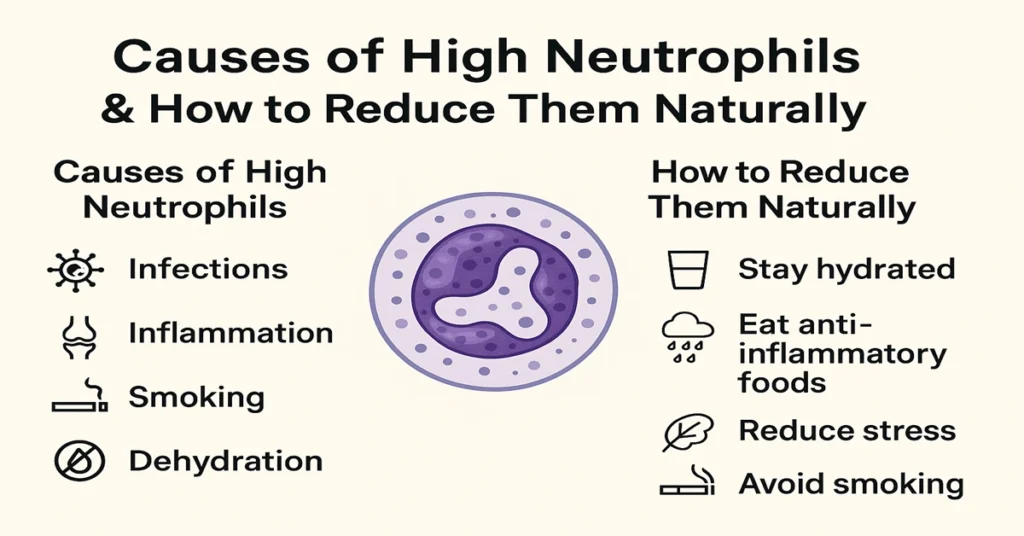
Causes of High Neutrophils and How to Reduce Them Naturally
Neutrophils are the most abundant type of white blood cell and play a central role in defending the body against infections, especially bacterial infections. In routine OPD and laboratory practice, an elevated neutrophil count is a very common finding. Most of the time, it simply means the body is responding appropriately to some form of stress, infection, or inflammation.
When neutrophil levels rise above the normal range, the condition is called neutrophilia. In many patients, this rise is temporary and settles once the underlying trigger resolves. However, when neutrophil levels remain high on repeated tests, doctors usually pause and look for a persistent cause. This article explains, in a practical and experience-based manner, why neutrophils become high, what symptoms may be seen, and how doctors generally think about natural reduction when the cause is mild or reversible.
Short Overview: What Are Neutrophils?
Neutrophils are a type of white blood cell produced in the bone marrow. They are usually the first immune cells to reach the site of infection or tissue injury.
Their main functions include fighting bacterial infections, destroying harmful organisms, supporting immune balance, controlling inflammation, and helping with tissue repair. In blood reports, neutrophils are measured in two ways: as a percentage of total white blood cells (NEUT%) and as an absolute value called the Absolute Neutrophil Count (ANC). Clinically, ANC gives a clearer picture than percentage alone.
In adults, neutrophils usually form about 40% to 70% of total WBCs. A normal ANC generally lies between about 1,500 and 8,000 cells per microliter. Values above this range are considered high and are interpreted in the context of symptoms and clinical findings.
Causes of High Neutrophils
High neutrophils usually reflect the body’s response to an internal or external trigger. In real-life practice, the cause is often straightforward.
Infections
Bacterial infections are the most common reason for neutrophilia. Conditions such as throat infections, skin infections, pneumonia, appendicitis, or urinary tract infections typically cause a strong neutrophil response. The rise indicates that the immune system is actively fighting the infection.
Physical or emotional stress
Stress hormones like adrenaline and cortisol can rapidly increase neutrophil levels by pushing cells from storage areas into the bloodstream. This is commonly seen during anxiety, panic episodes, emotional trauma, heavy workload, surgery, injury, or even intense physical exertion. These changes are often short-lived.
Inflammation in the body
Chronic inflammatory states such as arthritis, asthma, sinusitis, inflammatory bowel conditions, or persistent skin inflammation keep the immune system activated. Over time, this can lead to sustained elevation of neutrophils.
Smoking
Smoking causes continuous tissue irritation and inflammation. In routine lab practice, smokers often show chronically elevated neutrophil percentages even without obvious infection.
Medications
Certain drugs stimulate neutrophil release into the blood. Steroids are the most common cause of medication-related neutrophilia. Other examples include lithium, beta-agonist inhalers, and epinephrine. Doctors usually interpret these results based on medication history.
Injury, burns, or surgery
Any physical trauma activates the immune system to support healing. After surgery or injury, neutrophil levels often rise temporarily and normalize during recovery.
Dehydration
When the body is dehydrated, blood becomes more concentrated. This can make neutrophil counts appear falsely high. Adequate hydration often corrects this finding.
High blood sugar or diabetes
Poorly controlled blood sugar increases inflammation in the body. Over time, this inflammatory state can contribute to elevated neutrophil levels.
Obesity
Excess fat tissue releases inflammatory substances that keep the immune system mildly activated. This low-grade inflammation can lead to chronically raised neutrophils.
Rare causes
Less commonly, bone marrow disorders, leukemia, or myeloproliferative diseases can cause markedly high neutrophil counts. These situations usually involve very high values and other abnormal blood findings and need medical evaluation.
Symptoms of High Neutrophils
High neutrophils themselves usually do not cause symptoms. Most symptoms arise from the underlying cause rather than the blood count.
Common complaints include fever, body pain, fatigue, swelling, redness, sore throat, frequent infections, headache, increased thirst in dehydration, or breathing difficulty when inflammation is significant. Very high neutrophil levels often point toward active infection or significant inflammation.
How to Reduce High Neutrophils Naturally
When neutrophils are elevated due to temporary or lifestyle-related factors, supportive natural measures often help the body return to balance. These measures support recovery rather than directly “treating” the count.
Adequate hydration helps reduce blood concentration and supports normal circulation. Anti-inflammatory foods support immune balance and help calm excessive inflammatory responses. Stress reduction through proper sleep, breathing exercises, light physical activity, and mental relaxation plays a significant role, as stress-related neutrophilia is very common in practice.
Avoiding smoking is particularly important, as smoking keeps neutrophils persistently high. Maintaining a healthy body weight and balanced blood sugar levels also reduces chronic inflammation. Limiting processed, fried, and sugary foods supports overall immune stability.
Supplements (Safe Note)
Supplements should be used only after medical advice. In selected cases, doctors may suggest omega-3 fatty acids, vitamin C, curcumin, or probiotics based on clinical need. Self-medication or high-dose supplementation without guidance is discouraged.
When to See a Doctor
Medical consultation is important if neutrophil levels remain high on repeated tests, if ANC rises above about 9,000–10,000 cells per microliter, if fever lasts more than a few days, or if there are symptoms such as severe weakness, shortness of breath, unexplained weight loss, or recent surgery or injury. Persistently high neutrophils should always be evaluated rather than ignored.
Test Preparation (Neutrophils / CBC Test)
No fasting is required for a neutrophil count or CBC test. Normal water intake is advised. Avoid heavy exercise and smoking just before the test. Always inform the doctor or laboratory about ongoing medications, especially steroids, as they can influence results.
Important Word Explanations
| Term | Simple Explanation |
|---|---|
| Neutrophils | A type of white blood cell that fights infections, especially bacterial infections. |
| Neutrophilia | A condition where neutrophil levels are higher than normal. |
| NEUT% | The percentage of neutrophils among total white blood cells. |
| ANC (Absolute Neutrophil Count) | The actual number of neutrophils in the blood, more clinically useful than percentage. |
| Inflammation | The body’s response to injury or infection, causing redness, swelling, or pain. |
| Immune response | The way the body defends itself against germs or internal stress. |
People Also Ask
Is a high neutrophil count always serious?
Not always. Many cases are temporary and related to infection, stress, or dehydration.
Can neutrophils be high due to stress alone?
Yes. Physical or emotional stress can temporarily raise neutrophil levels.
Does high neutrophils always mean infection?
No. Inflammation, smoking, medications, or stress can also increase neutrophils.
When do doctors usually worry about high neutrophils?
Concern increases when levels are very high, persistent, or associated with symptoms.
Is repeat testing common for high neutrophils?
Yes. Doctors often repeat CBC tests to observe trends before making conclusions.
Can someone feel normal despite high neutrophils?
Yes. Many people have no symptoms, especially when the rise is mild or temporary.
~END~