
Causes of High Total Protein Levels and How to Reduce Them Naturally
Overview
Total protein is a routine blood test that reflects the combined amount of albumin and globulin circulating in your blood. These proteins are essential for immunity, maintaining fluid balance, healing tissues, and transporting hormones and nutrients.
When total protein rises above the normal range, it does not automatically mean something serious. In everyday lab practice, the most common reason is dehydration, where the blood becomes concentrated. However, persistently high values can also point toward ongoing inflammation, immune system activity, chronic infection, or abnormal protein production.
The key point clinicians focus on is not just the number, but why it is high. This article explains the common causes, related symptoms, lifestyle factors, and safe, natural ways to bring levels back toward normal—while also highlighting when medical evaluation becomes important.
What High Total Protein Means
High total protein, medically called hyperproteinemia, means the concentration of proteins in the blood is above the reference range. In most laboratories, the normal range is roughly 6.0–8.3 g/dL, though this can vary slightly.
Clinically, an elevated value usually happens in one of two ways. Either the blood has less water than normal, making proteins appear higher, or the body is producing excess globulins, often due to immune or inflammatory activity. Understanding which of these is happening guides the next steps.
Medical Causes of High Total Protein Levels
Chronic inflammation and immune disorders
When the immune system stays active for long periods, it produces more antibodies. Antibodies are a type of globulin, and increased globulin levels raise total protein.
In routine practice, this is commonly seen in long-standing inflammatory or autoimmune conditions, sometimes even before clear symptoms appear.
Persistent or recurrent infections
Chronic infections keep the immune system constantly stimulated. Conditions that last months or years can gradually push total protein higher due to sustained globulin production.
Bone marrow disorders and abnormal protein production
Some conditions cause the bone marrow to produce abnormal proteins, often referred to as monoclonal proteins. These can raise total protein significantly and always need medical evaluation.
When high total protein is accompanied by bone pain, frequent infections, or unexplained fatigue, doctors become more cautious and investigate further.
Liver-related conditions
The liver plays a central role in protein balance. Chronic liver conditions may not always lower protein; instead, they can sometimes alter the balance between albumin and globulins, resulting in a higher total protein reading.
Endocrine and metabolic influences
Hormonal imbalances, including thyroid disorders, long-standing stress, or poorly controlled diabetes, can indirectly affect total protein levels. Dehydration linked to high blood sugar is a frequent contributing factor.
Dehydration and Its Influence on Total Protein
In day-to-day laboratory work, dehydration is the single most common cause of a high total protein result. When fluid levels drop, blood becomes concentrated, and protein values rise even though actual protein production has not changed.
Common causes of dehydration
Not drinking enough water, excessive sweating, fever, vomiting, diarrhea, use of diuretics, or intense physical activity without proper fluid replacement can all lead to this pattern.
Once hydration improves, total protein levels often return to normal fairly quickly.
Chronic Diseases Linked to High Total Protein
Autoimmune conditions
Diseases involving long-term immune activation often show elevated globulin levels, which raise total protein over time.
Liver or kidney dysfunction
Liver disorders may change protein synthesis, while kidney disease can alter how proteins are filtered and retained. Either situation can disturb total protein readings.
Metabolic and hormonal imbalance
Chronic metabolic stress, including uncontrolled blood sugar or thyroid overactivity, can contribute indirectly through inflammation or dehydration.
Smoking, Alcohol, and Lifestyle Factors
Smoking
Smoking promotes chronic inflammation and can slightly increase globulin levels. It also contributes to fluid loss, which may concentrate blood proteins.
Alcohol use
Regular or heavy alcohol intake stresses the liver and commonly leads to dehydration. Together, these effects can raise total protein levels.
High-protein diets
Eating more protein alone does not usually raise total protein on blood tests. However, dehydration associated with excessive supplements or poor fluid intake can cause temporary increases.
Symptoms of High Total Protein Levels
High total protein itself does not usually cause symptoms. Any discomfort usually comes from the underlying cause rather than the protein level.
Commonly reported symptoms include fatigue, weakness, joint pain, frequent infections, excessive thirst, dark urine from dehydration, nausea, or unexplained weight changes.
When dehydration is the cause, symptoms often improve rapidly with adequate fluid intake.
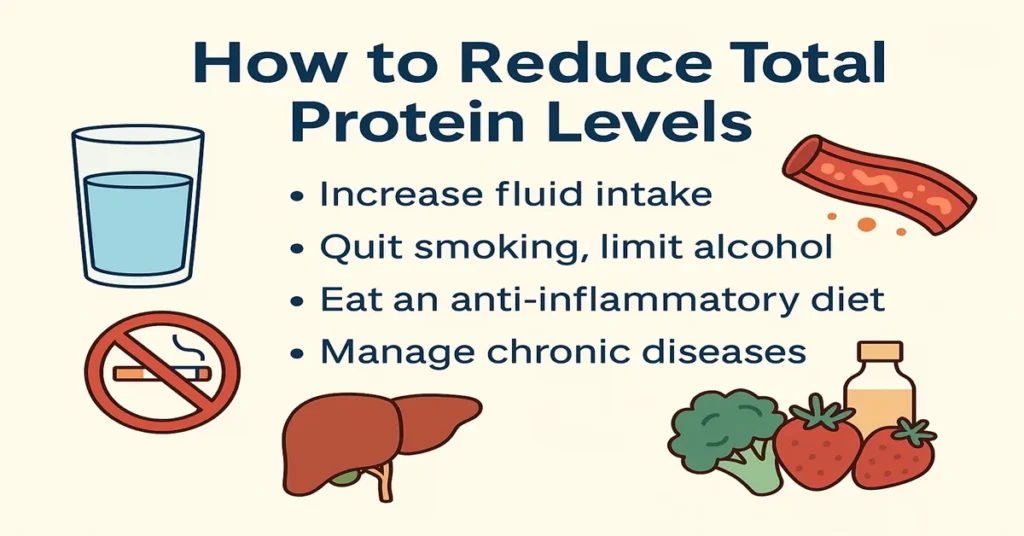
How to Reduce High Total Protein Levels Naturally
Natural correction is effective when dehydration or lifestyle-related inflammation is responsible.
Improve hydration
Regular water intake throughout the day is the simplest and most effective step. From a clinical perspective, spacing fluids evenly works better than drinking large amounts at once.
Reduce smoking and alcohol
Cutting down smoking reduces inflammatory stress. Limiting alcohol supports liver health and improves fluid balance, which helps normalize protein levels.
Manage stress and sleep
Chronic stress and poor sleep can worsen inflammation and hormonal imbalance. Simple routines such as regular sleep timing, breathing exercises, or relaxation practices can support recovery.
Support an anti-inflammatory diet
Foods rich in natural antioxidants and fiber help reduce inflammatory load. A diet centered around vegetables, fruits, whole grains, nuts, seeds, and balanced fats supports healthy protein metabolism.
Address underlying medical conditions
When high total protein is driven by autoimmune disease, chronic infection, liver disease, or bone marrow disorders, medical treatment is essential. Lifestyle measures alone are not enough in these situations.
When High Total Protein Levels Become Dangerous
Doctors become more concerned when total protein remains high on repeated testing, rises progressively, or is accompanied by warning signs such as unexplained weight loss, night sweats, persistent fatigue, bone pain, or abnormal urine findings.
These patterns may indicate serious underlying conditions and require prompt evaluation.
Test Preparation
To improve accuracy, stay well hydrated for 12–24 hours before testing, avoid heavy workouts the day before, limit alcohol intake, and inform your doctor about medications, especially diuretics. Fasting is only needed if specifically advised.
When to Consult a Doctor
Medical advice is important if total protein stays high on repeat tests, if symptoms such as bone pain, fatigue, or weight loss appear, or if dehydration does not improve with adequate fluid intake. A family history of autoimmune or blood-related disorders also warrants closer follow-up.
Important Word Explanations
Globulins are immune-related proteins that increase during inflammation.
Albumin is a liver-produced protein that maintains fluid balance.
Hyperproteinemia means higher-than-normal total protein in the blood.
Monoclonal protein refers to abnormal proteins produced in some bone marrow disorders.
Autoimmune disease describes conditions where the immune system attacks the body’s own tissues.
People Also Ask
Is high total protein always serious?
No. Dehydration is a very common and harmless cause. Persistent elevation needs evaluation.
Can total protein be temporarily high?
Yes. Fluid loss, fever, vomiting, or diarrhea can cause short-term increases.
Does high total protein always mean cancer?
No. Many inflammatory and immune conditions raise protein levels. Cancer is considered only when other warning signs are present.
When do doctors usually worry about high total protein?
When it stays high on repeat testing or is associated with symptoms like weight loss, fatigue, or bone pain.
Is repeat testing common?
Yes. Doctors often repeat the test after correcting dehydration or illness.
Can total protein return to normal naturally?
In many cases, yes—especially when hydration and underlying causes are addressed properly.
~END~
Hello colleagues, how is all, and what you would like to
say about this paragraph, in my view its truly awesome in favor of me.