
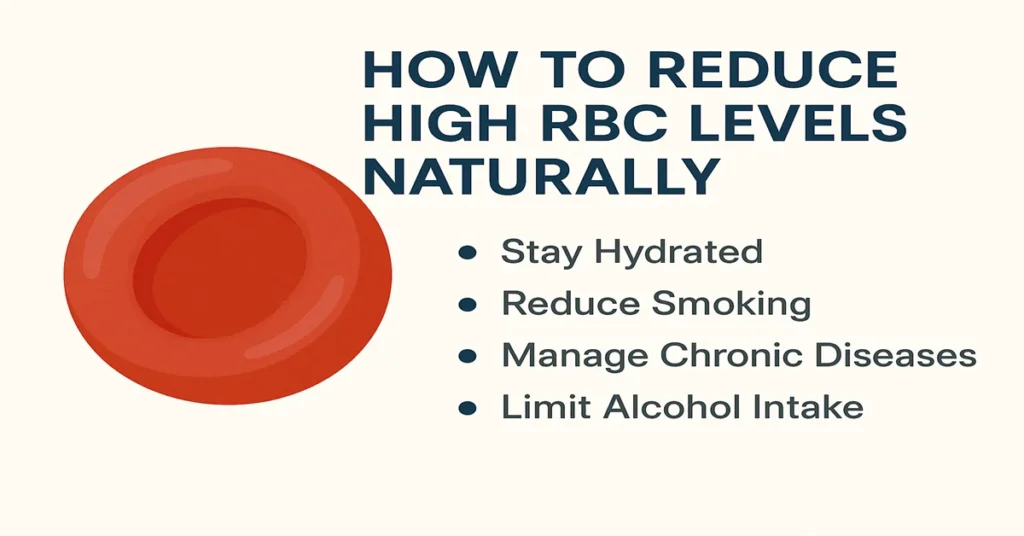
How to Reduce High RBC Levels: Causes, Symptoms & Natural Ways to Lower RBC Count
Red blood cells (RBCs) play a central role in carrying oxygen from the lungs to the rest of the body. In routine practice, most people worry when RBC counts are low, but occasionally reports show the opposite—RBC levels higher than expected. When this happens, the blood can become more concentrated and flow less smoothly, which is why doctors do not ignore a persistently high RBC count.
Clinically, a high RBC count is referred to as polycythemia. It is usually picked up incidentally during a Complete Blood Count (CBC) done for fatigue, routine health checks, or follow-up of another condition. Importantly, a high value does not always mean a serious disease, but it does mean the result needs to be understood in context.
This article explains what high RBC levels actually mean, the common medical and non-medical reasons behind them, the symptoms doctors watch for, and how high RBC counts are usually approached in real-world practice.
What Does a High RBC Level Mean?
A high RBC count means there are more red blood cells circulating in the blood than the body typically needs. From a laboratory point of view, this increases blood concentration and viscosity. In OPD settings, doctors often pause at this stage and ask a simple but important question:
“Is this a true increase in RBCs, or is the blood just concentrated?”
High RBC levels are almost always detected through a CBC test. The value is never interpreted alone. Hemoglobin, hematocrit, hydration status, oxygen levels, and clinical symptoms are all considered together before any conclusion is made.
Medical Causes of High RBC Levels
In clinical practice, high RBC counts are broadly divided into primary causes (where the bone marrow itself produces excess cells) and secondary causes (where the body is responding to low oxygen or hormonal signals).
Polycythemia Vera (Blood Disorder)
This is a rare bone marrow condition where red blood cells are produced in excess without a normal regulatory signal. It is a chronic condition and requires long-term medical monitoring rather than self-management.
Lung-Related Conditions
When oxygen delivery from the lungs is reduced, the body often compensates by increasing RBC production. This is commonly seen in chronic lung conditions where oxygen exchange is persistently lower than normal.
Heart-Related Conditions
Long-standing heart problems can reduce effective oxygen circulation. In such cases, the body increases RBC production as a compensatory response rather than as a primary disease.
Kidney-Related Causes
The kidneys regulate RBC production through a hormone called erythropoietin (EPO). Certain kidney conditions can increase EPO release, which in turn raises RBC counts.
Hormonal or Steroid Exposure
In routine lab work, raised RBC levels are frequently seen in people using testosterone therapy, anabolic steroids, or hormonal injections. This is a well-recognized and reversible cause once identified.
Bone Marrow Overactivity
In some chronic illnesses or medication-related states, bone marrow activity may increase, leading to higher RBC production without a malignant process.
Dehydration Factors (A Very Common Finding)
One of the most common and often overlooked reasons for high RBC readings is dehydration.
In daily lab practice, this is frequently the first thing doctors rule out.
When body fluid levels drop:
- Plasma volume reduces
- Blood becomes concentrated
- RBC counts appear high even when actual cell production is normal
This situation is called relative polycythemia and often normalizes once hydration improves.
Common triggers include inadequate water intake, excessive sweating, hot climates, vomiting, diarrhea, or intense physical activity without fluid replacement.
Chronic Conditions Linked to High RBC Levels
Certain long-term conditions consistently push the body to maintain higher RBC levels because oxygen delivery remains suboptimal. These include chronic lung disorders, heart disease, sleep-related breathing disorders, hormonal imbalances, and some liver conditions. In such cases, RBC elevation is usually part of a broader clinical picture rather than an isolated finding.
Smoking and Alcohol as Contributing Factors
Smoking
Smoking reduces effective oxygen delivery and increases carbon monoxide levels in the blood. Over time, the body responds by producing more RBCs. In routine reports, smokers often show raised RBC, hemoglobin, and hematocrit together.
Alcohol
Excess alcohol intake can contribute indirectly by causing dehydration, affecting liver function, and disturbing nutrient balance. These factors together may push RBC values upward.
Symptoms of High RBC Levels
Many people with mildly elevated RBC counts have no symptoms at all, especially in early stages. Symptoms tend to appear as blood concentration increases.
Common complaints include headaches, dizziness, blurred vision, facial redness, fatigue, itching after warm showers, tingling sensations, shortness of breath, or chest discomfort. Clinically, these symptoms prompt doctors to look at clot risk and circulation more carefully.
How High RBC Levels Are Usually Reduced in Practice
The approach to lowering RBC levels depends entirely on why they are high. In routine care, doctors first correct reversible factors such as dehydration, smoking-related oxygen changes, medication effects, or sleep-related breathing issues.
When an underlying medical condition is identified, management is directed at that cause. In specific disorders like polycythemia vera, medical interventions are planned under specialist care. Importantly, treatment decisions are never based on a single report alone.
When to See a Doctor
Medical evaluation is important if:
- RBC levels remain high on repeated tests
- Symptoms such as headaches, chest pain, numbness, or breathlessness appear
- There is a history of lung, heart, kidney, or hormonal disorders
- Steroids or testosterone therapy has been started recently
Early evaluation helps prevent circulation-related complications.
Test Preparation (For RBC Testing)
For accurate results, doctors usually advise maintaining normal hydration, informing the lab about supplements or hormones, and sharing smoking or alcohol habits honestly. These details often explain abnormal values better than repeat testing alone.
Important Word Explanations
RBC: Red blood cells that transport oxygen
Polycythemia: Increased red blood cell concentration
EPO: Kidney hormone that regulates RBC production
COPD: Chronic lung condition affecting oxygen exchange
Hematocrit: Percentage of blood made up of RBCs
People Also Ask
Is a high RBC count always dangerous?
No. Mild elevations are often temporary and related to hydration or lifestyle factors.
Can dehydration alone raise RBC levels?
Yes. This is one of the most common and reversible causes seen in routine lab reports.
Does high RBC always mean a blood disorder?
No. Many cases are secondary responses to oxygen levels, smoking, or hormones.
When do doctors usually worry about high RBC?
When values stay high on repeat tests or symptoms suggest circulation problems.
Is repeat testing common for high RBC?
Yes. Doctors often repeat the test after correcting hydration or other factors.
Can high RBC come down on its own?
In many cases, yes—once the underlying cause is addressed.
~END~