
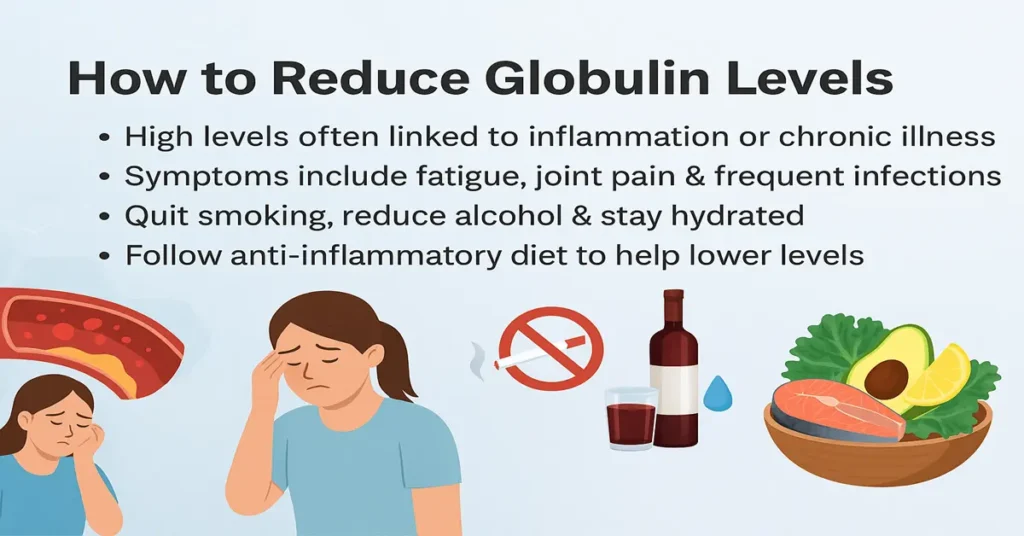
Causes of High Globulin Levels and How to Reduce Them Naturally
Overview
Globulin is a major group of proteins present in the bloodstream. It includes alpha, beta, and gamma globulins, each with a specific role in immunity, inflammation control, and transport of nutrients and hormones. In day-to-day lab practice, globulin levels are often reviewed along with total protein and albumin to understand how the immune system and liver are functioning.
High globulin levels usually reflect immune system activation, ongoing inflammation, or a chronic condition rather than a problem with diet alone. Many people do not notice symptoms in the early phase, but when globulin remains elevated over time, doctors look more closely to identify the underlying cause. This article explains the medical and lifestyle-related reasons for high globulin, common clinical patterns, natural supportive measures, and situations where further evaluation becomes necessary.
Medical Causes of High Globulin Levels
High globulin does not occur randomly. Clinically, it is most often a response, not a disease by itself.
Chronic inflammation
When inflammation persists in the body, the immune system produces more antibodies. These antibodies are part of the gamma globulin fraction. Conditions with long-standing inflammation commonly show raised globulin on blood tests, sometimes even before clear symptoms appear.
Chronic liver disease
The liver plays a central role in protein balance. In certain liver conditions, albumin production may fall while globulin levels rise, altering the overall protein ratio. This pattern is often seen in chronic liver disorders and prompts doctors to assess liver function in detail.
Autoimmune diseases
In autoimmune conditions, the immune system stays overactive and continuously produces antibodies. This sustained antibody production leads to increased gamma globulin levels. In practice, globulin elevation is often one of the laboratory clues that supports an autoimmune process.
Chronic infections
Long-standing infections keep the immune system stimulated for months or years. As a result, globulin levels rise gradually. This is commonly seen in chronic bacterial or viral infections and usually correlates with other inflammatory markers.
Blood and bone marrow disorders
Certain plasma cell and antibody-producing disorders lead to excessive production of specific globulins. In such cases, the rise is often significant and requires specialised tests to understand the exact pattern.
Because the causes vary widely, persistent elevation always needs correlation with symptoms and other investigations.
Dehydration Factors
Dehydration is not a primary cause of high globulin, but it can accentuate the elevation by concentrating blood proteins.
Not drinking enough water
When fluid intake is low, blood becomes more concentrated and globulin values may appear higher.
Excessive sweating
Heavy physical activity, heat exposure, or fever can increase fluid loss and temporarily raise protein concentrations.
Vomiting or diarrhea
Acute fluid loss can cause a short-term rise in globulin, which often normalises once hydration improves.
High alcohol or caffeine intake
Both can increase fluid loss and contribute indirectly to higher readings.
In routine practice, mild globulin elevation due to dehydration usually settles after proper hydration.
Chronic Diseases Associated With High Globulin
In many patients, high globulin is linked to a chronic underlying condition rather than a temporary issue.
Liver diseases
Chronic liver dysfunction often alters protein balance, leading to relatively higher globulin levels.
Kidney disorders
Some kidney conditions affect protein handling in the body, indirectly influencing globulin levels.
Chronic lung and inflammatory diseases
Long-standing respiratory or inflammatory conditions keep the immune system active, increasing antibody production.
Endocrine disorders
Hormonal imbalances can affect protein metabolism and immune regulation, contributing to elevated globulin in some cases.
In such situations, treating or controlling the primary disease is more important than focusing on the globulin number alone.
Smoking and Alcohol as Contributing Factors
Lifestyle habits play a supportive but important role.
Smoking
Smoking causes ongoing low-grade inflammation in the body. The immune system responds by producing more antibodies, which can raise gamma globulin levels over time.
Alcohol
Alcohol stresses the liver and also promotes dehydration. Both factors can contribute to higher globulin readings, especially in regular or heavy drinkers.
Reducing these habits often improves overall protein balance and inflammatory status.
Symptoms of High Globulin Levels
High globulin itself does not produce symptoms. What patients feel usually comes from the underlying cause.
Commonly reported features include:
Persistent fatigue
Frequent or recurrent infections
Joint pain or body aches
Unexplained weight loss
Low-grade fever or night sweats
General weakness or reduced stamina
In clinical settings, doctors pay close attention when these symptoms accompany elevated globulin.
How to Reduce High Globulin Levels Naturally
Natural measures help mainly when inflammation, lifestyle factors, or dehydration contribute to high globulin. They support recovery but do not replace medical care when disease is present.
Maintain proper hydration
Adequate daily water intake helps prevent concentration-related increases in blood proteins.
Reduce alcohol intake
Limiting alcohol supports liver health and improves protein balance.
Quit or reduce smoking
Lowering inflammation helps reduce unnecessary immune activation.
Follow an anti-inflammatory eating pattern
Foods such as leafy vegetables, berries, turmeric, ginger, garlic, olive oil, nuts, and seeds support immune balance and reduce inflammation.
Limit processed and sugary foods
Highly processed foods can worsen inflammatory responses.
Support liver health
Balanced meals, adequate rest, and avoiding unnecessary medications help the liver maintain normal protein regulation.
Improve sleep and stress control
Good sleep and stress management help regulate immune activity, which directly affects globulin levels.
When a chronic disease is present, these steps work best alongside proper medical management.
When High Globulin Levels Become Dangerous
High globulin needs closer attention when:
Levels are very high or continue to rise
There is unexplained weight loss, fever, or night sweats
Joint swelling or severe inflammation is present
Autoimmune disease is suspected
Liver or kidney function tests are abnormal
Protein pattern tests show abnormal fractions
In such cases, doctors may advise further tests, such as serum protein electrophoresis, to identify which globulin fraction is elevated.
Test Preparation
For accurate globulin or total protein testing:
Drink normal amounts of water
Avoid alcohol for 24 hours before testing
Eat regular meals unless advised otherwise
Inform the doctor about medications or supplements
Avoid heavy exercise just before blood collection
Rest briefly before the sample is taken
These steps help avoid misleading results.
When to Consult a Doctor
Consult a doctor if:
Globulin remains high on repeated tests
You feel persistently tired or unwell
There are symptoms of autoimmune or chronic inflammatory disease
You experience frequent infections or fever
There is unexplained weight loss
Liver or kidney problems are suspected
Lifestyle changes do not improve the values
Early evaluation helps identify the cause and prevents long-term complications.
Important Word Explanations
Globulin: A group of blood proteins involved in immunity, inflammation control, and transport
Hyperglobulinemia: Higher-than-normal globulin levels
Gamma globulins: Antibody-containing proteins
Autoimmune disease: A condition where the immune system attacks the body
Inflammation: The body’s response to injury or infection
Protein electrophoresis: A test that separates and identifies different protein fractions
People Also Ask
Is high globulin always serious?
Not always. Mild elevation is often due to inflammation or infection and may settle once the cause resolves.
Can globulin levels be temporarily high?
Yes. Dehydration or short-term illness can cause temporary increases.
Does high globulin always mean cancer?
No. Most cases are related to inflammation or immune activity. Cancer is only considered when levels are very high or patterns are abnormal.
When do doctors usually worry about high globulin?
When it stays elevated over time or is associated with weight loss, fever, or abnormal protein patterns.
Is repeat testing common for high globulin?
Yes. Doctors often repeat tests to confirm persistence and monitor trends.
Can lifestyle changes alone reduce high globulin?
They help when inflammation or dehydration is mild, but underlying diseases require medical evaluation.
~END~