
Causes of High Albumin Levels and How to Reduce Them Naturally
Overview
Albumin is one of the most important proteins present in the blood. In routine lab practice, it is commonly checked along with total protein and other liver-related parameters. Albumin helps maintain fluid balance inside blood vessels, transports hormones and medicines, and supports overall metabolic stability.
While low albumin is discussed more often, high albumin levels can also appear in blood reports. Clinically, high albumin is called hyperalbuminemia. In most cases, it does not mean the body is producing excess protein. Instead, it usually reflects loss of body water, making the blood more concentrated. Less commonly, it may be associated with certain medical or lifestyle factors that disturb fluid balance.
This article explains why albumin becomes high, what symptoms may be seen, how levels can be reduced naturally, and when further medical evaluation is needed.
What Causes High Albumin Levels?
From real-world lab experience, high albumin almost always points toward concentration of blood rather than overproduction of protein. The liver rarely produces albumin in excess. The reasons behind high albumin are usually related to hydration status.
Medical Causes of High Albumin
Severe dehydration
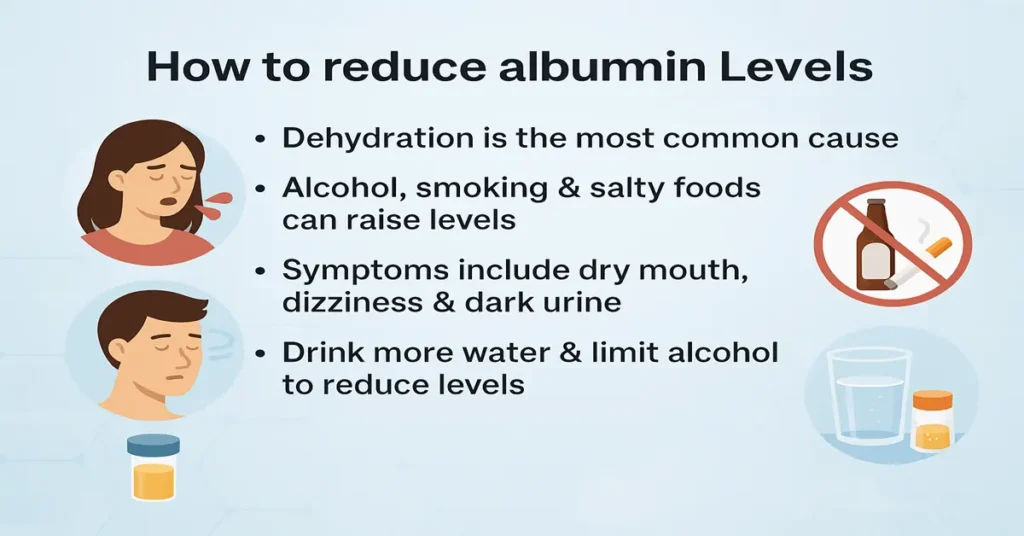
This is the most common cause. When the body loses water through vomiting, diarrhea, fever, heavy sweating, or poor fluid intake, blood volume reduces. Albumin then appears higher because there is less water to dilute it.
Major burns or injuries
Significant fluid loss from damaged skin or tissues can temporarily raise albumin concentration in blood tests.
Certain medications
Drugs such as corticosteroids, hormones, or medicines that increase urine output can reduce body water and lead to higher albumin readings.
Pre-test factors or lab variation
In routine practice, we often see slightly high albumin in patients who did not drink enough water before testing or came after prolonged fasting or travel. This is not true disease-related elevation.
Importantly, high albumin is rarely a sign of liver disease, because liver disorders usually lower albumin rather than raise it.
Dehydration-Related Factors
Since dehydration plays a central role, everyday habits can strongly influence albumin levels.
Low water intake
People who rely mostly on tea, coffee, or sugary drinks instead of plain water often show concentrated blood results.
Excessive sweating
Outdoor workers, athletes, and people in hot climates lose fluids rapidly. Without proper replacement, albumin rises.
High salt intake
Salty foods pull water out of cells and worsen dehydration.
Vomiting or diarrhea
Acute illness with fluid loss commonly causes a temporary rise in albumin, which normalizes after recovery.
In most such cases, albumin returns to normal once hydration improves.
Chronic Conditions That May Show High Albumin
High albumin itself is not typical of chronic disease, but some conditions promote dehydration, indirectly increasing albumin.
Uncontrolled diabetes
High blood sugar causes excessive urination, leading to fluid loss and concentrated blood proteins.
Kidney-related conditions
Certain kidney disorders disturb water and electrolyte balance, increasing dehydration risk.
Chronic gastrointestinal illness
Long-standing diarrhea or malabsorption conditions can cause ongoing fluid loss.
In these cases, treating the underlying condition is more important than focusing on albumin alone.
Smoking and Alcohol as Risk Factors
Smoking
Smoking increases oxidative stress and may contribute to subtle fluid imbalance. Smokers sometimes show mildly elevated albumin without obvious symptoms.
Alcohol
Alcohol acts as a diuretic. Regular or binge drinking leads to fluid loss through urine and worsens dehydration. In routine practice, alcohol-related dehydration is a very common reason for high albumin reports.
Reducing or stopping these habits often normalizes albumin levels quickly.
Symptoms of High Albumin Levels
High albumin itself does not cause symptoms. Any symptoms usually come from dehydration or the underlying condition.
Common signs include dry mouth, excessive thirst, dark yellow urine, dizziness, headache, muscle cramps, fatigue, and reduced urine output. If diabetes or kidney problems are present, symptoms related to those conditions may also appear.
How to Reduce High Albumin Levels Naturally
In most patients, high albumin improves with simple, natural measures focused on hydration and lifestyle correction.
Improve hydration
Drinking water regularly throughout the day is the most effective step. Instead of drinking large amounts at once, spread intake evenly.
Include water-rich foods
Fruits and vegetables such as watermelon, cucumber, oranges, grapes, and leafy greens help maintain fluid balance.
Reduce alcohol intake
Avoiding alcohol for a few days often brings albumin back into the normal range.
Limit salty and processed foods
High sodium intake worsens dehydration and should be reduced.
Avoid smoking
Reducing or quitting smoking improves overall blood composition and hydration status.
Manage chronic conditions
Good control of diabetes, kidney issues, or digestive disorders prevents repeated dehydration-related albumin elevation.
Review medications
If medicines contribute to fluid loss, doctors may adjust dosage or timing.
Clinically, once hydration improves, albumin levels usually normalize within days to a couple of weeks.
When High Albumin Levels Become Concerning
High albumin is rarely dangerous on its own. Doctors become concerned when:
Albumin remains high despite adequate hydration
There is ongoing vomiting or diarrhea
It is associated with uncontrolled diabetes
There are signs of kidney dysfunction
Unexplained weight loss, weakness, or chronic illness symptoms are present
In such situations, further tests like kidney function tests, blood sugar levels, electrolytes, or urine analysis may be advised.
Test Preparation
For accurate albumin results:
Drink normal amounts of water the day before testing
Avoid alcohol for at least 24 hours
Avoid very heavy exercise before the test
Inform your doctor about medicines you take
Eat normal meals unless fasting is specifically advised
Proper preparation helps avoid misleading elevations.
When to Consult a Doctor
Consult a doctor if albumin remains high on repeated tests, dehydration symptoms do not improve, blood sugar remains uncontrolled, vomiting or diarrhea is persistent, or kidney-related symptoms appear. Early evaluation helps identify and correct the underlying cause.
Important Word Explanations
Albumin: A protein made by the liver that maintains fluid balance and transports substances
Dehydration: Loss of body water leading to concentrated blood
Hyperalbuminemia: Higher-than-normal albumin levels
Electrolytes: Minerals that help regulate hydration and nerve function
Diuretic: A substance that increases urine output and fluid loss
People Also Ask
Is high albumin serious?
Most of the time, no. It usually reflects dehydration rather than disease.
Can albumin levels be temporarily high?
Yes. Illness, sweating, poor water intake, or alcohol can raise albumin temporarily.
Does high albumin always mean liver disease?
No. Liver disease usually lowers albumin, not increases it.
When do doctors worry about high albumin?
When it stays high even after proper hydration or appears with other abnormal findings.
Is repeat testing common for high albumin?
Yes. Doctors often repeat the test after improving hydration to confirm normalization.
Can drinking more water lower albumin?
Yes. Adequate hydration is usually enough to bring albumin back to normal.
~END~