
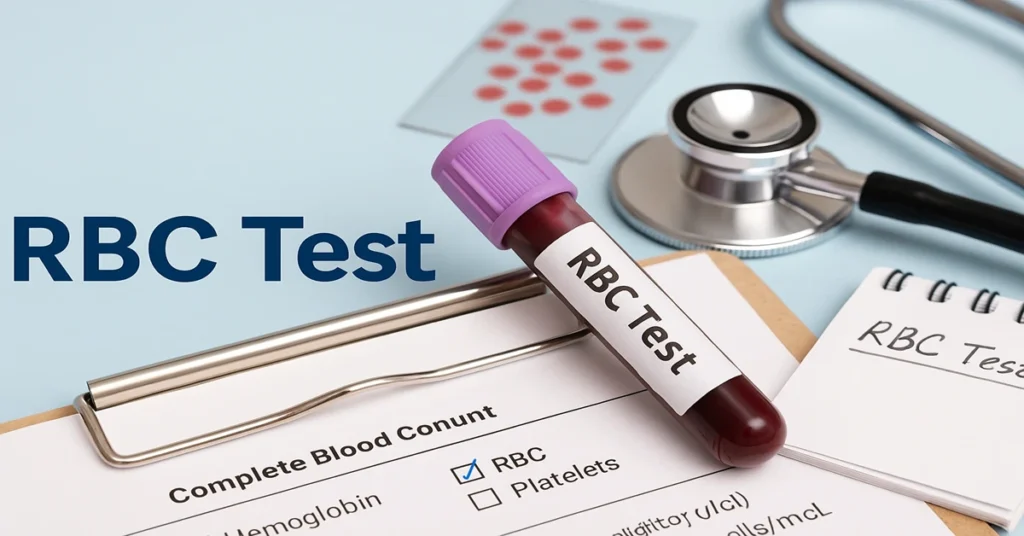
RBC Test: Meaning, Functions, Normal Levels, Causes of Low & High RBC Count, Symptoms, and Complete Guide
What Is the RBC Test?
The RBC test measures the number of red blood cells present in a given volume of blood. Red blood cells are responsible for transporting oxygen from the lungs to tissues throughout the body and returning carbon dioxide back to the lungs for removal. Because oxygen delivery is fundamental to how organs function, the RBC count offers a practical snapshot of how well this system is working.
In routine clinical practice, the RBC test is almost always performed as part of a Complete Blood Count (CBC). It is one of the most frequently requested blood tests in hospitals and diagnostic laboratories. Doctors commonly look at the RBC count when evaluating symptoms such as ongoing fatigue, breathlessness, dizziness, or reduced physical stamina. Rather than acting alone, the RBC value is interpreted alongside other blood parameters to understand the broader picture of a person’s health.
Where Are RBCs Produced in the Body?
Red blood cells are produced in the bone marrow, the soft tissue located inside bones such as the spine, ribs, pelvis, and long bones. This continuous production process is known as erythropoiesis and is carefully regulated by the body.
The kidneys play an important supporting role by releasing a hormone called erythropoietin (EPO). When oxygen levels in the blood fall, EPO signals the bone marrow to increase red blood cell production. From a clinical perspective, this connection explains why kidney health and bone marrow function are closely linked to RBC levels.
Once released into the bloodstream, red blood cells circulate for about 120 days before being naturally removed and replaced. This steady renewal helps maintain a stable oxygen supply under normal conditions.
Functions and Importance of Red Blood Cells
Red blood cells are essential for daily physiological balance, and even mild changes in their number can affect how a person feels.
Oxygen Transport
Red blood cells contain hemoglobin, which binds oxygen in the lungs and delivers it to tissues and organs. This process supports normal organ activity and physical performance.
Carbon Dioxide Removal
After oxygen delivery, red blood cells assist in carrying carbon dioxide back to the lungs. Efficient removal of this waste gas helps maintain normal breathing and blood chemistry.
Maintaining Blood pH
By participating in gas exchange, red blood cells contribute to maintaining the blood’s pH within a narrow range, which is necessary for enzymes and metabolic processes to function properly.
Supporting Energy and Organ Function
Adequate oxygen delivery supports energy production in muscles and organs. When RBC levels are lower than expected, people often notice reduced stamina and general weakness.
Clinically, RBC count serves as a signal rather than a diagnosis, guiding further evaluation when needed.
Causes of Low RBC Count (Anemia)
A reduced RBC count is broadly referred to as anemia. In medical settings, anemia is treated as a finding that prompts investigation rather than a condition on its own.
Iron deficiency is one of the most frequent contributors, as iron is required for hemoglobin formation. Vitamin B12 and folic acid deficiencies can also interfere with normal red blood cell production. Chronic medical conditions may affect RBC formation or shorten cell lifespan, leading to lower counts over time.
Disorders involving the bone marrow can directly reduce RBC production. Blood loss, whether sudden or ongoing, lowers circulating red blood cells. In some cases, autoimmune or inherited conditions affect red blood cell survival or structure, resulting in persistently low values.
The underlying cause is always more important than the number itself.
Symptoms of Low RBC Count
When RBC levels are reduced, symptoms usually develop gradually. People may notice ongoing tiredness, weakness, breathlessness with mild activity, light-headedness, or difficulty concentrating. Pale skin and cold extremities may also be observed.
From a clinical point of view, these symptoms reflect reduced oxygen delivery rather than direct damage. Their presence helps doctors decide whether further testing or monitoring is needed.
Causes of High RBC Count (Polycythemia)
An increased RBC count is referred to as polycythemia. This may occur as a normal physiological response or due to underlying medical conditions.
Living at high altitude, smoking, and chronic lung or heart conditions can stimulate the body to produce more red blood cells in response to reduced oxygen availability. Dehydration may temporarily raise RBC concentration by reducing plasma volume.
Less commonly, bone marrow conditions may cause excessive production of red blood cells. In clinical practice, persistently elevated values are evaluated carefully to determine whether further assessment is required.
Symptoms of High RBC Count
High RBC levels may cause nonspecific symptoms such as headaches, dizziness, skin redness, or itching. Some individuals experience visual disturbances or elevated blood pressure.
Clinically, the main concern with significantly high RBC counts is increased blood thickness, which can affect circulation. This is why unexplained or sustained elevation is taken seriously, even when symptoms are mild.
Normal RBC Reference Ranges
Reference ranges can vary slightly depending on the laboratory, age, and testing method.
- Men: 4.7 – 6.1 million cells/mcL
- Women: 4.2 – 5.4 million cells/mcL
- Children: 4.1 – 5.5 million cells/mcL
Pregnant women may show slightly lower RBC values due to normal changes in blood volume. Results are always interpreted in clinical context.
Sample Type and Collection
- Sample Required: Whole blood
- Tube Used: Lavender top (EDTA tube)
Blood is drawn from a vein, usually in the arm. The procedure is routine, quick, and generally well tolerated. Results are commonly available the same day or within 24 hours.
Test Preparation
No fasting is required for an RBC test. Hydration status can influence concentration values, so this is considered during interpretation. Doctors also review medications, supplements, recent travel to high altitudes, and other relevant factors when assessing results.
The RBC count is most often evaluated as part of a Complete Blood Count rather than in isolation.
When to Consult a Doctor
Medical advice is recommended if symptoms such as persistent fatigue, breathlessness, dizziness, or fainting occur without a clear explanation. Consultation is also important when RBC values remain consistently outside the reference range.
People with chronic kidney, lung, or heart conditions, as well as those who are pregnant or planning pregnancy, are commonly monitored more closely. Regular follow-up helps identify changes early and supports appropriate clinical decisions.
Important Word Explanations
- Erythropoiesis: The process by which red blood cells are produced in the bone marrow.
- Erythropoietin (EPO): A hormone released by the kidneys that stimulates red blood cell production.
- Polycythemia: A condition where the red blood cell count is higher than normal.
- EDTA Tube: A lavender-top blood collection tube that prevents clotting.
- CBC (Complete Blood Count): A blood test that measures red cells, white cells, and platelets together.
~END~
Pingback: MCHC Test – Normal Range, Low & High Levels, Causes and Symptoms
Hello, I enjoy reading all of your post. I wanted to write a little comment to support you.