
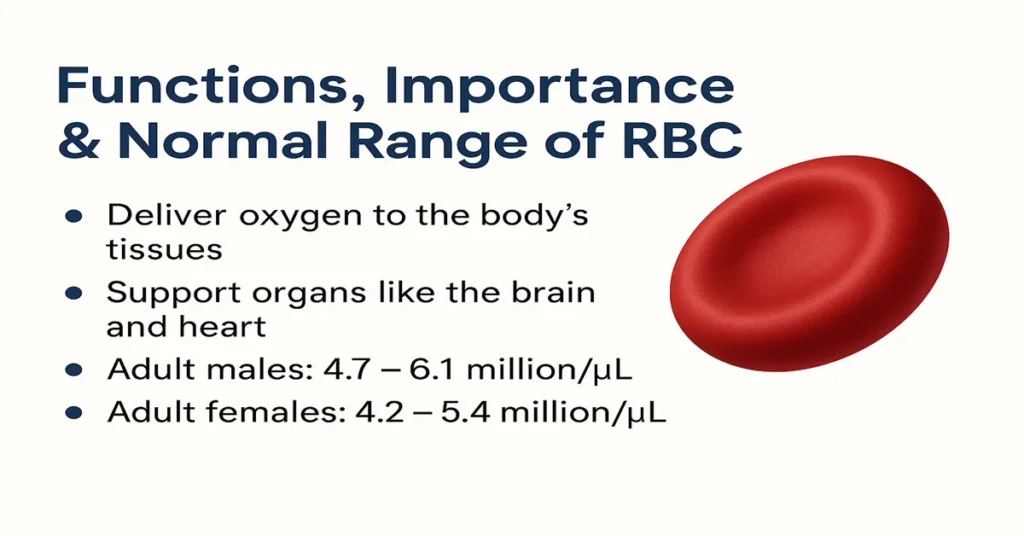
Functions, Importance & Normal Range of RBC (Red Blood Cells)
Red Blood Cells (RBCs) are one of the most critical components of blood. Their main job is to carry oxygen from the lungs to every tissue in the body and return carbon dioxide back to the lungs for removal. In day-to-day medical practice, RBC levels are closely observed because even small changes can affect how a person feels and functions.
Simply put, RBCs act as the body’s oxygen transport system. When their number or function is disturbed, organs such as the brain, heart, and muscles are the first to feel the effect. This is why RBC count is always reviewed carefully in routine blood reports.
This article explains what RBCs do, why they are important, normal ranges across age, gender, and pregnancy, and when abnormal values start becoming clinically concerning.
What the RBC Parameter Does
The RBC parameter measures how many red blood cells are present in a given volume of blood. These cells are packed with hemoglobin, the protein that binds oxygen.
In routine lab interpretation, the RBC count helps doctors understand:
- How efficiently oxygen is being delivered to tissues
- Whether the bone marrow is producing an adequate number of cells
- If anemia, dehydration, or blood-related conditions may be present
- Whether symptoms like fatigue or breathlessness have a blood-related cause
RBC count is a core part of the Complete Blood Count (CBC) and is almost never interpreted alone. Doctors usually correlate it with hemoglobin, hematocrit, and clinical symptoms before drawing conclusions.
Why RBC Is Important
RBCs support nearly every essential body function. Their importance becomes especially clear when levels fall outside the normal range.
Energy and stamina:
Cells require oxygen to produce energy. When RBC levels are low, people commonly report tiredness and reduced endurance.
Organ performance:
The brain, heart, kidneys, and muscles are highly oxygen-dependent. Adequate RBC levels help these organs function smoothly.
Physical activity:
Normal RBC levels allow the body to tolerate exertion better and recover faster after activity.
Circulation balance:
RBCs help maintain normal blood flow characteristics, ensuring oxygen reaches even small blood vessels.
Pregnancy support:
During pregnancy, RBCs supply oxygen to both the mother and the developing baby. Even mild reductions can increase fatigue and warrant closer monitoring.
Role of RBC in the Body (Detailed Explanation)
RBCs perform several interconnected functions that go beyond simple oxygen transport.
Oxygen delivery:
RBCs collect oxygen in the lungs and distribute it throughout the body. Without this process, cells cannot survive.
Carbon dioxide transport:
After delivering oxygen, RBCs carry carbon dioxide back to the lungs so it can be exhaled.
Acid–base balance:
RBCs help stabilize blood pH, which is essential for enzyme activity and organ function.
Temperature distribution:
Through circulation, RBCs help spread heat evenly across the body.
Circulatory support:
While RBCs do not carry nutrients directly, they support smooth circulation, allowing nutrients to reach tissues efficiently.
High-demand organ support:
Organs like the brain and heart consume large amounts of oxygen. RBCs ensure these organs receive a steady supply.
Normal RBC Range (Age-Wise, Gender-Wise & Pregnancy)
RBC values vary naturally with age, sex, and physiological states such as pregnancy. These variations are normal and expected.
Age-Wise Normal RBC Ranges
(million cells/µL)
- Newborn: 4.0 – 6.6
- Infants (1–12 months): 3.6 – 5.2
- Children (1–10 years): 4.0 – 5.5
- Teenagers: 4.1 – 5.5
- Adults: 4.2 – 6.0
Gender-Wise Normal RBC Ranges
(million cells/µL)
- Adult Men: 4.7 – 6.1
- Adult Women: 4.2 – 5.4
Clinically, men tend to have higher RBC levels due to hormonal influence and greater muscle mass.
Pregnancy-Wise Normal RBC Ranges
(million cells/µL)
During pregnancy, blood volume increases, leading to a natural dilution of RBC count.
- First trimester: 3.4 – 4.8
- Second trimester: 3.3 – 4.4
- Third trimester: 3.3 – 4.8
Mild reductions are expected, but significantly low values require evaluation.
When Abnormal RBC Levels Become Risky
Doctors become concerned not just by numbers, but by persistence of abnormal values and associated symptoms.
Low RBC Levels (Anemia)
Low RBC levels reduce oxygen delivery and may lead to:
- Persistent fatigue and weakness
- Dizziness or headaches
- Shortness of breath
- Paleness of skin
- Increased strain on the heart
- Pregnancy-related complications
Severe anemia can affect vital organs due to prolonged oxygen deficiency.
High RBC Levels (Polycythemia)
High RBC levels thicken the blood and may increase:
- Risk of blood clots
- Stroke or heart attack risk
- Headaches and visual disturbances
- Facial redness or flushing
- Increased blood pressure
- Cardiac workload
Clinically, this is often seen in smokers, people living at high altitude, or those using testosterone-based therapies.
Test Preparation (For RBC Test)
RBC testing requires minimal preparation:
- No fasting needed
- Maintain normal hydration
- Inform the doctor about iron, B12, or hormone supplements
- Share smoking or alcohol history
- Mention pregnancy or chronic illnesses
Proper context helps avoid misinterpretation of results.
When to Consult a Doctor
Medical review is advised if:
- RBC levels remain outside normal range on repeat testing
- Fatigue, breathlessness, or dizziness persist
- There are heart, lung, or kidney conditions
- Pregnancy-related weakness is significant
- Symptoms such as chest pain, rapid heartbeat, or severe headaches appear
Early assessment prevents complications.
Important Word Explanations
- RBC: Red blood cells that transport oxygen
- Hemoglobin: Oxygen-binding protein inside RBCs
- Anemia: Low RBC count
- Polycythemia: High RBC count
- Hypoxia: Reduced oxygen supply to tissues
- Erythropoietin (EPO): Kidney hormone regulating RBC production
People Also Ask
Is an abnormal RBC count always dangerous?
Not always. Mild changes are common and often temporary.
Can dehydration affect RBC count?
Yes. Dehydration can make RBC levels appear falsely high.
Does low RBC always mean anemia?
Usually yes, but doctors confirm it with hemoglobin and other tests.
When do doctors usually worry about RBC levels?
When values stay abnormal on repeat tests or symptoms are present.
Is repeat RBC testing common?
Yes. Repeat testing is often done to confirm trends.
Can RBC levels change naturally?
Yes. Hydration, altitude, pregnancy, and lifestyle factors can influence RBC count.
~END~
I showed this article to my parents and they also understood the results instantly. Very useful site.
Cool blog. I didn’t know what this test meant before reading this. Now I understand importance & normal ranges properly.