
Random Blood Sugar (RBS) Test: Normal Range, Importance & Detailed Guide
Short Overview
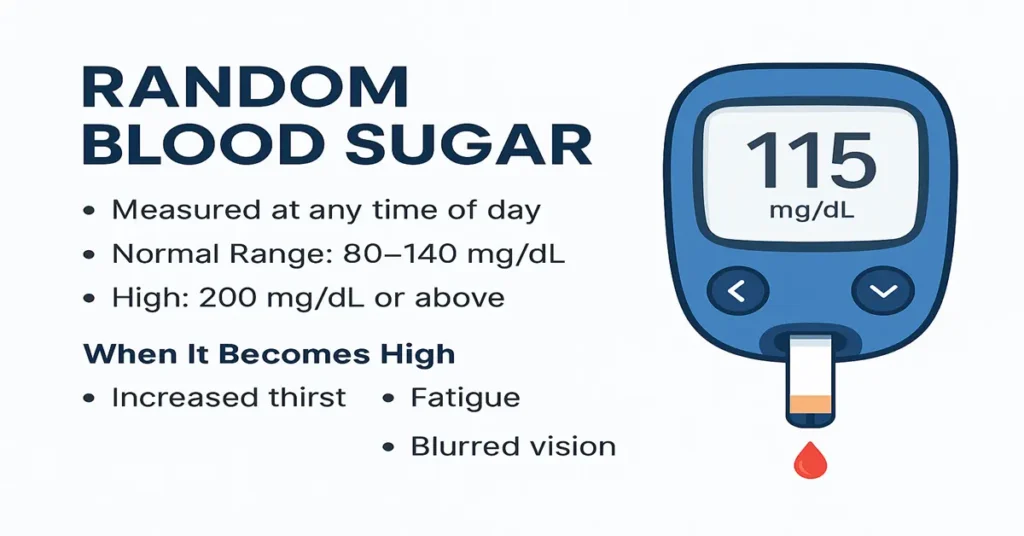
The Random Blood Sugar (RBS) test measures the level of glucose in your blood at any random time of the day, without the need for fasting. In routine hospital and OPD practice, this is one of the quickest ways doctors get a real-time picture of how the body is handling sugar at that moment.
Clinically, RBS is often ordered when a patient walks in with symptoms like sudden weakness, dizziness, confusion, excessive thirst, or frequent urination. It is also commonly used for quick diabetes screening when waiting for fasting tests is not practical. Unlike fasting sugar, RBS reflects what is happening right now in the body.
What Random Blood Sugar Measures (Functions of the RBS Test)
Shows real-time blood glucose level
RBS tells us the current sugar level, regardless of whether the person has eaten recently or not. In day-to-day lab work, this is especially useful when timing of the last meal is unclear.
Helps in quick diabetes screening
When someone reports classic symptoms such as increased thirst, frequent urination, unexplained weight loss, or blurred vision, an RBS test gives an immediate clue about possible sugar imbalance. Doctors usually correlate this value with symptoms before deciding the next step.
Detects sudden high or low sugar states
Symptoms like shakiness, sweating, confusion, anxiety, or extreme weakness often prompt an urgent RBS check. In emergency settings, this is one of the first blood tests done.
Useful in emergency and OPD settings
In hospitals and clinics, patients with altered sensorium, dehydration, or unexplained fatigue are frequently checked with RBS because it is fast and informative.
Monitors day-to-day glucose fluctuations
RBS is helpful for people already diagnosed with diabetes, those on insulin, and even individuals who complain of random dizziness or tiredness during the day.
Why the RBS Test Is Important
Early signal of diabetes
In real practice, we often see patients with normal fasting sugar but raised RBS. This can act as an early warning sign, prompting further evaluation.
Helps identify prediabetes
Many people feel completely fine and are unaware of rising sugar levels. An abnormal RBS may be the first hint that the body’s sugar control is starting to slip.
Supports diabetes management decisions
Doctors sometimes use RBS values to understand how current treatment is working, especially when patients report symptoms between scheduled fasting tests.
Catches post-meal sugar spikes
Some individuals have normal fasting values but significant sugar rise after meals. RBS helps reveal these hidden spikes, which might otherwise go unnoticed.
Symptoms of Abnormal RBS Levels
Symptoms of high RBS (hyperglycemia)
Excessive thirst, dry mouth, frequent urination, fatigue, blurred vision, headache, nausea, slow-healing wounds, irritability, and unexplained weight loss are commonly reported. Clinically, these symptoms often develop gradually.
Symptoms of low RBS (hypoglycemia)
Shaking, sweating, sudden hunger, weakness, confusion, dizziness, fast heartbeat, anxiety, and pale skin are typical. Low RBS is considered urgent because symptoms can progress quickly if not addressed.
Normal Range for Random Blood Sugar (RBS)
RBS values are interpreted in context. Age, pregnancy status, symptoms, and clinical background all matter.
General RBS interpretation
80–140 mg/dL is usually considered normal for healthy individuals.
140–199 mg/dL suggests borderline or prediabetes, especially if seen repeatedly.
200 mg/dL or above raises strong suspicion of diabetes, particularly if confirmed on repeat testing.
Age-Wise Random Blood Sugar Ranges
Children (0–12 years)
A range of about 80–160 mg/dL is commonly accepted. Children often show wider fluctuations due to faster metabolism and activity levels.
Teenagers (13–19 years)
Values around 90–150 mg/dL are generally seen. Hormonal changes during adolescence can cause mild, temporary elevations.
Adults (20–60 years)
80–140 mg/dL is considered the standard healthy range in most clinical settings.
Senior adults (60+ years)
A slightly higher range, around 100–160 mg/dL, may be acceptable. With age, insulin response can become slower, which doctors factor into interpretation.
Gender-Wise RBS Ranges
Men
Typically fall within 80–140 mg/dL. Higher values are more commonly noted in those who are overweight or physically inactive.
Women
Often considered normal up to around 135 mg/dL. Hormonal conditions such as thyroid imbalance or PCOS can influence readings, which doctors usually evaluate alongside other tests.
Pregnancy-Specific RBS Ranges
During pregnancy, sugar control is monitored more strictly to protect both mother and baby.
For pregnant women, an RBS value of 70–120 mg/dL is generally preferred. Values between 121–139 mg/dL are watched closely, while 140 mg/dL or more is considered high and needs further assessment.
Persistently high RBS during pregnancy can be associated with gestational diabetes, higher baby weight, excess amniotic fluid, and delivery-related complications. This is why doctors take even mild elevations seriously in pregnancy.
Causes of High Random Blood Sugar
High RBS can be seen after heavy carbohydrate intake, during stress, with lack of physical activity, obesity, thyroid disorders, PCOS, pancreatic conditions, infections, fever, or use of steroid medications. Clinically, doctors look for patterns rather than a single isolated value.
Causes of Low Random Blood Sugar
Low RBS is commonly linked to long gaps between meals, excessive physical exertion, very restrictive diets, hormonal issues, excess insulin, alcohol intake, or adrenal gland disorders. Context and timing play a major role in interpretation.
When Abnormal RBS Levels Become Risky
Dangerously high levels
Readings of 200 mg/dL or above are considered significant and may indicate diabetes. Over time, persistently high sugar can affect nerves, kidneys, eyes, heart, and brain. Very high values can also lead to acute complications like DKA in certain patients.
Dangerously low levels
Values below 70 mg/dL indicate hypoglycemia. If untreated, this can lead to fainting, seizures, or loss of consciousness, which is why doctors treat low sugar as an emergency.
Test Preparation for RBS
One advantage of the RBS test is that fasting is not required. However, for more reliable results, it helps to avoid heavy sweets just before testing, avoid smoking and alcohol for at least 12–24 hours, stay hydrated, and inform the doctor about insulin or sugar-lowering medicines. Overeating immediately before the test can affect interpretation.
When to Consult a Doctor
Medical advice should be sought if RBS readings are repeatedly above 140 mg/dL, cross 200 mg/dL even once, or if symptoms like constant thirst, fatigue, blurred vision, or frequent urination are present. Pregnant women should consult promptly if RBS exceeds 120 mg/dL. Recurrent low readings below 70 mg/dL also need medical evaluation.
Important Word Explanations
RBS: Random Blood Sugar test done at any time of the day.
Hyperglycemia: Higher than normal blood sugar.
Hypoglycemia: Lower than normal blood sugar.
Insulin resistance: Reduced response of body cells to insulin.
Gestational diabetes: Diabetes detected during pregnancy.
DKA: A serious complication related to very high blood sugar.
People Also Ask
Is a high RBS result always serious?
Not always. Doctors usually look at symptoms and repeat values before drawing conclusions.
Can RBS levels change during the day?
Yes. RBS naturally fluctuates based on meals, stress, and activity.
Does one abnormal RBS mean diabetes?
No. A single value is not enough. Confirmation with repeat or additional tests is common.
When do doctors usually worry about RBS?
Concern increases when values are persistently high, very high, or linked with symptoms.
Is repeat testing common after an abnormal RBS?
Yes. Repeat testing helps confirm whether the change is temporary or persistent.
Can low RBS be temporary?
Yes. It can occur due to missed meals or exertion, but repeated lows need evaluation.
~END~