
Prolactin Test – Complete, Simple, and Patient-Friendly Guide
Introduction
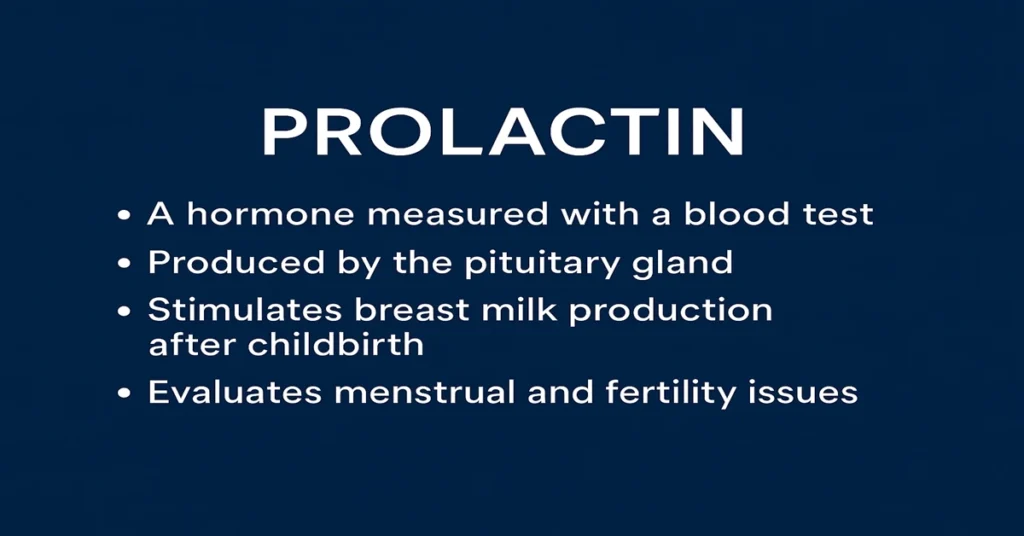
The Prolactin Test is a routine blood test used to measure the level of prolactin, a hormone released by the pituitary gland. In everyday clinical practice, this test is most often ordered when doctors want to understand symptoms related to reproductive hormones, menstrual patterns, fertility, or sexual health.
While prolactin is widely known for its role in breast milk production after childbirth, its influence goes beyond lactation. It interacts closely with other hormones and can affect menstrual regularity, ovulation, testosterone balance, and overall reproductive function in both women and men. Because of this wide hormonal influence, prolactin testing often serves as an important first step when evaluating unexplained hormonal symptoms.
What is Prolactin?
Prolactin is a hormone produced by the anterior part of the pituitary gland, a small but critical gland located at the base of the brain. Under normal conditions, prolactin secretion is tightly controlled by dopamine, which acts as a natural brake to keep levels within a stable range.
When this balance is disturbed—either due to physiological changes, medications, or pituitary-related conditions—prolactin levels can rise or fall outside the expected range. Measuring prolactin helps clinicians assess whether the pituitary gland is functioning normally and whether hormonal regulation remains intact.
Where is Prolactin Produced in the Body?
Prolactin is produced in the anterior pituitary, but its regulation depends on coordinated signaling between the brain and endocrine system.
How Production Works:
The hypothalamus continuously releases dopamine, which suppresses prolactin release under normal conditions.
During pregnancy, this suppression is reduced, allowing prolactin levels to rise naturally.
Once released into the bloodstream, prolactin acts on breast tissue, reproductive organs, and certain brain pathways.
This regulation occurs through the hypothalamic–pituitary axis, a finely balanced hormonal control system that plays a central role in reproductive and stress-related functions.
Functions and Importance of Prolactin
Prolactin has multiple roles in the body, and its effects vary slightly between females and males.
In Females
Prolactin supports breast tissue development during pregnancy and plays a central role in milk production after delivery. It also interacts with ovarian hormones and can influence ovulation and menstrual regularity. From a clinical perspective, prolactin levels are often reviewed when menstrual cycles become irregular or fertility concerns arise.
In Males
Although prolactin levels are normally lower in men, the hormone still contributes to overall reproductive hormone balance. Abnormal levels may interfere with testosterone regulation and sexual function. Even mild elevations can be clinically relevant when symptoms are present.
Causes of Low Prolactin Levels
Low prolactin levels are uncommon and are usually identified incidentally during broader hormonal evaluations rather than through isolated symptoms.
Common Causes
Reduced pituitary hormone production, often due to pituitary dysfunction
Use of dopamine-enhancing medications that suppress prolactin release
Head injury affecting the pituitary region
Pressure effects from pituitary tumors
Severe blood loss during childbirth, known as Sheehan’s syndrome
In clinical practice, low prolactin is typically interpreted in the context of other pituitary hormone levels rather than as a standalone concern.
Symptoms of Low Prolactin Levels
In Females
Difficulty with breast milk production after childbirth is the most recognized association. Other effects are rare and usually occur only when multiple pituitary hormones are affected.
In Males
Most men with low prolactin do not experience noticeable symptoms. Occasionally, subtle changes in libido or mood may be observed, but these findings are nonspecific.
Overall, low prolactin becomes clinically important mainly when it reflects broader pituitary insufficiency.
Causes of High Prolactin Levels
High prolactin levels, medically referred to as hyperprolactinemia, are more commonly encountered in clinical practice. Elevation may be temporary and physiological or related to underlying medical conditions.
Common Medical Causes
Benign pituitary tumors that secrete prolactin
Low thyroid hormone levels, which indirectly stimulate prolactin release
Reduced hormone clearance in chronic kidney disease
Altered metabolism in chronic liver disease
Certain hormonal conditions, including selected cases of PCOS
Physical or emotional stress
Medication-Related Causes
Several commonly prescribed medications are known to increase prolactin levels, particularly drugs that affect dopamine pathways, such as antipsychotics, some antidepressants, anti-nausea medications, and specific blood pressure treatments.
Natural Causes
Pregnancy and breastfeeding
Deep sleep phases
Sexual activity or nipple stimulation
Clinicians always interpret elevated prolactin values in the context of timing, symptoms, and medication history.
Symptoms of High Prolactin Levels
Elevated prolactin can interfere with normal reproductive hormone signaling.
In Females
Changes in menstrual patterns, difficulty conceiving, and unexpected breast milk discharge may occur. Some women also report vaginal dryness, breast discomfort, or reduced sexual interest, reflecting altered estrogen balance.
In Males
Men may experience reduced libido, erectile difficulties, changes in sperm production, or breast tissue enlargement. Fatigue related to hormonal imbalance may also be noted.
When prolactin-secreting tumors grow large, pressure effects such as headaches or visual disturbances can develop due to proximity to optic nerves.
Reference (Normal) Ranges
Reference ranges vary slightly between laboratories due to testing methods.
Typical Ranges
Non-pregnant women: 4.8 – 23.3 ng/mL
Pregnant women: 80 – 400 ng/mL (varies by trimester)
Men: 4.0 – 15.2 ng/mL
Children: Usually below 10 ng/mL
Interpretation
Elevated prolactin values signal the need for further evaluation of pituitary or thyroid function.
Low values may suggest reduced pituitary activity when assessed alongside other hormones.
Sample Type
Sample: Serum (blood sample)
Tube Used: Red top (plain) or SST
Fasting: Not mandatory, though morning samples are preferred due to natural hormonal fluctuations
Test Preparation
Although the test is simple, certain factors can influence prolactin levels temporarily.
Avoiding physical and emotional stress before testing helps reduce false elevations. Intense exercise, nipple stimulation, and sexual activity should be avoided for at least 12–24 hours prior to sample collection. Patients should also inform their doctor about any medications they are taking, as many drugs affect prolactin secretion.
Blood is drawn from a vein, and results are usually available within a day.
When to Consult a Doctor
Medical evaluation is recommended if symptoms such as irregular menstrual cycles, unexplained breast discharge, infertility, reduced sexual drive, or breast enlargement in men are present. Persistent headaches or changes in vision should also prompt medical review.
Based on results, doctors may request additional tests, including thyroid function tests, pituitary imaging, or other hormone assessments, to understand the complete hormonal picture.
Important Word Explanations
- Prolactin: A hormone involved in milk production and reproductive hormone regulation.
- Pituitary Gland: A small gland at the base of the brain that controls multiple hormones.
- Dopamine: A brain chemical that suppresses prolactin release under normal conditions.
- Prolactinoma: A non-cancerous pituitary tumor that produces excess prolactin.
- Galactorrhea: Milk discharge unrelated to pregnancy or breastfeeding.
- Hypopituitarism: Reduced hormone production from the pituitary gland.
~END~
Related Posts
None found