
Potassium (K⁺) Test: Meaning, Functions, Causes, Symptoms, Normal Range & Complete Guide
Overview
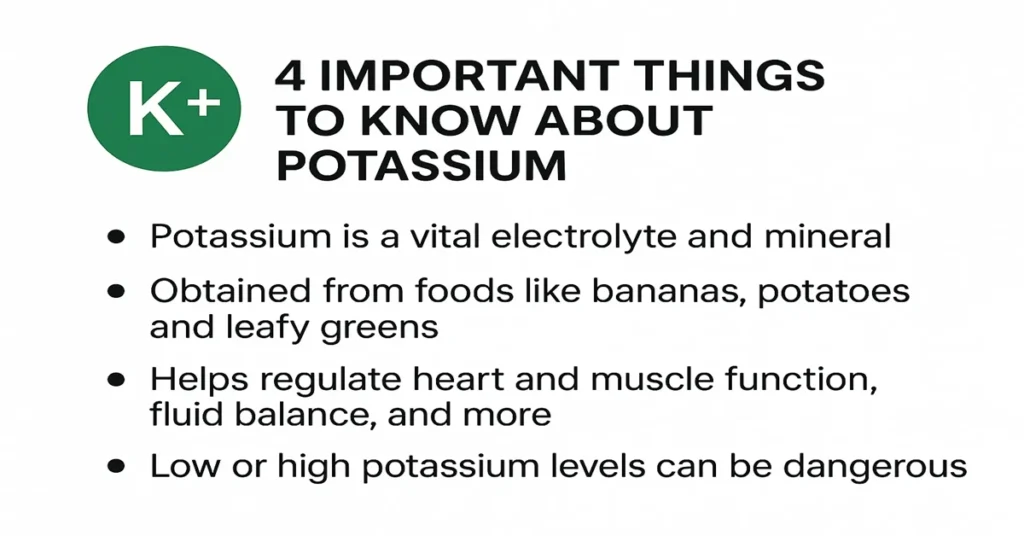
Potassium (K⁺) is a vital mineral and electrolyte that plays a central role in the body’s electrical activity. It is essential for normal nerve signaling, muscle movement, and maintaining a steady and coordinated heartbeat. The Potassium Blood Test measures the amount of potassium circulating in the bloodstream and helps doctors assess whether this balance is being maintained.
In clinical practice, potassium is treated with particular caution. Even small shifts outside the normal range can affect the heart and muscles. For this reason, potassium testing is routinely included in metabolic panels, kidney evaluations, and emergency assessments, especially when symptoms such as weakness, palpitations, or fluid imbalance are present.
What is Potassium (K⁺)?
Potassium is an electrolyte that carries an electrical charge in body fluids. This charge allows cells—especially nerve and muscle cells—to generate and transmit electrical impulses. These impulses are responsible for coordinated muscle contraction, normal heart rhythm, and communication between the brain and the rest of the body.
Because the body cannot produce potassium on its own, it must be obtained from external sources. Blood potassium levels reflect not only intake, but also how effectively the kidneys and hormones regulate potassium movement between the blood and body cells.
Where is Potassium Obtained and Regulated?
Potassium enters the body through food and is absorbed in the intestines. Once in the bloodstream, most potassium moves into body cells, while a smaller portion remains in the blood, where it is measured.
The kidneys are the main regulators of potassium balance. They continuously adjust how much potassium is excreted in the urine based on the body’s needs. Hormones such as aldosterone and insulin help control how potassium shifts between the bloodstream and cells. When kidney function or hormonal regulation is impaired, potassium levels can change quickly and significantly.
Main Functions and Importance of Potassium
Regulates Heartbeat and Muscle Contraction
Potassium is critical for maintaining a regular heart rhythm. It helps control the electrical signals that coordinate each heartbeat. Both low and high potassium levels can interfere with this process and lead to rhythm disturbances.
Supports Nerve Transmission
Nerve cells rely on potassium to send signals efficiently. Proper potassium balance allows smooth communication between the brain, nerves, and muscles.
Maintains Fluid and Electrolyte Balance
Potassium works closely with sodium to regulate fluid distribution inside and outside cells. This balance supports normal cell size, hydration, and blood pressure stability.
Helps Maintain Acid–Base Balance
Potassium contributes to maintaining the body’s internal pH, allowing enzymes and metabolic processes to function normally.
Supports Energy Metabolism
Normal potassium levels are necessary for cellular metabolism, growth, and repair, making potassium essential for overall physical function.
Causes of Low Potassium (Hypokalemia)
Hypokalemia refers to a potassium level below the normal range. In most cases, it reflects increased potassium loss or shifts of potassium from the blood into cells rather than a simple dietary shortage.
Low potassium is often seen with significant fluid loss, certain medications, hormonal influences, or metabolic disturbances. Doctors usually assess whether the loss is occurring through the kidneys, the digestive system, or as a result of internal redistribution.
Symptoms of Low Potassium
When potassium levels fall, muscles and nerves are affected first. People may notice muscle weakness, cramps, or unusual fatigue. In more pronounced cases, heart rhythm changes or difficulty with muscle control can occur.
The severity of symptoms often depends on how rapidly potassium levels drop, not just the numerical value itself.
Causes of High Potassium (Hyperkalemia)
Hyperkalemia occurs when potassium levels rise above the normal range. This is most commonly related to reduced kidney excretion, where potassium is retained instead of being removed in urine.
Other contributing factors may include hormonal disorders, certain medications, tissue breakdown, or shifts of potassium from inside cells into the bloodstream. Because the heart is highly sensitive to potassium, elevated levels are taken seriously in clinical settings.
Symptoms of High Potassium
High potassium primarily affects the heart and skeletal muscles. Symptoms may be subtle at first, such as muscle heaviness or mild weakness, but can progress to noticeable changes in heart rhythm.
In more significant elevations, people may experience palpitations, chest discomfort, or profound weakness. Severe hyperkalemia can disrupt cardiac electrical activity and requires urgent medical evaluation.
Reference Ranges for Potassium (K⁺)
Reference ranges may vary slightly between laboratories, but commonly accepted values are:
Normal Range: 3.5 – 5.1 mEq/L
Values well below or above this range are considered clinically significant and are evaluated promptly due to their potential effect on heart rhythm.
Sample Type and Collection
Sample Type: Serum (blood)
Tube Used: Red Top (Plain Tube)
A small blood sample is drawn from a vein. Potassium testing is often performed alongside other electrolytes and kidney-related markers.
Test Preparation
In most cases, no fasting is required for a potassium test. For accurate interpretation, it is important that the healthcare provider is aware of any medications or supplements being taken, as several drugs can influence potassium levels.
Normal hydration and routine activity are usually sufficient unless specific instructions are provided.
When to Consult a Doctor
Medical advice should be sought if potassium levels are abnormal or if symptoms such as persistent muscle weakness, palpitations, or unexplained fatigue occur. People with kidney disease, heart conditions, diabetes, or those taking medications known to affect potassium often require closer monitoring.
Because potassium imbalances can affect heart rhythm, timely evaluation helps prevent serious complications.
Important Word Explanations
Electrolyte
A charged mineral in body fluids that supports nerve signaling and muscle activity.
Arrhythmia
An abnormal heart rhythm caused by changes in the heart’s electrical activity.
Diuretic
A medication that increases urine output and can influence electrolyte balance.
Hypokalemia
A condition in which blood potassium levels are lower than normal.
Hyperkalemia
A condition in which blood potassium levels are higher than normal.
Serum
The clear liquid portion of blood used for laboratory testing.
Hemolysis
Breakdown of red blood cells, which can falsely elevate potassium results in a blood sample.
~END~
Related Posts
None found
I think this is one of the most significant info for me.
And i am glad reading your article. But should remark on some general things,
The site style is ideal, the articles is really great : D.
Good job, cheers