
Short Overview
Post-lunch blood sugar, also known as Post-Prandial Blood Sugar (PPBS), measures the glucose level 2 hours after eating lunch. In routine lab and OPD practice, this value is extremely useful because it shows how efficiently the body manages sugar after food intake.
After a meal, blood sugar naturally rises. A healthy pancreas releases insulin, which helps move this sugar into cells for energy. When insulin is insufficient, delayed, or not working effectively, glucose remains high in the blood. This is often the earliest signal of prediabetes, diabetes, or metabolic imbalance, even when fasting sugar appears normal.
Clinically, many patients are surprised to learn that their fasting sugar is fine, but post-lunch sugar is high. This is exactly why PPBS is such an important parameter.
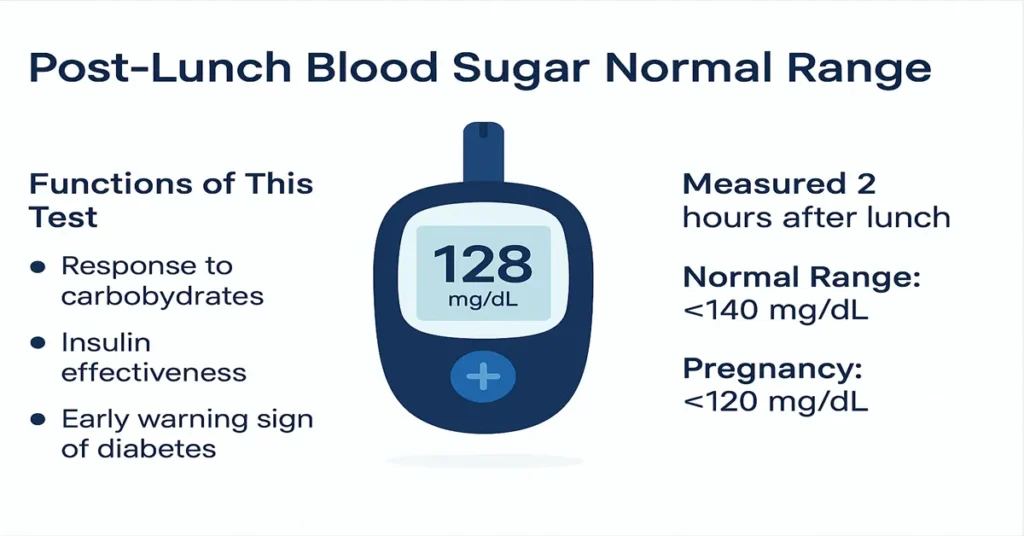
What Post-Lunch Blood Sugar Shows (Functions of This Test)
Post-lunch blood sugar gives doctors a real-world picture of how the body behaves after food.
It shows how the body handles carbohydrates. After eating, sugar should rise and then come down within two hours. If it stays high, the body is struggling to process carbs properly.
It reflects the strength and timing of insulin response. A high PPBS often means insulin is too little, too slow, or not effective due to insulin resistance.
It acts as an early warning sign for diabetes. Many people develop impaired glucose tolerance first, where only post-meal sugar is high while fasting remains normal.
It explains post-meal energy changes. Abnormal PPBS can cause sleepiness, poor concentration, fatigue, or irritability after lunch, which patients often complain about in OPD.
In routine lab practice, PPBS is one of the first values doctors correlate with lifestyle, weight, stress, and family history.
Symptoms of Abnormal Post-Lunch Blood Sugar
Post-lunch sugar can be either high or low. Symptoms usually guide which direction the imbalance is going.
When post-lunch sugar is high, people may notice excessive thirst, dry mouth, unusual tiredness, blurred vision, frequent urination, sleepiness after meals, headache, or irritability. Some patients describe a “heavy” feeling after lunch.
When post-lunch sugar drops too low, a condition called reactive hypoglycemia, symptoms may include shaking, sweating, sudden hunger, fast heartbeat, dizziness, anxiety, confusion, or weakness occurring 2–3 hours after eating.
Doctors often rely on both symptoms and lab values together before drawing conclusions.
Post-Lunch Blood Sugar Normal Ranges
PPBS ranges vary slightly with age, gender, and physiological states like pregnancy.
Age-Wise Normal Ranges
In children (0–12 years), a post-lunch value between 110–160 mg/dL is generally acceptable. Children tend to show higher spikes due to fast metabolism and activity levels.
In teenagers (13–19 years), normal PPBS usually stays between 110–150 mg/dL. Hormonal changes during adolescence can cause temporary fluctuations.
In adults (20–60 years), a healthy post-lunch sugar is less than 140 mg/dL. This is the standard reference used in most laboratories.
In senior adults (60+ years), values up to 140–160 mg/dL may be seen. With age, insulin sensitivity reduces slightly, which doctors take into account.
Gender-Wise Normal Ranges
In men, a post-lunch value below 140 mg/dL is considered normal. Higher values are often linked with abdominal weight, stress, or insulin resistance.
In women, PPBS usually falls between 110–135 mg/dL. Hormonal factors can cause mild variation. Conditions like PCOS, thyroid imbalance, or chronic stress may push values higher.
Overall, gender differences are mild and not diagnostic by themselves.
Pregnancy-Specific Post-Lunch Ranges
During pregnancy, glucose control is stricter because maternal sugar directly affects the baby.
A normal 2-hour post-meal value is below 120 mg/dL.
Values between 120–139 mg/dL are considered borderline.
Values 140 mg/dL or above are high.
Doctors monitor PPBS closely in pregnancy because high post-meal sugar increases the risk of large baby size, excess amniotic fluid, gestational diabetes, and delivery complications.
What High Post-Lunch Sugar Means
When PPBS stays between 140–199 mg/dL, it usually indicates prediabetes.
Values 200 mg/dL or higher strongly suggest diabetes, especially if seen repeatedly.
Common contributing factors include excess carbohydrate intake, insulin resistance, stress hormones, lack of physical activity, family history of diabetes, thyroid disorders, PCOS, pancreatic issues, and heavy caffeine intake after meals.
Long-term high PPBS silently damages nerves, kidneys, eyes, heart, and blood vessels, even if fasting sugar looks acceptable.
What Low Post-Lunch Sugar Means
If PPBS drops below 70 mg/dL, it suggests reactive hypoglycemia. This can happen due to excessive insulin release, long gaps between meals, very low-carb diets, intense exercise, thyroid or adrenal imbalance, or rapid stomach emptying.
Low PPBS should not be ignored, especially if symptoms are frequent.
Test Preparation for Post-Lunch Blood Sugar
For accurate results, eat your usual lunch without overeating or skipping items. The blood sample should be taken exactly 2 hours after finishing the meal. Avoid sugary drinks, smoking, and alcohol before the test. Limit tea or coffee around testing time and stay hydrated. Always inform the doctor if you are on insulin or sugar-lowering medicines.
When to Consult a Doctor
Medical advice is important if PPBS repeatedly exceeds 140 mg/dL, if you feel sleepy or weak after meals every day, if you experience shakiness a few hours after eating, or if pregnancy PPBS crosses 120 mg/dL. It is also important when fasting sugar is normal but post-lunch sugar remains high.
Early correction at this stage can prevent long-term diabetes complications.
Important Word Explanations
PPBS means Post-Prandial Blood Sugar, measured 2 hours after a meal.
Hyperglycemia refers to high blood sugar levels.
Hypoglycemia means low blood sugar levels.
Insulin resistance is a condition where body cells do not respond properly to insulin.
Prediabetes is an early stage where blood sugar is higher than normal but not yet diabetes.
Reactive hypoglycemia is a sudden drop in sugar occurring a few hours after eating.
People Also Ask
Is high post-lunch sugar serious if fasting sugar is normal?
Yes, it can be. This pattern often appears in early diabetes and should not be ignored.
Can post-lunch sugar be temporarily high?
Yes. Stress, illness, overeating, or poor sleep can cause temporary spikes.
Does high PPBS always mean diabetes?
Not always. Doctors usually confirm with repeat tests and overall clinical assessment.
When do doctors usually worry about PPBS values?
When values stay above 140 mg/dL consistently or symptoms are present.
Is repeat testing common for PPBS?
Yes. Repeat testing helps confirm whether the rise is temporary or persistent.
Why do doctors check PPBS more than fasting sugar sometimes?
Because PPBS often detects sugar problems earlier than fasting values.
~END~