
Platelet Count Test: Meaning, Normal Range, Low & High Platelet Causes, Symptoms, and Complete Medical Guide
What Is the Platelet Test?
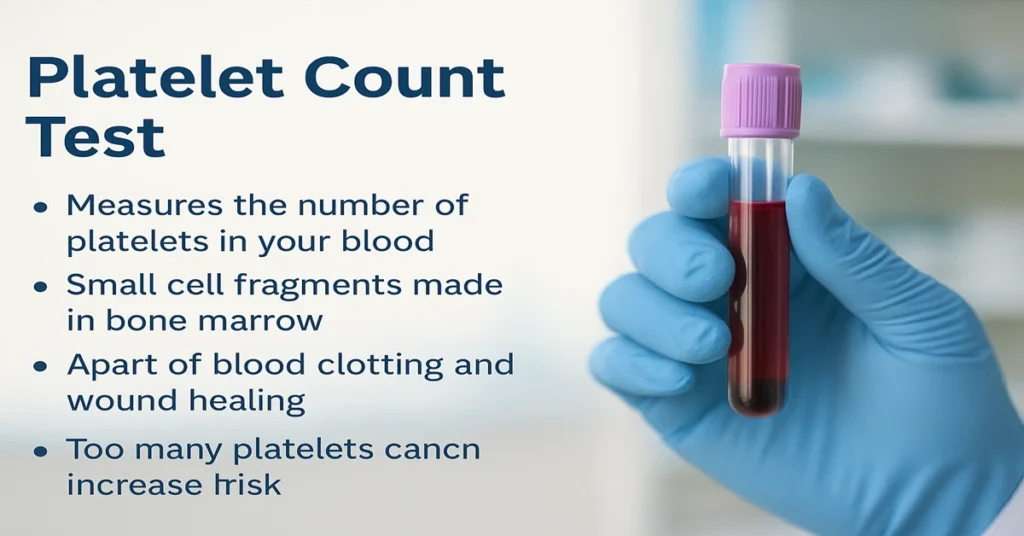
The platelet count test measures the number of platelets circulating in your blood. Platelets are small cell fragments that play a central role in blood clotting. When a blood vessel is injured, platelets quickly gather at the site, stick together, and help form a clot to control bleeding. They also release substances that support vessel repair and healing.
This test is routinely included in a Complete Blood Count (CBC). In clinical practice, doctors use platelet values to assess bleeding risk, clotting tendencies, and bone marrow function. A low platelet count may explain frequent bruising or prolonged bleeding, while a persistently high count raises concern for abnormal clot formation. Because both extremes can have clinical implications, platelet count is interpreted carefully and always in context.
Where Are Platelets Produced?
Platelets are produced in the bone marrow, the soft tissue found inside larger bones such as the pelvis, spine, and ribs. Within the marrow, large precursor cells called megakaryocytes mature and gradually release fragments into the bloodstream. Each fragment becomes a functional platelet.
Once in circulation, platelets typically survive for about 7 to 10 days before being removed and replaced. The body maintains a steady balance by continuously producing new platelets. From a clinical point of view, this is why disorders affecting the bone marrow often have a noticeable impact on platelet counts.
Functions and Importance of Platelets
Platelets are essential for maintaining normal blood flow and preventing excessive bleeding.
Blood Clotting
Platelets are the first responders when a blood vessel is damaged. They adhere to the injured surface, aggregate together, and form a temporary plug that limits blood loss.
Wound Healing
Beyond clot formation, platelets release growth factors that support tissue repair and recovery after injury.
Maintaining Vessel Integrity
Blood vessels experience minor wear on a daily basis. Platelets help seal tiny defects and maintain vessel stability even in the absence of obvious injury.
Clinically, both insufficient and excessive platelet activity can disturb this balance, which is why platelet count is closely monitored.
Causes of Low Platelet Count (Thrombocytopenia)
A reduced platelet count is referred to as thrombocytopenia. In medical practice, this finding signals either reduced platelet production, increased destruction, or abnormal distribution within the body.
Viral infections can temporarily suppress platelet production or increase their breakdown. Autoimmune conditions may cause the immune system to destroy platelets prematurely. Disorders affecting the bone marrow can limit platelet formation altogether.
Cancer treatments, certain medications, nutritional deficiencies, and prolonged alcohol exposure may also influence platelet levels. In some situations, an enlarged spleen traps platelets, lowering their number in circulation. Clinicians focus on identifying the underlying mechanism rather than the platelet count alone.
Symptoms of Low Platelet Count
Symptoms depend on how low the platelet count is and how quickly it has fallen. People may notice easy bruising, nosebleeds, gum bleeding, or prolonged bleeding from minor cuts. Tiny red or purple spots on the skin may appear due to small bleeds under the surface.
From a clinical perspective, these signs reflect impaired clot formation. Fatigue may develop if bleeding is ongoing or recurrent.
Causes of High Platelet Count (Thrombocytosis)
An elevated platelet count is called thrombocytosis. This may occur as a temporary response or as part of an underlying condition.
Platelet levels can rise following surgery, trauma, infection, or inflammation. Iron deficiency may also be associated with higher counts. In some individuals, removal of the spleen results in persistently elevated platelet levels because platelets are no longer filtered normally.
Less commonly, disorders of the bone marrow cause excessive platelet production. Doctors differentiate between reactive changes and primary platelet disorders by reviewing the full clinical picture.
Symptoms of High Platelet Count
Many people with mildly elevated platelet counts have no noticeable symptoms. When levels are significantly high, symptoms may include headaches, dizziness, chest discomfort, or tingling sensations in the hands and feet.
Clinically, the main concern with very high platelet counts is an increased tendency toward clot formation, which is why persistent or unexplained elevation is evaluated carefully.
Normal Platelet Reference Range
Platelet reference ranges can vary slightly between laboratories, but commonly used values include:
- Normal Platelet Count: 150,000 – 450,000 cells/mcL
- Low Platelets: Below 150,000 cells/mcL
- High Platelets: Above 450,000 cells/mcL
Doctors interpret these numbers alongside symptoms, medical history, and other CBC parameters.
Sample Type and Collection
- Sample Required: Whole blood
- Collection Tube: Lavender-top EDTA tube
Blood is drawn from a vein, usually in the arm. Platelet count is measured automatically as part of a CBC. The procedure is routine, and results are often available the same day.
Test Preparation
No fasting is required for a platelet count test. Hydration status and recent medical history are considered during interpretation. Doctors also review medications and recent illnesses when assessing platelet values.
The platelet count is almost always reviewed together with other CBC results rather than in isolation.
When to Consult a Doctor
Medical consultation is recommended if there is unexplained bruising, frequent nosebleeds, gum bleeding, or blood in urine or stool. Follow-up is also important when platelet levels remain consistently outside the normal range.
People with chronic infections, cancer, or known blood disorders are often monitored more closely. Sudden neurological symptoms or chest discomfort require prompt medical attention, as they may signal clot-related complications.
Important Word Explanations
- Thrombocytopenia: A condition where platelet count is lower than normal.
- Thrombocytosis: A condition where platelet count is higher than normal.
- Megakaryocytes: Large bone marrow cells that produce platelets.
- Petechiae: Small red or purple skin spots caused by minor bleeding under the skin.
- CBC (Complete Blood Count): A blood test that measures red cells, white cells, platelets, and related indices.
~END~