
Overview
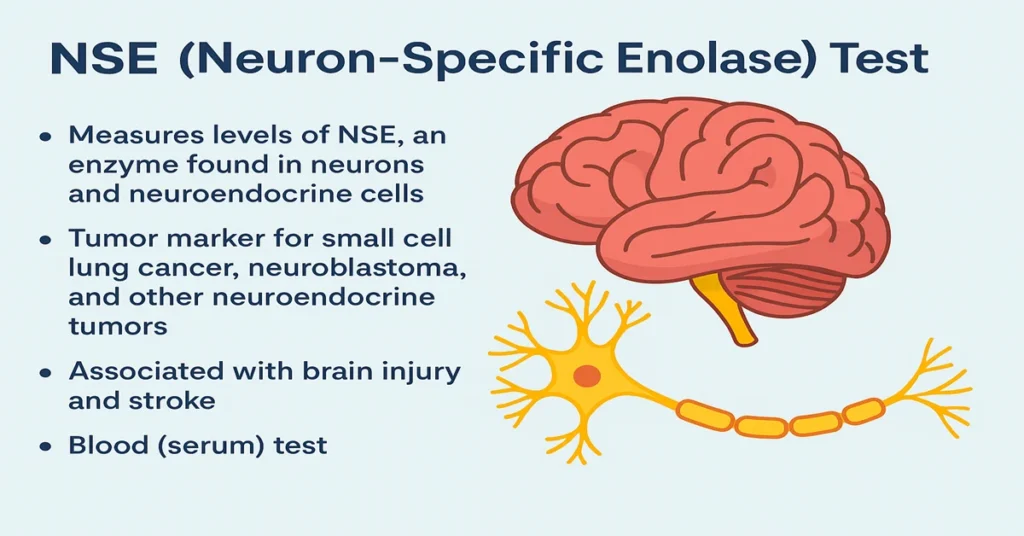
The NSE (Neuron-Specific Enolase) Test is a blood test used to measure the level of neuron-specific enolase in the body. NSE is an enzyme found mainly inside nerve cells (neurons) and neuroendocrine cells—specialized cells present in organs such as the lungs, pancreas, thyroid, adrenal glands, and parts of the digestive system. While NSE plays a role in energy production within nerve cells, its primary value in medical practice is as a laboratory marker.
Clinically, NSE is used as a tumor marker in certain cancers, most notably small cell lung cancer and neuroblastoma, as well as in other neuroendocrine tumors. NSE levels can also rise when nerve cells are damaged, such as after brain injury, stroke, or cardiac arrest. Because of this dual relevance in oncology and neurology, the NSE test is commonly used to support diagnosis, assess disease activity, and monitor clinical progression in selected conditions.
What Is NSE and Why It Matters
Neuron-specific enolase is an enzyme involved in glycolysis, the process by which cells generate energy from glucose. In neurons and neuroendocrine cells, NSE is present in relatively high concentrations, which makes it useful as a marker when these cells are damaged or abnormally active.
NSE may be released into the bloodstream when tumor cells produce it in excess or when nerve cells are injured. In laboratory practice, this release provides indirect information about underlying disease activity. It is also important to note that NSE levels can be affected by sample handling, as breakdown of red blood cells during collection can lead to falsely elevated results.
Where NSE Is Produced in the Body
NSE is mainly produced within nerve cells of the brain and nervous system, making it a useful indicator of neuronal injury. It is also produced by neuroendocrine cells found in various organs, including the lungs, thyroid, pancreas, adrenal glands, and gastrointestinal tract.
Smaller amounts of NSE are present in red blood cells and platelets. Because of this, hemolysis during blood collection can artificially raise NSE levels, which is an important consideration when interpreting results.
Main Functions and Clinical Importance
Although NSE has a metabolic role inside cells, its clinical importance lies in its use as a laboratory marker.
Tumor Marker
NSE is commonly used as a tumor marker in cancers with neuroendocrine features. Elevated levels may reflect tumor activity in conditions such as small cell lung carcinoma, neuroblastoma, medullary thyroid carcinoma, pheochromocytoma, and other neuroendocrine tumors.
Brain Injury Assessment
NSE levels may increase following neuronal damage due to traumatic brain injury, stroke, cardiac arrest, or severe lack of oxygen to the brain. In such settings, NSE can help support assessment of injury severity alongside clinical findings and imaging.
Monitoring Treatment
In oncology, NSE is often measured at baseline and followed over time to observe trends. Changes in levels may help clinicians assess response to treatment or detect possible disease progression or recurrence.
Causes of Low NSE Levels
Low or normal NSE levels are generally considered reassuring. They usually indicate normal neuronal integrity, absence of significant neuroendocrine tumor activity, and no major ongoing brain injury.
Low levels do not carry clinical significance and are not associated with disease.
Symptoms of Low NSE Levels
There are no symptoms linked to low or normal NSE levels. Such results simply reflect the absence of abnormal NSE release into the bloodstream.
Causes of High NSE Levels
Elevated NSE levels can be seen in a range of conditions.
The most common cause is neuroendocrine tumors, particularly small cell lung cancer and neuroblastoma. Other cancers with neuroendocrine characteristics may also show increased levels.
NSE may also rise after damage to brain tissue, such as following stroke, head injury, or cardiac arrest. Severe illness, hypoxia, or systemic stress can sometimes lead to modest elevations. In addition, hemolysis during blood collection is a well-recognized non-disease cause of falsely high results.
Symptoms Associated With High NSE Levels
Symptoms are related to the underlying condition rather than the NSE level itself.
In cancer-related cases, symptoms may include respiratory complaints, unexplained weight loss, chest discomfort, lymph node enlargement, or abdominal masses, depending on tumor type and location.
When elevations are due to neurological injury, patients may experience confusion, memory changes, seizures, weakness, loss of consciousness, or severe headache. General symptoms such as fatigue or loss of appetite may also be present.
An elevated NSE level is therefore viewed as a clinical signal that further evaluation is needed.
Reference Ranges
Reference ranges vary slightly between laboratories. In general, NSE levels below the laboratory’s upper reference limit are considered normal.
Values above this limit raise concern for increased NSE release and prompt further assessment. NSE results are never interpreted in isolation and must be correlated with clinical findings, imaging studies, and other laboratory tests.
Sample Type
The NSE test is most commonly performed on a blood (serum) sample. In selected neurological conditions, cerebrospinal fluid may be tested, although this is less common.
Careful sample handling is essential, as hemolysis can significantly affect results.
How the NSE Test Is Performed
A blood sample is collected from a vein and processed to separate serum. NSE levels are measured using immunoassay-based laboratory techniques. Results are reviewed in comparison with reference values, and additional investigations such as imaging may be recommended if levels are elevated.
Advantages of the NSE Test
The NSE test is a useful marker in selected cancers and neurological conditions. It supports early detection in childhood tumors such as neuroblastoma, helps assess brain injury severity, and assists in monitoring disease activity over time. It is a relatively simple and minimally invasive blood test.
Limitations
NSE is not specific to cancer and may be elevated in non-malignant conditions. False elevations can occur due to hemolysis. The test cannot establish a diagnosis on its own and must be interpreted in combination with clinical assessment, imaging, and, when needed, tissue diagnosis.
Test Preparation
No fasting is required. Patients are generally advised to avoid strenuous physical activity before testing. Doctors should be informed about recent injuries, seizures, neurological symptoms, or medications. Proper blood collection technique is important to minimize hemolysis.
When to Consult a Doctor
Medical evaluation is advised if symptoms such as persistent cough, unexplained weight loss, chest pain, neurological changes, seizures, weakness, or symptoms following head injury occur. Individuals with elevated NSE levels should follow medical advice regarding further testing and follow-up.
Important Word Explanations
- Tumor Marker: A substance measured in blood that can suggest tumor activity
- Neuroendocrine Cells: Cells with both nerve-like and hormone-producing properties
- Neuron: A nerve cell responsible for transmitting signals
- Glycolysis: The process by which cells generate energy from glucose
- Hemolysis: Breakdown of red blood cells during or after blood collection
- Neuroblastoma: A childhood cancer arising from nerve tissue
- Enzyme: A protein that accelerates chemical reactions in the body
~END~
Related Posts
None found
Awesome blog.