
Overview
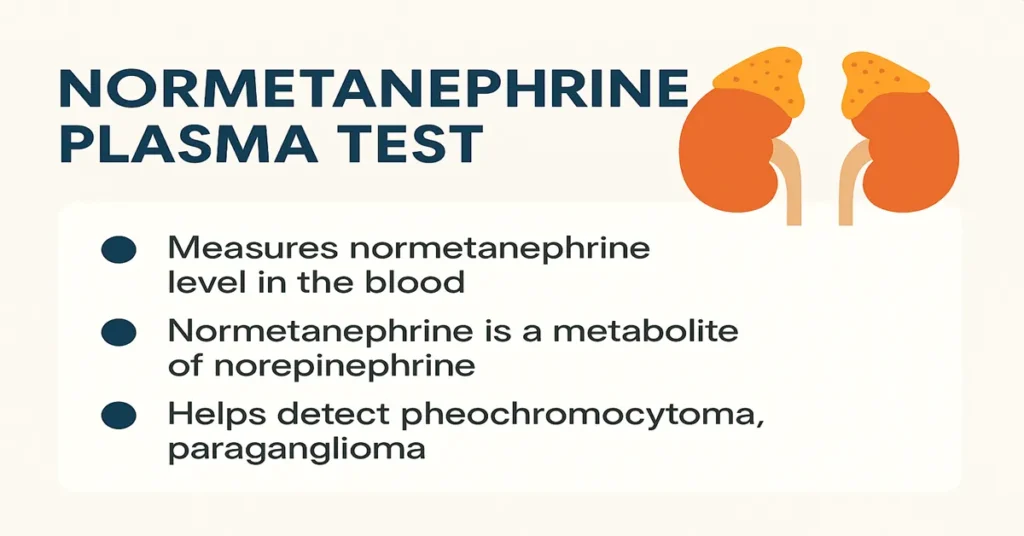
The Normetanephrine Plasma Test is a sensitive blood test used to measure normetanephrine, a substance formed when the body breaks down the stress hormone norepinephrine. This test is especially important when doctors are evaluating the possibility of hormone-producing tumors such as pheochromocytomas and paragangliomas. These tumors may be small or difficult to detect on imaging, but their hormone effects can be significant and potentially dangerous.
Norepinephrine is produced mainly in the adrenal glands, which sit above the kidneys, and in sympathetic nerve endings throughout the body. When norepinephrine is metabolized, normetanephrine is formed and released into the bloodstream. Because normetanephrine levels remain relatively stable compared with the parent hormone, measuring it provides a reliable reflection of ongoing catecholamine activity. For this reason, the test is commonly used in patients with unexplained or severe high blood pressure, recurrent headaches, sweating episodes, palpitations, or anxiety-like attacks.
What Is Normetanephrine and Why Is It Important?
Normetanephrine itself is not an active hormone. It is a metabolite formed when norepinephrine is processed by the enzyme catechol-O-methyltransferase (COMT). This breakdown occurs mainly in the adrenal glands, sympathetic nerves, and body tissues.
Because normetanephrine circulates more steadily in the blood than norepinephrine, it is easier to measure accurately. Elevated levels often indicate excessive norepinephrine production, which can be a clue to the presence of adrenal or nerve-related tumors. This stability is what makes the Normetanephrine Plasma Test one of the preferred screening tools when such conditions are suspected.
Main Functions and Importance of the Test
Although normetanephrine does not have a direct biological role, measuring it has important clinical value.
The test helps detect tumors of the adrenal glands and sympathetic nervous system that release excess catecholamines. It may also be included as part of the evaluation in certain pediatric tumors such as neuroblastoma. In everyday clinical practice, the test is often requested when patients report unexplained episodes of high blood pressure, headaches, sweating, rapid heartbeat, or panic-like symptoms.
Because plasma free normetanephrine remains stable in circulation, it provides a more sensitive screening approach than older tests that measured catecholamines directly. Elevated results often guide doctors toward further imaging studies to locate a possible tumor.
Causes of Low Normetanephrine Levels
Low normetanephrine levels are usually considered normal and are not associated with disease. They generally reflect normal adrenal and sympathetic nervous system function.
In some cases, lower levels may be seen in individuals taking medications that reduce sympathetic activity. Importantly, low values do not produce symptoms and do not require medical intervention.
Symptoms Associated With Low Levels
There are no direct symptoms linked to low normetanephrine levels. Because normetanephrine is only a metabolite, low values simply indicate that catecholamine production is not excessive.
If symptoms such as headaches or palpitations persist despite low levels, clinicians typically look for other possible causes.
Causes of High Normetanephrine Levels
Elevated normetanephrine levels are the main clinical concern and suggest increased norepinephrine activity.
Common reasons include pheochromocytomas and paragangliomas, which actively secrete catecholamines. Temporary increases may also occur with physical exertion, emotional stress, exposure to cold, or sudden activity. Certain medications, including some antidepressants, decongestants, stimulants, and amphetamines, can influence results as well.
Other medical conditions such as sleep apnea, severe hypertension, heart disease, kidney disorders, or acute illness may also contribute to higher readings. For this reason, results are always interpreted in context.
Symptoms of High Normetanephrine Levels
High normetanephrine levels reflect increased norepinephrine release and are often associated with characteristic symptoms. These may include persistently elevated blood pressure or sudden spikes, severe headaches, palpitations, excessive sweating, tremors, and feelings of anxiety or restlessness. Some patients report fatigue, weakness, or unintentional weight loss.
Symptoms may occur in episodes or be more constant, depending on the underlying cause and tumor activity.
Reference Ranges
Reference ranges vary slightly between laboratories. Typical plasma free normetanephrine values are generally reported below established upper limits.
Results above the laboratory reference range raise concern for catecholamine-producing tumors and usually prompt further evaluation. Doctors assess the absolute value together with symptoms, medication history, and clinical findings before drawing conclusions.
Sample Type and Testing Method
The test is performed on a blood plasma sample. To reduce the chance of falsely elevated results, patients are usually asked to rest quietly before the sample is collected.
Blood is drawn into a chilled tube, plasma is separated, and normetanephrine levels are measured using advanced laboratory techniques. In some cases, additional tests such as plasma metanephrine or 24-hour urine studies may be ordered for confirmation.
How the Test Is Performed (Step-by-Step)
Before collection, the patient rests quietly for a short period. A blood sample is then taken from a vein and processed to obtain plasma. Specialized laboratory methods are used to measure normetanephrine levels, which are then compared with reference values. If results are elevated, further investigations such as imaging studies may be recommended.
Advantages of the Normetanephrine Plasma Test
This test offers high sensitivity for detecting catecholamine-producing tumors and helps explain unexplained hypertension and related symptoms. It allows earlier identification of potentially serious conditions and is a relatively simple, non-invasive blood test suitable for both adults and children.
Limitations
Results can be influenced by stress, posture, and medications, leading to false-positive findings. The test does not identify the exact location of a tumor, so imaging studies are required when results are abnormal. Interpretation always requires correlation with clinical symptoms and other investigations.
Test Preparation
Patients are usually advised to rest quietly before the test and to avoid factors that may stimulate catecholamine release. Doctors should be informed about all medications being taken. In some cases, fasting or temporary medication adjustments may be recommended to improve accuracy.
When to Consult a Doctor
Medical evaluation is advised if a person experiences repeated episodes of severe headache, unexplained high blood pressure, excessive sweating, rapid heartbeat, anxiety-like attacks, or unexplained weight loss. A family history of pheochromocytoma or paraganglioma also warrants discussion with a doctor.
Prompt assessment helps ensure that serious underlying causes are identified early.
Important Word Explanations
- Norepinephrine: A stress hormone involved in regulating blood pressure and heart rate
- Metabolite: A substance formed when the body breaks down another compound
- Pheochromocytoma: A tumor of the adrenal gland that produces excess catecholamines
- Paraganglioma: A tumor arising from sympathetic nerve tissue outside the adrenal glands
- Catecholamines: Hormones such as adrenaline and norepinephrine
- COMT: An enzyme involved in catecholamine breakdown
- Plasma: The liquid component of blood
~END~
Related Posts
None found