
Normal Range of Amylase Test
Why Normal Range Matters
The amylase test measures the level of amylase, a digestive enzyme mainly produced by the pancreas and salivary glands. This enzyme plays a key role in breaking down carbohydrates into simpler sugars that the body can absorb and use for energy. Knowing the normal range of amylase is important because abnormal values often point toward pancreatic, salivary gland, or gastrointestinal problems.
Clinically, this is where doctors pause and correlate the number with symptoms. Mild variations can happen due to temporary or non-serious reasons, while clearly abnormal values may signal conditions that need attention, such as pancreatitis or blockage of pancreatic ducts. Understanding the normal range helps avoid unnecessary worry and ensures that genuinely important results are acted on in time.
General Reference Range
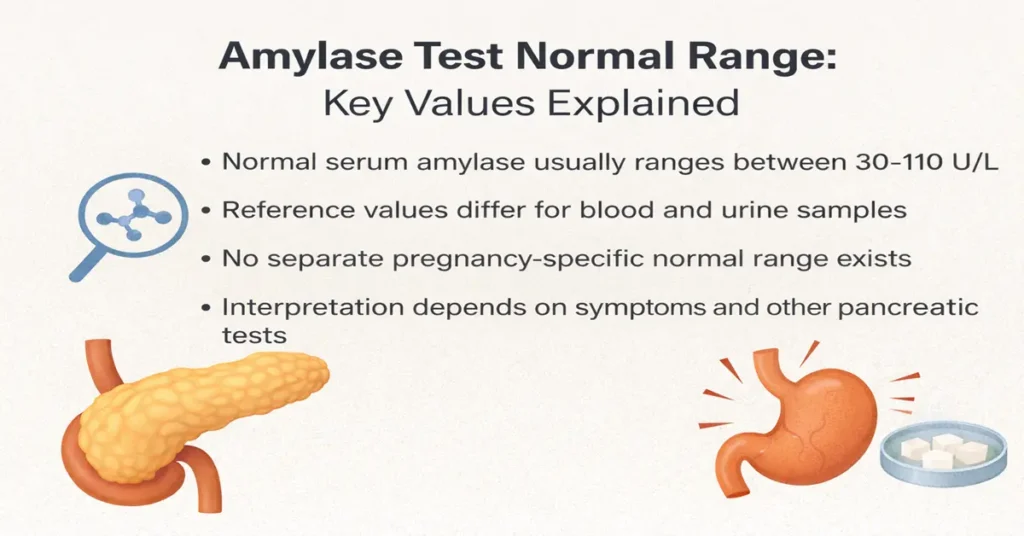
The normal reference range for serum (blood) amylase varies slightly between laboratories because of differences in testing methods and equipment. In most routine clinical labs, the normal adult range is approximately 30 to 110 U/L. Some labs may use a slightly different upper or lower limit, which is why the reference range printed on the report should always be used for interpretation.
Amylase can also be measured in urine. Urine amylase reflects enzyme excretion over a longer period and may be used when blood results are unclear or delayed. Normal urine amylase values are usually reported as less than 500 U/L, though this depends on whether the sample is random or collected over 24 hours.
A value just above or below the reference range does not automatically mean disease. In routine lab practice, doctors look at trends, symptoms, and supporting tests before drawing conclusions.
Age-Wise Normal Range
Amylase levels vary slightly with age, particularly in early life.
In newborns and infants, amylase levels are naturally low. This is normal because the pancreas and salivary glands are still developing, and carbohydrate digestion relies more on other enzymes at this stage.
In children, amylase levels gradually increase as the digestive system matures. By adolescence, values usually fall within the adult reference range, although pediatric ranges are often slightly wider.
In adults, amylase levels remain relatively stable. Aging itself does not significantly increase or decrease amylase. Therefore, abnormal values in adults are more likely due to a medical condition rather than age alone.
Gender-Wise Normal Range
There is no meaningful difference in the normal amylase range between males and females. Most laboratories use the same reference values for all adults.
Hormonal differences do not significantly affect amylase production or clearance. If variations are seen between individuals, they are usually related to health conditions, medications, hydration status, or temporary illness rather than gender.
Pregnancy-Specific Normal Range
Pregnancy causes changes in many blood parameters, but amylase levels generally remain within the normal adult range.
There is no separate pregnancy-specific reference range for amylase. Mild fluctuations may occur, but clearly elevated amylase during pregnancy is not considered normal and should always be evaluated. Doctors interpret results carefully, especially because abdominal discomfort is relatively common in pregnancy and may have many causes.
Factors That Affect Test Values
Several factors can influence amylase results and should always be considered during interpretation.
Pancreatic conditions are the most common medical cause of abnormal amylase levels. Acute pancreatitis often causes a rapid rise, while chronic pancreatic damage may show normal or even low values.
Salivary gland infections or inflammation can raise amylase because saliva contributes to circulating enzyme levels.
Kidney function also matters. Reduced clearance can cause amylase to remain elevated in the blood even when pancreatic function is normal.
Medications such as certain painkillers, diuretics, and oral contraceptives may affect levels. Alcohol intake, recent abdominal surgery, and timing of the test can also influence results.
Additional Information
Amylase is frequently tested along with lipase. Lipase is more specific to the pancreas and often stays elevated longer in pancreatic disease. In routine practice, doctors rely on both values rather than amylase alone.
Normal amylase levels do not always rule out pancreatic disease. This is why imaging studies and clinical examination remain important when symptoms persist despite normal test results.
Test Preparation
In most cases, no special preparation is required for an amylase blood test. Patients are usually advised to avoid alcohol for at least 24 hours before testing.
All medications, including over-the-counter drugs, should be reported to the doctor. Fasting is not always required, but some laboratories may recommend a short fasting period if other tests are done at the same time.
When to See a Doctor
Medical advice should be sought if there is persistent or severe abdominal pain, especially pain that radiates to the back. Nausea, vomiting, fever, or unexplained digestive discomfort should not be ignored.
Consultation is particularly important when amylase levels are clearly outside the normal range and symptoms are present. Early evaluation helps prevent complications and unnecessary delays.
Sample Type
The amylase test is most commonly performed using a blood sample drawn from a vein in the arm. In selected cases, a urine sample may also be used to assess enzyme levels over time.
The choice of sample depends on clinical judgment and the reason for testing.
Important Word Explanations
Amylase: A digestive enzyme that breaks down carbohydrates into simple sugars
Reference Range: The range of values considered normal in healthy individuals
Pancreatitis: Inflammation of the pancreas, often linked to raised enzyme levels
Salivary Glands: Glands that produce saliva and contribute to amylase production
Lipase: A pancreatic enzyme often tested alongside amylase
People Also Ask
Is an amylase result slightly outside the normal range serious?
Not always. Mild changes can be temporary and may not indicate disease.
Can amylase levels change from day to day?
Yes. Levels can fluctuate depending on illness, hydration, or recent alcohol intake.
Does normal amylase always mean the pancreas is healthy?
No. Some pancreatic conditions can exist even with normal amylase levels.
When do doctors usually worry about amylase levels?
When levels are clearly abnormal and the patient has abdominal pain or related symptoms.
Is repeat amylase testing common?
Yes. Repeat testing is often done to monitor trends or recovery.
Can stress or diet affect amylase levels?
Stress and recent illness can have an indirect effect, but diet alone usually does not cause major changes.
~END~