
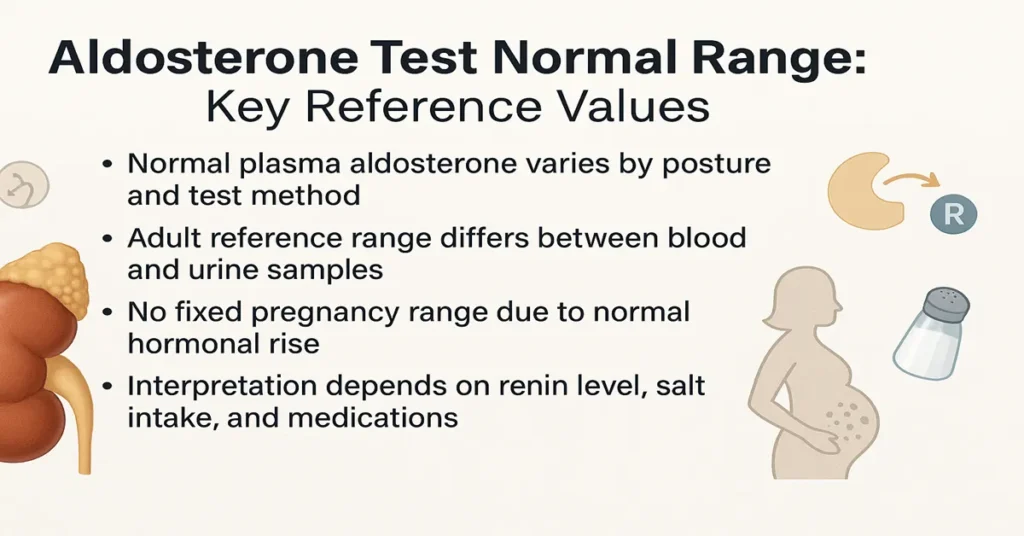
Normal Range of Aldosterone Test
Why Normal Range Matters
The aldosterone test measures the level of aldosterone, a hormone that plays a central role in regulating blood pressure, fluid balance, and electrolyte levels in the body. From a clinical point of view, aldosterone helps the kidneys decide how much sodium to retain, how much water to hold, and how much potassium to excrete. Even small changes in this balance can have noticeable effects on circulation, heart rhythm, and muscle function.
Understanding the normal range of aldosterone is important because results outside this range often point toward an underlying cause rather than a random lab variation. Clinically, doctors use aldosterone levels to understand why blood pressure is high or low, why potassium levels are abnormal, or why a patient has unexplained fatigue, weakness, or dizziness. Because aldosterone secretion is sensitive to posture, salt intake, medications, and time of testing, knowing how to interpret the reference range correctly prevents misdiagnosis and unnecessary anxiety.
General Reference Range
The normal range of aldosterone depends on how the test is performed and what type of sample is used. Most commonly, aldosterone is measured in blood plasma, though 24-hour urine testing is also used in selected cases.
For plasma aldosterone, adult reference ranges often fall roughly between 1 to 16 ng/dL when measured under standard conditions. Some laboratories may report values in picomoles per liter, and the numerical range will differ accordingly. The testing posture matters—levels measured while standing are usually higher than those measured while lying down.
For 24-hour urine aldosterone, normal values typically range from about 2 to 20 micrograms per 24 hours. This method reflects total aldosterone production over an entire day rather than a single time point.
In routine lab practice, the most important rule is to use the reference range printed on the report. Aldosterone assays vary between laboratories, and interpretation should always be based on lab-specific values.
Age-Wise Normal Range
Aldosterone levels naturally vary with age due to changes in kidney function, fluid regulation, and hormonal control.
In newborns and infants, aldosterone levels are physiologically higher. This is normal and reflects immature kidney handling of sodium and water after birth. High values in this age group are not automatically abnormal unless symptoms or electrolyte disturbances are present.
In children and adolescents, aldosterone levels gradually decrease and stabilize as the kidneys and adrenal glands mature. Pediatric reference ranges are wider and more variable, which is why interpretation in children is always done alongside growth patterns and clinical signs.
In adults, aldosterone levels are generally stable. In older adults, mild regulatory changes may occur, but significant elevations or reductions are not considered part of normal aging and should always be evaluated.
Gender-Wise Normal Range
Most laboratories use the same aldosterone reference range for males and females. From a practical standpoint, gender alone does not significantly alter interpretation.
In women, aldosterone levels may fluctuate slightly due to hormonal changes during the menstrual cycle, pregnancy, or use of hormonal medications. These variations are usually mild and stay within the normal range.
In men, aldosterone levels tend to be more stable, though sodium intake, blood pressure status, and physical stress still influence results.
Clinically, when aldosterone levels are clearly high or low, doctors look for medical causes rather than attributing changes to gender differences.
Pregnancy-Specific Normal Range
Pregnancy brings major hormonal and circulatory adjustments. Aldosterone levels normally rise during pregnancy to help retain sodium and water and support the increased blood volume needed for fetal development.
Because of this natural increase, there is no single fixed normal range for aldosterone during pregnancy. Levels that would appear high in a non-pregnant adult may be entirely appropriate in a pregnant individual.
Doctors interpret aldosterone results during pregnancy very cautiously, correlating them with blood pressure, potassium levels, gestational age, and overall clinical findings. Testing is usually reserved for cases with severe hypertension, unexplained electrolyte imbalance, or suspected adrenal disorders.
Factors That Affect Test Values
Several factors can influence aldosterone levels, even in healthy people, and must always be considered during interpretation.
Posture is one of the most important variables. Aldosterone levels are higher when standing and lower when lying down. This is why labs often specify how long a patient should rest in a particular position before sample collection.
Salt intake strongly affects aldosterone secretion. Low sodium intake stimulates aldosterone release, while high sodium intake suppresses it. Many borderline or confusing results are explained simply by recent dietary changes.
Medications play a major role. Blood pressure medicines, diuretics, hormonal drugs, and medications affecting the renin–angiotensin system can significantly alter aldosterone levels.
Time of day also matters, as aldosterone follows a daily rhythm, with higher levels often seen in the morning. Stress, dehydration, and acute illness can further modify results.
In routine practice, doctors always correlate aldosterone values with test conditions before labeling a result as abnormal.
Additional Information
Aldosterone levels are rarely interpreted alone. They are commonly paired with renin levels to calculate the aldosterone-to-renin ratio, which is especially useful when evaluating causes of difficult-to-control high blood pressure.
If results are abnormal, further evaluation may include repeat testing, confirmatory suppression tests, or imaging studies of the adrenal glands. These steps help distinguish true hormonal disorders from temporary or situational changes.
Normal reference ranges are guides, not diagnoses. Symptoms, blood pressure readings, potassium levels, and medical history always carry equal or greater importance.
Test Preparation
Proper preparation improves the reliability of aldosterone testing. Patients are usually advised to maintain a normal salt diet for several days before the test, as extreme salt restriction or excess can distort results.
Certain medications may need adjustment under medical supervision. Patients should never stop prescribed drugs without consulting their doctor.
Laboratories may give specific instructions about posture before blood collection, such as lying down or standing for a fixed period. Following these instructions closely helps ensure meaningful results.
When to See a Doctor
You should consult a doctor if you have high blood pressure that is difficult to control, especially if it begins at a young age or is associated with low potassium levels. Persistent fatigue, muscle weakness, frequent urination, or unexplained electrolyte abnormalities also warrant evaluation.
Medical advice is essential if aldosterone results fall outside the normal range or if there is a family history of adrenal or hormonal disorders. Early assessment helps prevent long-term complications involving the heart, kidneys, and blood vessels.
Sample Type
The aldosterone test is commonly performed using a blood sample drawn from a vein in the arm. In selected cases, a 24-hour urine sample may be collected to measure aldosterone production over an entire day. The choice of test depends on clinical suspicion and physician judgment.
Important Word Explanations
Aldosterone: A hormone produced by the adrenal glands that regulates sodium, potassium, and blood pressure.
Reference Range: The expected range of test values seen in healthy individuals.
Renin: An enzyme involved in controlling blood pressure and fluid balance.
Electrolytes: Minerals such as sodium and potassium that are essential for nerve, muscle, and heart function.
Hyperaldosteronism: A condition in which the body produces too much aldosterone.
People Also Ask
Is an abnormal aldosterone result always serious?
Not always. Some changes are temporary or related to posture, diet, or medications, but persistent abnormalities need evaluation.
Can aldosterone levels change from day to day?
Yes. Aldosterone varies with salt intake, body position, stress, and time of day.
Does a normal aldosterone level rule out hormonal problems?
No. Doctors often look at aldosterone together with renin and electrolytes for a complete picture.
When do doctors worry about aldosterone levels?
When results are clearly outside the reference range and match symptoms like high blood pressure or low potassium.
Is repeat testing common?
Yes. Repeat tests are often done to confirm results under controlled conditions.
Why is posture important during testing?
Because aldosterone rises when standing and falls when lying down, posture directly affects the measured value.
~END~