
Overview
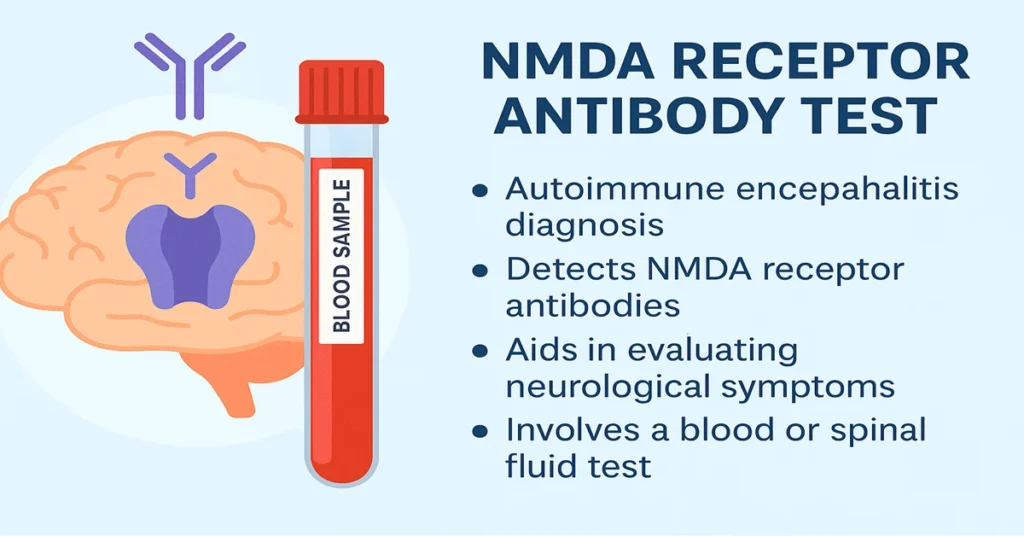
The NMDA Receptor Antibody Test is a specialized diagnostic test used to detect antibodies that target NMDA (N-Methyl-D-Aspartate) receptors in the brain. These receptors play an essential role in normal brain function, including memory, learning, behavior, and communication between nerve cells. When the immune system mistakenly produces antibodies against these receptors, it can lead to a form of autoimmune encephalitis known as anti-NMDA receptor encephalitis.
This condition may present with sudden or progressive changes in thinking, behavior, mood, memory, or movement. Because these symptoms can resemble psychiatric disorders, seizure conditions, or viral infections of the brain, diagnosis is often challenging. The NMDA receptor antibody test helps clarify the underlying cause and supports timely clinical decision-making.
What Are NMDA Receptors?
NMDA receptors are specialized proteins located on nerve cells within the brain. They are involved in key neurological processes such as memory formation, learning, emotional balance, thought processing, and coordination.
These receptors are activated by glutamate, a naturally occurring neurotransmitter that supports normal communication between neurons. When NMDA receptors are functioning properly, brain signaling remains organized and stable. When antibodies interfere with these receptors, signaling becomes disrupted, which explains the combination of neurological and behavioral symptoms that may be seen.
What Is the NMDA Receptor Antibody Test?
This test looks for anti-NMDA receptor antibodies produced by the immune system. These antibodies may be detected in blood (serum) or in cerebrospinal fluid (CSF).
CSF is obtained through a lumbar puncture, commonly called a spinal tap. In many clinical situations, CSF testing provides stronger diagnostic information than blood testing alone. Identifying these antibodies supports the diagnosis of autoimmune NMDA receptor encephalitis and helps guide further evaluation by specialists.
Where Are These Antibodies Produced?
Anti-NMDA receptor antibodies are produced by the body’s immune system. Instead of targeting infections, the immune response becomes misdirected and attacks NMDA receptors in the brain.
This may occur as part of an autoimmune process, in association with certain tumors (most notably ovarian teratomas in some young women), or without a clearly identifiable trigger. Once formed, these antibodies can interfere with normal nerve activity and lead to inflammation within the brain.
Functions and Importance of NMDA Receptor Antibody Test
The NMDA receptor antibody test has an important role in evaluating complex neurological presentations.
Confirms autoimmune encephalitis
Detection of NMDA receptor antibodies helps identify immune-mediated inflammation of the brain.
Differentiates neurological and psychiatric symptoms
Behavioral changes, hallucinations, or seizures may initially appear psychiatric. Antibody testing helps clarify when these symptoms have an autoimmune neurological basis.
Allows early clinical intervention
Early recognition supports timely specialist care and monitoring, which may reduce the risk of prolonged neurological effects.
Helps evaluate unexplained symptoms
The test is particularly useful when imaging studies or routine laboratory tests do not clearly explain a patient’s condition.
Guides further clinical decisions
A positive result helps clinicians plan appropriate follow-up investigations and specialist management, based on established medical practice.
Causes of Low or Negative Test Results
A negative result indicates that NMDA receptor antibodies were not detected in the tested sample. This may mean that autoimmune NMDA receptor encephalitis is unlikely.
In some cases, antibodies may be present at very low levels, confined to CSF rather than blood, or testing may have been performed early in the disease course. Results are always interpreted together with symptoms, imaging findings, and clinical judgment.
Symptoms Associated With Low/Negative Antibody Results
A negative test result does not cause physical symptoms. If neurological or behavioral symptoms continue despite negative findings, doctors may explore other causes such as infections, seizure disorders, metabolic conditions, or primary psychiatric illnesses.
Causes of High or Positive Test Results
A positive result confirms the presence of NMDA receptor antibodies. This finding is most commonly associated with autoimmune NMDA receptor encephalitis.
Potential contributing factors include autoimmune processes, certain tumors, immune responses triggered by infections, or other immune system abnormalities. In some individuals, no clear cause is identified.
Symptoms of High or Positive Antibody Levels
Patients with NMDA receptor antibodies may show a combination of neurological and behavioral features. These can include changes in mood or personality, confusion, memory impairment, hallucinations, seizures, abnormal movements, sleep disturbance, speech difficulties, or reduced levels of consciousness. In more severe cases, disturbances in heart rhythm or breathing may occur.
When these antibodies are detected in a symptomatic patient, urgent specialist evaluation is required.
Reference Range
This test does not have a numeric reference range. Results are reported qualitatively as negative or positive.
Detection of antibodies in cerebrospinal fluid is generally considered more specific than blood testing alone. Final interpretation depends on laboratory findings together with the clinical picture.
Sample Type Required
The test may be performed using a blood sample or cerebrospinal fluid. CSF samples, obtained through lumbar puncture, often provide clearer diagnostic information, particularly when blood results are inconclusive.
Procedure of NMDA Receptor Antibody Test
The doctor first assesses the patient’s symptoms and determines whether antibody testing is appropriate. A blood sample is collected, and in some cases, a lumbar puncture is performed to obtain CSF. Samples are sent to specialized laboratories where antibodies are identified using advanced immunological methods. Results are then reviewed by specialists to support diagnosis and further care planning.
Advantages of the Test
This test helps identify a serious but potentially reversible neurological condition. It clarifies autoimmune causes of complex psychiatric or neurological symptoms and supports early diagnosis and long-term medical planning when needed.
Limitations
The NMDA receptor antibody test is not used as a routine screening test and is performed only when clinically indicated. False-negative results may occur, and testing requires specialized laboratory facilities. CSF collection may require a hospital setting. Results must always be interpreted in conjunction with clinical findings.
Test Preparation
No fasting is required. Patients should inform the doctor about current medications, known autoimmune conditions, pregnancy status, or previous neurological problems. If a lumbar puncture is planned, brief rest afterward may be advised.
When to Consult a Doctor
Medical evaluation is important if symptoms such as sudden personality or behavior changes, seizures, memory loss, hallucinations, involuntary movements, or unexplained confusion occur. Early consultation is especially important when symptoms progress rapidly or do not follow a typical psychiatric pattern.
Important Word Explanations
- Autoimmune: A condition in which the immune system attacks the body’s own tissues
- Encephalitis: Inflammation of the brain
- Antibodies: Proteins produced by the immune system to recognize targets
- CSF: Cerebrospinal fluid surrounding the brain and spinal cord
- Lumbar puncture: A procedure used to collect CSF from the lower spine
- Glutamate: A neurotransmitter involved in learning and memory
- Receptors: Proteins on nerve cells that receive chemical signals
~END~
Related Posts
None found