
Overview
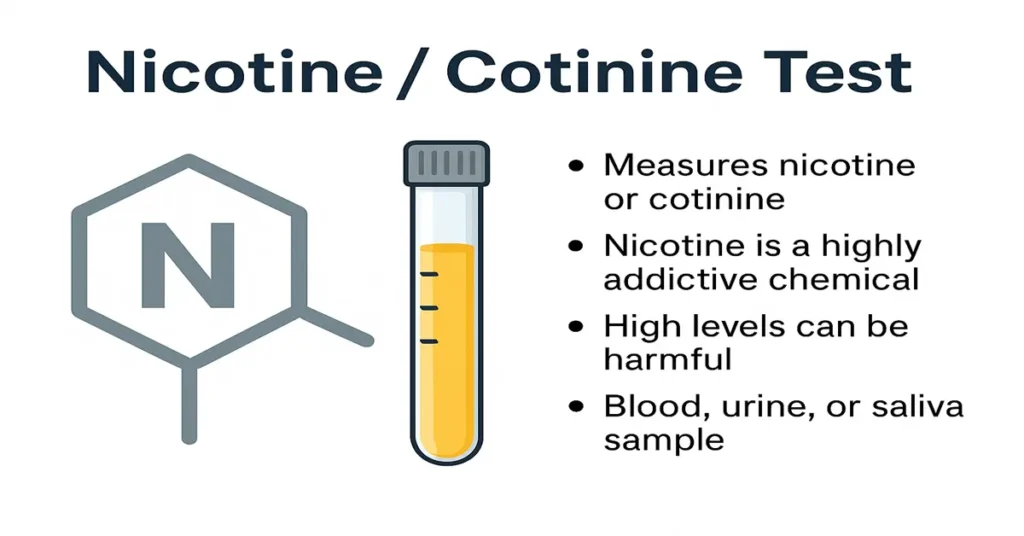
The Nicotine Test, commonly referred to as the Nicotine/Cotinine Test, is a laboratory test used to measure nicotine or its primary breakdown product, cotinine, in the body. Nicotine is an addictive chemical found in cigarettes, cigars, bidis, chewing tobacco, gutka, hookah, and electronic cigarettes. Once nicotine enters the bloodstream, it is rapidly processed by the liver into cotinine, which remains detectable for a longer period.
Because cotinine stays in the body longer than nicotine itself, it is considered the most reliable indicator of recent tobacco use or exposure to tobacco smoke. In clinical practice, this test is frequently used to confirm smoking status, assess passive smoke exposure, and support decisions in medical, surgical, or insurance-related evaluations.
What Is Nicotine?
Nicotine is a naturally occurring chemical present in the tobacco plant. It acts as a stimulant and is responsible for the addictive nature of tobacco products by influencing neurotransmitters involved in reward pathways.
Nicotine enters the body through smoking, chewing tobacco, vaping, or inhalation of secondhand smoke. Once absorbed, it reaches the bloodstream quickly. The liver then converts most of it into cotinine, which can be detected for several days after the last exposure, depending on the amount and frequency of use.
Where Is Nicotine Produced in the Body?
Nicotine is not produced by the human body. All nicotine detected in blood, urine, or other samples comes from external sources, including tobacco products, vaping devices, or nicotine replacement therapies.
After absorption, the liver metabolizes nicotine into cotinine. Cotinine circulates in the blood and is eventually eliminated through urine, which is why urine testing is commonly used for screening purposes.
Main Functions & Importance of the Nicotine/Cotinine Test
Nicotine does not have any essential or beneficial role in normal body function. Its importance in medical testing lies entirely in its ability to indicate exposure.
The Nicotine/Cotinine Test is useful because it helps confirm recent nicotine intake, distinguish between active smoking and passive exposure, and verify tobacco abstinence when required. In hospital settings, it is often part of pre-operative assessments, as nicotine exposure can influence surgical outcomes. It is also used by insurance providers and in structured smoking cessation or de-addiction programs to monitor progress.
Causes of Low or Negative Levels
Low or negative nicotine or cotinine levels usually indicate the absence of recent tobacco exposure. This may reflect non-use, successful cessation, or a significant time gap since last exposure.
In some cases, low levels may also be seen when exposure has been minimal or when nicotine-free products are used. Laboratory interpretation always considers the timing of sample collection in relation to possible exposure.
Symptoms of Low or Negative Levels
Low or negative nicotine levels themselves do not cause medical symptoms, as nicotine is not required by the body.
However, individuals who have recently stopped using tobacco may experience symptoms such as irritability, restlessness, cravings, mood changes, or anxiety. These reflect nicotine withdrawal rather than a deficiency or abnormal laboratory finding.
Causes of High or Positive Levels
High nicotine or cotinine levels indicate recent or ongoing exposure. This is most commonly due to active smoking or use of smokeless tobacco products. Vaping liquids containing nicotine and nicotine replacement therapies can also raise cotinine levels.
Lower but detectable levels may be seen in people exposed to secondhand smoke. In certain occupational settings, such as tobacco processing environments, exposure may also contribute to measurable levels.
Symptoms of High Nicotine Levels
Symptoms associated with higher nicotine exposure depend on the amount and duration of use.
Short-term effects may include increased heart rate, elevated blood pressure, dizziness, nausea, headache, or heightened alertness. With long-term exposure, symptoms may relate more to dependence, sleep disturbance, restlessness, or anxiety.
Chronic nicotine exposure is also associated with increased health risks over time, which is why identifying and documenting exposure is clinically relevant.
Reference Ranges (May Vary by Lab)
Laboratories report nicotine and cotinine levels using reference thresholds rather than strict normal ranges.
Very low or undetectable levels are typically seen in non-users. Higher values suggest recent exposure, with progressively increasing levels reflecting light, moderate, or regular use. Cotinine is preferred for interpretation because of its longer persistence in the body.
Results are always interpreted in the context of exposure history and the reason for testing.
Sample Types Used
Nicotine and cotinine can be measured in several sample types. Blood testing provides precise quantitative information, while urine testing is most commonly used for screening because it is simple and reliable. Saliva samples can detect recent exposure, and hair testing may reflect longer-term exposure patterns.
The choice of sample depends on clinical need and testing purpose.
Nicotine/Cotinine Test – Why It Is Done
Doctors may request this test when evaluating respiratory or throat symptoms in known tobacco users, before surgical procedures, or when documentation of tobacco use status is required. It is also used to assess possible relapse in individuals attempting to quit, investigate suspected nicotine exposure, or evaluate exposure in children living around smokers.
The test serves as an objective measure rather than relying solely on self-reported history.
Test Preparation
No fasting is required for this test. Patients are usually advised to inform their doctor about recent tobacco use, vaping, or use of nicotine replacement products. Normal hydration is recommended, and urine samples should be collected as instructed to ensure accuracy.
When to Consult a Doctor
Medical advice should be sought for persistent cough, breathing difficulty, chest discomfort, high blood pressure, or symptoms related to nicotine withdrawal that interfere with daily functioning. Individuals struggling with nicotine dependence or finding it difficult to quit may also benefit from professional evaluation and support.
Important Word Explanations
- Cotinine: A substance formed when the liver breaks down nicotine
- Metabolite: A compound produced when the body processes a chemical
- Secondhand Smoke: Smoke inhaled from another person’s tobacco use
- Withdrawal: Physical or psychological symptoms after stopping nicotine
- Nicotinic Receptors: Brain receptors that respond to nicotine
~END~
Related Posts
None found