
Overview
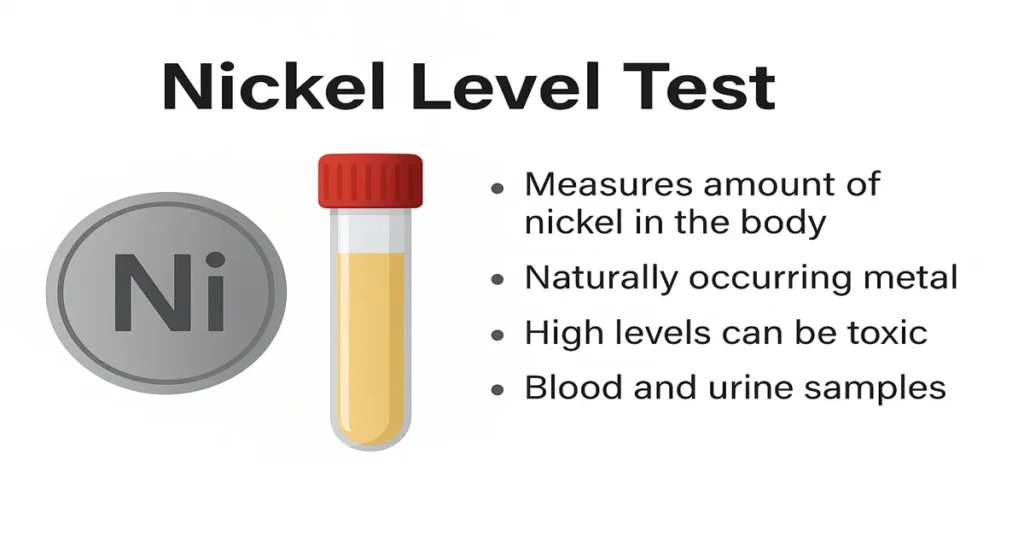
The Nickel Level Test is a laboratory test performed on blood or urine samples to assess how much nickel is present in the body. Nickel is a naturally occurring metal widely used in daily life and industry. It is found in items such as stainless steel products, jewelry, coins, batteries, electronics, tools, and industrial equipment. Small amounts may enter the body through food, water, or air and are usually handled without difficulty.
Concerns arise when exposure becomes excessive or prolonged. Elevated nickel levels can be associated with skin reactions, respiratory irritation, digestive discomfort, and other systemic effects, particularly in individuals with ongoing occupational or environmental exposure. For this reason, nickel testing is commonly requested for industrial workers, people with known nickel sensitivity, or when metal exposure is suspected based on symptoms or history.
This overview explains what nickel is, how it enters the body, why testing may be needed, and how results are interpreted in clinical practice.
What Is Nickel?
Nickel is a metallic element used extensively in manufacturing and consumer products. Most people are exposed to small amounts through everyday contact with metal objects or through food and water.
Common sources include household items such as jewelry, coins, keys, phones, metal utensils, and stainless steel cookware, as well as industrial materials. Certain foods naturally contain trace amounts of nickel, which typically do not pose a health concern.
Under normal conditions, the body tolerates these small exposures. Problems tend to arise with higher or repeated exposure, particularly through industrial contact or prolonged skin contact in sensitive individuals.
Where Is Nickel Produced in the Body?
Nickel is not produced or synthesized by the human body. It enters from external sources such as air, food, water, or direct skin contact with nickel-containing materials.
Once absorbed, small amounts may circulate in the blood and bind to proteins in tissues. The kidneys play a central role in removing nickel from the body, primarily through urine. For this reason, urine testing is often used to assess ongoing or recent exposure.
Main Functions & Importance of Nickel in the Body
Nickel is classified as a trace element, meaning it may be present in very small amounts, though its precise biological role in humans is not clearly defined.
Research suggests that trace amounts of nickel may be involved in supporting certain enzymatic processes or metabolic functions. It may also interact with iron metabolism and cellular stability at very low levels.
From a clinical standpoint, the key concern is not deficiency but excess. The body has no requirement for higher amounts of nickel, and elevated levels are considered potentially harmful rather than beneficial.
Causes of Low Nickel Levels
Low nickel levels are rarely a clinical issue, as nickel is present in many environmental and dietary sources. Deficiency is not well defined in humans and is not commonly diagnosed.
Occasionally, lower levels may be seen in individuals with extremely restricted intake, conditions affecting absorption of trace minerals, or in those exposed to substances that bind and remove metals from the body. Even in these situations, low nickel levels are generally not associated with specific clinical symptoms.
Symptoms of Low Nickel Levels
There are no well-established symptoms linked specifically to low nickel levels in humans. While some animal studies have suggested effects related to growth or enzyme function, these findings have not been clearly demonstrated in human health.
As a result, low nickel levels are not usually considered clinically significant.
Causes of High Nickel Levels
Elevated nickel levels are of greater medical interest and usually reflect increased exposure rather than altered production.
Occupational exposure is a common cause, particularly in industries involving metal processing, welding, battery production, mining, or stainless steel manufacturing. Inhalation of nickel-containing dust or fumes is a significant route of exposure in such environments.
Prolonged skin contact with nickel-containing items may increase absorption in individuals who are sensitive. Contaminated food or water sources can also contribute, as can accidental ingestion of nickel compounds. In people with impaired kidney function, reduced elimination may allow levels to rise further.
Symptoms of High Nickel Levels
Symptoms depend on the amount, route, and duration of exposure.
Skin-related effects are common and may include itching, redness, rashes, or eczema, particularly in individuals with nickel sensitivity. Respiratory exposure can lead to cough, wheezing, or breathing discomfort. Digestive symptoms such as nausea or abdominal discomfort may occur with ingestion.
With long-term exposure, nickel accumulation may place strain on organs such as the lungs, liver, or kidneys. These risks are mainly seen in settings of sustained occupational exposure rather than everyday contact.
Reference Ranges
Reference values vary slightly by laboratory, but typical findings in individuals without significant exposure are low.
Blood and urine nickel levels are generally reported within a narrow range. Values above expected limits suggest increased exposure or reduced elimination and are interpreted in the context of occupational history, symptoms, and kidney function.
Sample Types Used
Nickel levels may be measured using blood samples to assess circulating levels or urine samples to evaluate how much nickel is being excreted. Urine testing, including timed collections, is commonly used when monitoring occupational exposure or ongoing environmental contact.
The choice of sample depends on the clinical question and the pattern of exposure being assessed.
Nickel Level Test – Why It Is Done
Doctors may request this test to evaluate suspected nickel exposure, monitor individuals working in high-risk environments, assess unexplained skin reactions, or investigate possible environmental or occupational sources of metal exposure. It may also be used when kidney function is being reviewed in the context of metal accumulation.
The test is used as part of an overall clinical assessment rather than as a stand-alone diagnostic tool.
Test Preparation
Special preparation is usually minimal. Patients may be advised to avoid wearing nickel-containing jewelry before testing and to inform their doctor about any medications or supplements being taken. When urine testing is required, careful adherence to collection instructions is important for accurate results.
When to Consult a Doctor
Medical advice should be sought if symptoms such as persistent skin reactions, breathing difficulty, unexplained digestive complaints, unusual fatigue, or known exposure to metal dust or chemicals occur. Individuals with occupational exposure who notice worsening symptoms should also seek evaluation.
Prompt assessment helps determine whether testing is needed and whether exposure control measures should be reviewed.
Important Word Explanations
- Chelation: A medical process used to bind and remove metals from the body
- Trace element: A mineral present in very small amounts in the body
- Toxicity: Harmful effects caused by excessive exposure to a substance
- Fibrosis: Thickening or scarring of tissue, commonly referring to lung tissue
- Occupational exposure: Contact with substances during work activities
~END~
Related Posts
None found
I have been browsing online greater than 3 hours as of late,
but I never found any attention-grabbing article like yours.
It is pretty value sufficient for me. In
my opinion, if all site owners and bloggers made good content material as you probably did, the internet might be
a lot more useful than ever before.