
Neutrophils Test: Meaning, Normal Range, Low & High Neutrophils Causes, Symptoms, and Complete Medical Guide
What Is the Neutrophils Test?
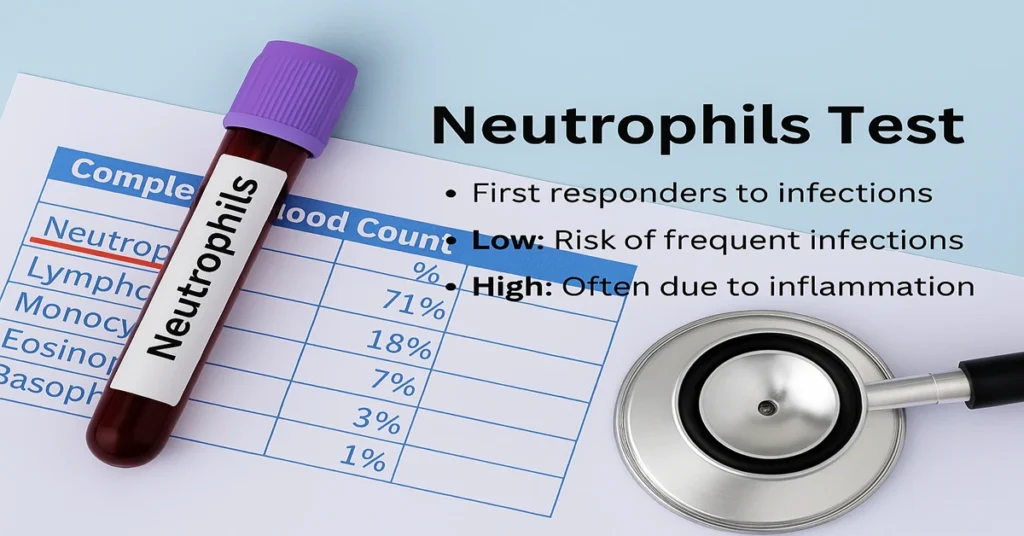
The Neutrophils Test measures the number or percentage of neutrophils present in the blood. Neutrophils are a major type of white blood cell and form the body’s first line of defense against infections, particularly bacterial infections. They are fast-acting cells, which is why their levels often change early during illness, inflammation, or physical stress.
This test is reported as part of a Complete Blood Count with Differential (CBC with differential). The differential helps doctors see how each white blood cell type is distributed. From a clinical perspective, neutrophil levels provide early clues about how the immune system is responding and whether further evaluation is needed.
Where Are Neutrophils Produced?
Neutrophils are produced in the bone marrow from blood-forming stem cells. These cells mature through several stages before being released into the bloodstream as fully functional neutrophils.
Once in circulation, neutrophils are constantly moving through blood vessels and tissues, ready to respond when the immune system detects a threat. Their lifespan is short, usually lasting hours to a few days. Because of this rapid turnover, the bone marrow must continuously produce neutrophils to maintain normal levels. Any condition affecting bone marrow activity can quickly influence neutrophil counts.
Functions and Importance of Neutrophils
Neutrophils play a central role in everyday immune defense and infection control.
Destroy Bacteria and Fungi
Neutrophils rapidly identify and attack invading bacteria and some fungi. Their quick response helps limit the spread of infection in the early stages.
Phagocytosis
One of their key functions is phagocytosis. Neutrophils surround and ingest harmful organisms, break them down, and clear them from the body. They also help remove damaged tissue and cellular debris.
Inflammation Response
Neutrophils release chemical signals that trigger inflammation. This process increases blood flow to affected areas, brings in additional immune cells, and supports tissue repair.
Forming Pus
After fighting infection, neutrophils often die at the site of inflammation. The accumulation of dead neutrophils and debris forms pus, which is commonly seen in bacterial infections.
Clinically, an adequate neutrophil count is essential. When levels are too low, even minor infections can become serious.
Causes of Low Neutrophils (Neutropenia)
Low neutrophil levels are referred to as neutropenia. This finding indicates reduced immune defense against infections.
Severe or prolonged infections may temporarily reduce neutrophil production. Disorders affecting the bone marrow can limit the formation of healthy neutrophils. Cancer treatments such as chemotherapy or radiation often suppress bone marrow activity, making neutropenia a common laboratory finding in these settings.
Autoimmune conditions may increase destruction of neutrophils. Nutritional deficiencies, inherited conditions, and certain medications can also influence neutrophil levels. Doctors usually look at the severity, duration, and trend rather than a single reading.
Symptoms of Low Neutrophils
Symptoms of neutropenia are mainly related to increased susceptibility to infections. People may experience frequent infections, fever, mouth ulcers, sore throat, or slow wound healing. Fatigue is also commonly reported.
From a clinical standpoint, the concern with low neutrophils is the higher risk of infections progressing quickly, especially when counts are significantly reduced.
Causes of High Neutrophils (Neutrophilia)
High neutrophil levels are known as neutrophilia. This often reflects the body’s response to infection, inflammation, or stress.
Bacterial infections are a common trigger. Inflammatory conditions, physical stress such as surgery or trauma, and tissue injury can also raise neutrophil levels temporarily. Smoking and intense physical exertion may cause mild increases.
In some cases, disorders affecting blood cell production lead to persistently elevated neutrophils. Doctors interpret neutrophilia by reviewing clinical symptoms, other blood values, and whether the elevation is short-lived or sustained.
Symptoms of High Neutrophils
Most people with elevated neutrophils do not experience symptoms directly related to the count itself. Any symptoms usually arise from the underlying condition causing the increase.
These may include fever, inflammation, body aches, or signs of infection. In blood-related disorders, additional symptoms may be present. Clinically, neutrophilia is viewed as a response signal rather than a disease on its own.
Neutrophil Reference Ranges
Reference ranges may vary slightly between laboratories, but commonly used values include:
Absolute Neutrophil Count (ANC)
Normal: 1,500 – 8,000 cells/µL
Lower values indicate varying degrees of neutropenia
Neutrophil Percentage (CBC Differential)
Adults: 40% – 70% of total WBCs
Children: 30% – 60%
Doctors consider both the absolute count and the percentage to assess immune function accurately.
Sample Type and Collection
- Sample Required: Whole blood
- Collection Tube: Lavender-top EDTA tube
Blood is drawn from a vein, usually in the arm. Neutrophil values are calculated automatically as part of a CBC with differential. Results are often available the same day.
Test Preparation
No fasting is required for a neutrophils test. Hydration status and recent physical stress can influence results and are taken into account during interpretation. Doctors also review medications, recent infections, and ongoing treatments when assessing neutrophil values.
The neutrophil count is almost always interpreted together with other white blood cell parameters.
When to Consult a Doctor
Medical advice is recommended if infections occur frequently, fever persists without a clear cause, or mouth ulcers and sore throat develop repeatedly. Follow-up is also important when neutrophil levels remain consistently high or low.
People undergoing chemotherapy, those with autoimmune conditions, or individuals with delayed wound healing are often monitored more closely. Early evaluation helps clarify whether changes are temporary or require further investigation.
Important Word Explanations
- Neutrophils: White blood cells that provide rapid defense against bacteria and fungi.
- Neutropenia: A condition where neutrophil levels are lower than normal.
- Neutrophilia: A condition where neutrophil levels are higher than normal.
- ANC (Absolute Neutrophil Count): The actual number of neutrophils per microliter of blood.
- CBC with Differential: A blood test that measures total white blood cells and the proportion of each type.
~END~
[custom-related-posts}