
Neutrophils: Functions, Importance & Normal Ranges Explained
Neutrophils are a special type of white blood cell and form the body’s first line of defense against infection. In real OPD and laboratory practice, they are often the earliest immune cells to react when germs enter the body. Within minutes, neutrophils move to the affected area, which is why doctors pay close attention to their levels in routine blood reports.
Because neutrophils play such a critical protective role, understanding what they do, why they matter, and how their normal ranges change with age and condition helps patients and students make sense of CBC reports. This article explains neutrophil functions, importance, normal ranges, and how doctors interpret high or low values in daily clinical work.
What Neutrophils Do (Short Overview)
Neutrophils are produced in the bone marrow and then released into the bloodstream. From there, they quickly travel to sites of infection or tissue damage.
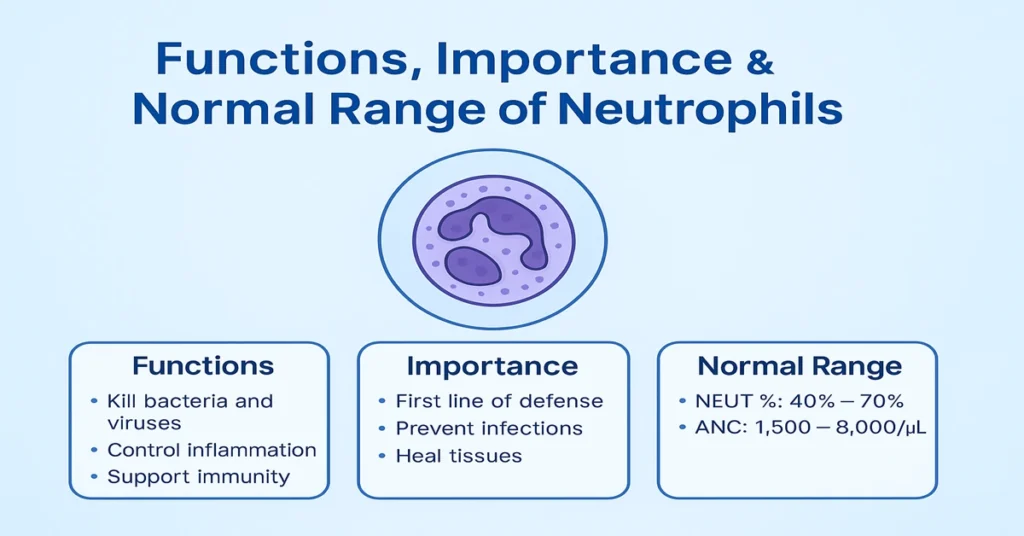
Their core functions include killing bacteria, helping control inflammation, removing dead or damaged cells, supporting the immune response, and assisting in wound healing. Among all white blood cells, neutrophils respond the fastest, which makes them especially important during early infection.
In blood reports, neutrophils are measured in two ways. One is NEUT%, which shows their percentage among total white blood cells. The other is ANC, or Absolute Neutrophil Count, which reflects the actual number of neutrophils in the blood. Clinically, doctors rely more on ANC than percentage alone.
Why Neutrophils Are Important
Neutrophils are essential for everyday immune protection. When bacteria enter the body, neutrophils reach the site quickly and limit the spread of infection. This early response often prevents minor infections from becoming serious.
They also help regulate inflammation. Neutrophils release chemical signals that start inflammation when needed and help calm it once healing begins. This balance is important, because uncontrolled inflammation can damage tissues.
After fighting infection, neutrophils help clear dead cells and debris so new, healthy tissue can form. This cleanup role supports proper healing. Without enough neutrophils, even small infections can linger or worsen, which is why persistently low levels raise concern in clinical practice.
At the same time, very high neutrophil levels can indicate that the body is under stress or fighting infection. Both extremes act as warning signals rather than diagnoses on their own.
Role of Neutrophils in the Body
Neutrophils protect the body through several coordinated actions. They directly swallow and destroy microbes, a process known as phagocytosis. They release antimicrobial enzymes that break down harmful organisms. In some situations, they form web-like structures called neutrophil extracellular traps, which help trap and kill bacteria.
Neutrophils also communicate with other immune cells, such as lymphocytes and macrophages, to coordinate the immune response. Once the immediate threat is controlled, they assist in cleaning damaged tissue, allowing healing to begin.
Normal Ranges of Neutrophils
Neutrophil levels naturally vary with age, physiological state, and overall health. Doctors always interpret these values in context rather than relying on a single number.
Adults
In most laboratories, normal neutrophil percentage ranges from about 40% to 70%. Normal ANC usually lies between 1,500 and 8,000 cells per microliter.
Gender differences
Men and women generally share similar ranges. Mild variations can occur due to hormonal changes, especially in women during menstrual cycles or other hormonal shifts, but these are usually not clinically significant.
Age-related ranges
Newborns and infants have higher and more variable neutrophil counts because their immune systems are still developing. As children grow, values gradually settle into adult ranges. Older adults may show slightly lower upper limits, which is usually a normal age-related change.
Pregnancy
During pregnancy, neutrophil levels often rise naturally. This is a normal physiological response that supports maternal immunity and protects both mother and baby. In routine practice, this elevation is expected unless values are excessively high or accompanied by symptoms.
When Neutrophil Levels Become Risky
Both low and high neutrophil levels can become concerning, depending on severity and persistence.
Low neutrophils (neutropenia)
An ANC below about 1,500 cells per microliter is considered low. Mild reductions are common during viral infections and often recover on their own. Lower values increase the risk of infections, especially when ANC drops below 500. In practice, doctors watch for repeated infections, fever, or mouth ulcers when neutrophils are low.
High neutrophils (neutrophilia)
Neutrophil counts above the normal range usually indicate infection, inflammation, stress, dehydration, smoking, or medication effects such as steroids. Very high or persistent elevations prompt doctors to look for ongoing infection or inflammatory conditions.
How to Maintain Healthy Neutrophil Levels
Balanced immunity supports stable neutrophil levels. In routine advice, doctors emphasize adequate nutrition, sufficient protein intake, good hydration, proper sleep, stress control, avoiding smoking and excess alcohol, and treating infections early. These measures support overall immune health rather than targeting neutrophil numbers directly.
Test Preparation (CBC / Neutrophil Test)
No fasting is required for a CBC or neutrophil count. Normal water intake is recommended. Heavy exercise and smoking should be avoided just before the test. Always inform the doctor or laboratory about medications, especially steroids, as they can temporarily alter neutrophil values. Ongoing infection or fever can also cause short-term changes.
When to See a Doctor
Medical advice is important if neutrophil levels are repeatedly high or low, if ANC falls below about 1,500 or rises well above the normal range, or if there are frequent infections, unexplained fever, persistent fatigue, or pregnancy with abnormal values. Early evaluation helps prevent complications.
Important Word Explanations
| Term | Simple Explanation |
|---|---|
| Neutrophils | The most common white blood cells that fight infections, especially bacterial infections. |
| ANC (Absolute Neutrophil Count) | The actual number of neutrophils in the blood; more useful than percentage alone. |
| Neutropenia | A condition where neutrophil levels are lower than normal. |
| Neutrophilia | A condition where neutrophil levels are higher than normal. |
| Phagocytosis | The process by which neutrophils swallow and destroy germs. |
| Bone marrow | The soft tissue inside bones where blood cells are produced. |
People Also Ask
Is an abnormal neutrophil count always serious?
Not always. Mild changes are common and often temporary.
Can neutrophil levels change during infection or stress?
Yes. Infection, stress, surgery, or illness can temporarily raise or lower neutrophils.
Does high neutrophils always mean bacterial infection?
No. Stress, smoking, dehydration, or medications can also increase levels.
When do doctors usually worry about neutrophils?
Concern increases when values are very high or very low, persistent, or linked with symptoms.
Is repeat testing common for neutrophil abnormalities?
Yes. Doctors often repeat CBC tests to observe trends over time.
Can someone feel normal with abnormal neutrophil levels?
Yes. Many people have no symptoms, especially when changes are mild or short-lived.
~END~