
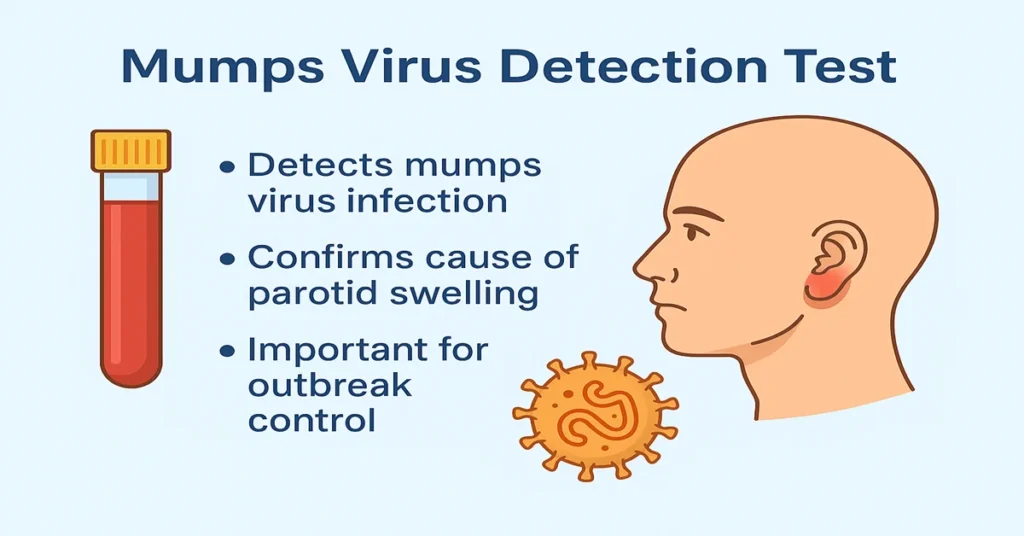
What is the Mumps Virus Detection Test?
The Mumps Virus Detection Test is used to confirm whether a person is currently infected with the mumps virus. Mumps is a contagious viral illness that most often affects the salivary glands, particularly the parotid glands located just in front of the ears. When infected, these glands may become swollen and painful, which is often the first sign that brings a patient to medical attention.
The virus spreads mainly through respiratory droplets. Simple activities such as coughing, sneezing, talking closely, or sharing utensils can allow transmission. Although mumps is more commonly seen in children, adults can also be affected, including those who were vaccinated earlier in life.
In routine clinical practice, this test is requested to:
Confirm suspected mumps infection when symptoms are suggestive
Differentiate mumps from other causes of salivary gland swelling
Assist public health teams during outbreak investigations
Evaluate infection risk in unvaccinated or partially vaccinated individuals
Clarify infection status in rare cases where vaccinated individuals develop symptoms
Early laboratory confirmation is helpful because mumps can occasionally involve organs beyond the salivary glands, and timely identification supports appropriate medical and public health decisions.
Where Does the Mumps Virus Come From?
The mumps virus does not originate within the human body. It is an RNA virus belonging to the Paramyxoviridae family and enters the body from an infected person through the respiratory tract.
After entry, the virus initially multiplies in the tissues of the nose and throat. From there, it can spread through the bloodstream and reach various organs. In clinical settings, the virus is known to localize in the salivary glands and lymph nodes, which explains the typical facial swelling. In some cases, it may also involve the pancreas, reproductive organs, or the central nervous system.
This pattern of spread accounts for the range of symptoms seen in mumps, from mild gland swelling to more systemic involvement in selected cases.
Why is the Mumps Virus Detection Test Important?
Although the virus itself has no useful function in the body, identifying its presence through testing plays an important role in patient care and public health management.
Confirms Diagnosis
Several conditions can mimic mumps clinically. Bacterial infections, other viral illnesses, or even non-infectious salivary gland problems may present with similar swelling. Laboratory testing helps clarify whether mumps is truly responsible, allowing doctors to manage the case appropriately.
Helps Control Outbreaks
In environments such as schools, colleges, hostels, and workplaces, early detection helps limit further spread. Confirmed testing supports isolation decisions and outbreak control measures, which are especially important in crowded settings.
Identifies Complications
While many cases of mumps are uncomplicated, some patients may develop involvement of other organs. Laboratory confirmation helps doctors remain alert to potential complications and monitor patients more closely when needed.
Supports Vaccination Decisions
Antibody testing provides useful background information about immunity. It can help indicate whether a person has immunity from past infection or vaccination, which is relevant in outbreak settings and public health planning.
Types of Mumps Virus Detection Tests
Two main laboratory approaches are used to detect mumps infection, depending on the stage of illness and clinical context.
PCR Test (Polymerase Chain Reaction)
This test looks directly for the genetic material of the virus. Samples are usually collected from the throat, buccal area, or saliva. PCR testing is most informative during the early phase of infection, when viral levels are highest.
Serology (Antibody Testing)
Blood testing measures the body’s immune response to the virus. IgM antibodies generally suggest a recent or current infection, while IgG antibodies reflect past exposure or vaccination. In selected cases with neurological symptoms, cerebrospinal fluid may also be tested.
Each method provides different information, and doctors choose the test based on symptoms, timing, and clinical suspicion.
Causes of Low/Negative Test Results
A negative result does not always mean that mumps is definitively excluded. In routine laboratory practice, low or negative findings may be seen when there is no active infection, when testing is done very early before detectable levels appear, or when immunity from prior infection or vaccination is present.
Technical factors such as sample quality and timing also influence results. Viral levels tend to decrease as the illness progresses, which can affect detection later in the course of infection.
For this reason, test results are always interpreted alongside symptoms and clinical findings.
Symptoms When Test is Negative
When test results are truly negative, symptoms are unlikely to be due to mumps infection. In such situations, doctors often consider other possible causes of gland swelling or fever, including bacterial infections, other viral illnesses, or non-infectious salivary gland conditions.
If symptoms continue despite a negative test, further evaluation may be advised to identify the underlying cause and guide appropriate management.
Causes of High/Positive Test Results
A positive test indicates evidence of mumps virus infection. This may reflect an active infection, recent exposure, or detection of virus-specific antibodies. PCR positivity confirms the presence of viral genetic material, while IgM antibody detection suggests a recent immune response.
Although vaccination significantly reduces risk, mild infections can still occur in vaccinated individuals. In such cases, laboratory findings help confirm the diagnosis and explain the symptoms.
Symptoms of a Positive Infection
Patients with confirmed mumps infection commonly experience swelling and tenderness of the salivary glands, often accompanied by fever, headache, muscle discomfort, and general fatigue. Appetite may be reduced during the acute phase of illness.
Symptoms in Males After Puberty
Some male patients may develop testicular inflammation, which presents as pain and swelling. This is a recognized complication and is monitored carefully in clinical practice.
Symptoms in Females
In females, ovarian involvement may occur, sometimes causing pelvic discomfort. These cases are usually evaluated based on symptoms and clinical findings.
Severe or Rare Complications
In a small number of cases, mumps can involve the nervous system or pancreas, or lead to hearing changes. These situations require careful medical assessment and monitoring.
Reference Ranges
A normal or negative result indicates that no viral RNA or recent infection markers are detected at the time of testing. Abnormal or positive findings include detection of viral genetic material by PCR or the presence of IgM antibodies. IgG antibodies generally indicate past infection or immunity due to vaccination.
Laboratory reports are always interpreted in the context of symptoms and timing of sample collection.
Sample Types
Different samples are used depending on the test method. Swabs or saliva samples are commonly used for PCR testing, while blood samples are required for antibody testing. In patients with neurological symptoms, cerebrospinal fluid may be examined.
The timing of sample collection is important, as early samples tend to provide the most reliable PCR results.
Who Should Get Tested?
Testing is typically considered for individuals with swelling near the ears or jaw, unvaccinated persons with compatible symptoms, people exposed during known outbreaks, and individuals in group living or working environments. Testing may also be advised for symptomatic individuals even if they have a history of vaccination.
Limitations of the Test
Like all laboratory investigations, mumps testing has limitations. False-negative results may occur if samples are collected too early or too late. Vaccinated individuals may show a weaker antibody response, which can affect interpretation. The test does not assess disease severity or predict future complications.
Results are therefore best understood as one part of the overall clinical evaluation.
Test Preparation
No fasting is required for this test. For saliva or buccal samples, patients are usually advised to avoid eating or drinking shortly before collection. Providing information about vaccination history and recent exposures helps laboratories and doctors interpret results more accurately.
When to Consult a Doctor
Medical advice should be sought if there is swelling near the ears or jaw, persistent fever, severe headache, neck stiffness, abdominal pain, or testicular discomfort. Changes in hearing, swallowing difficulty, or worsening symptoms also warrant evaluation.
Emergency care is required if severe neurological symptoms, marked dehydration, or sudden loss of consciousness occurs.
Important Word Explanations
- Parotid Gland: A major salivary gland located near the ear
- IgM: An antibody that usually indicates recent infection
- IgG: An antibody that reflects past infection or immunity
- PCR: A laboratory method that detects viral genetic material
- Orchitis: Inflammation and swelling of the testes
~END~
Related Posts
None found