
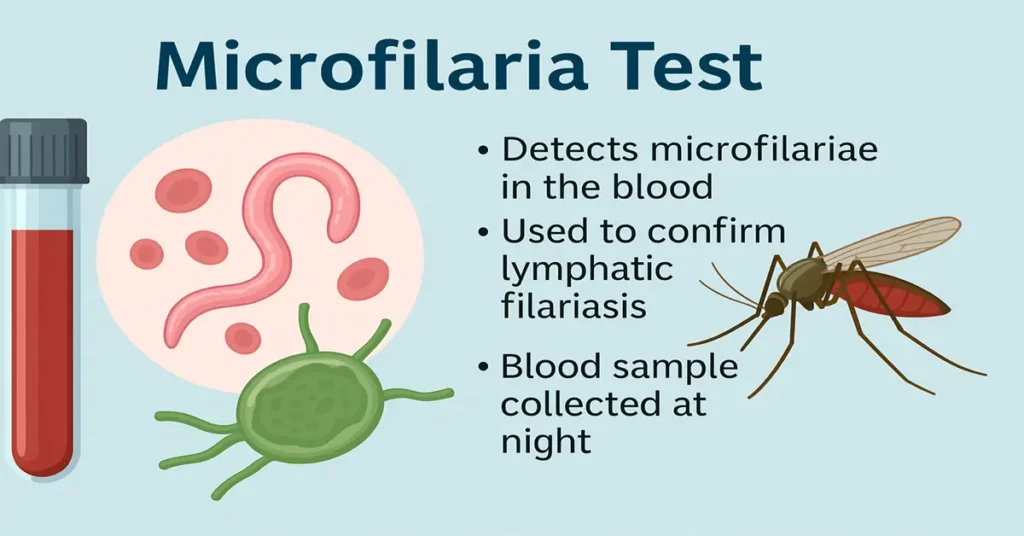
What is the Microfilaria Test?
The Microfilaria Test is a laboratory test used to detect microfilariae, the microscopic larval forms of filarial worms, in the blood. These parasites are responsible for lymphatic filariasis, a long-standing infection seen mainly in tropical and subtropical regions.
Filariasis is caused by worms such as Wuchereria bancrofti, Brugia malayi, and Brugia timori. The infection spreads through mosquito bites. After entering the body, the parasites settle in the lymphatic system, where adult worms can survive for years. During this time, female worms release large numbers of microfilariae into the bloodstream.
Finding microfilariae in blood is clear evidence of infection. This makes the Microfilaria Test a key investigation for confirming filariasis, assessing disease activity, and supporting public health control programs.
Where Do Microfilariae Come From?
Microfilariae are not produced by the human body. They appear only after infection with filarial worms.
The process usually follows a predictable pattern. An infected mosquito introduces the parasite into the body. The larvae mature into adult worms within the lymphatic system. Once established, adult female worms release microfilariae, which circulate in the blood.
An important clinical feature is nocturnal periodicity. In many filarial infections, microfilariae are present in higher numbers in the bloodstream at night, typically between late evening and early morning. This timing matches mosquito feeding habits and is why blood collection time matters for accurate detection.
Why is the Microfilaria Test Important?
From a clinical and public health perspective, this test serves several important purposes.
First, it allows early confirmation of filarial infection, often before irreversible damage develops. Many patients remain asymptomatic for years while the parasites slowly affect the lymphatic system.
Second, it helps clarify the cause of symptoms such as fever, limb swelling, lymph node enlargement, or recurrent inflammation. These complaints are common and nonspecific, and laboratory confirmation is essential before attributing them to filariasis.
Third, the test supports monitoring and control efforts in endemic areas. Detecting active infections helps track transmission and evaluate the effectiveness of elimination programs.
Causes of Low or Negative Microfilaria Levels
A negative result is common and often reassuring, but it must always be interpreted in context.
The most frequent reason is the absence of infection. However, negative results can also occur in early disease, before adult worms begin releasing microfilariae.
Timing is another critical factor. Blood collected during the daytime may not show microfilariae because of their nocturnal circulation pattern. In some individuals, microfilariae may be confined to tissues rather than circulating in blood, a situation sometimes referred to as occult filariasis.
For these reasons, a single negative test does not always exclude infection if symptoms or exposure risk remain significant.
Symptoms When Levels Are Low or Negative
When microfilariae are truly absent, there are no symptoms related to filariasis. If symptoms are present despite a negative result, they may be due to another illness or an early or atypical form of filarial infection that requires further evaluation.
This is a common situation in clinical practice and often prompts repeat testing or alternative investigations.
Causes of High or Positive Microfilaria Levels
A positive Microfilaria Test usually indicates active filarial infection. It reflects the presence of mature adult worms producing larvae within the lymphatic system.
Higher microfilarial counts may suggest a greater parasite burden or well-established disease. Proper timing of blood collection, especially during night hours, significantly increases detection.
Symptoms of High Microfilaria Levels
Symptoms vary depending on the stage and duration of infection.
In earlier stages, patients may experience intermittent fever, chills, lymph node tenderness, or skin itching. These episodes are often worse at night.
With ongoing infection, lymphatic damage becomes more apparent. Swelling of the limbs, repeated local infections, or scrotal swelling in men may develop over time.
In advanced disease, long-standing lymphatic obstruction can lead to severe tissue swelling and skin thickening, commonly referred to as elephantiasis. These changes can cause physical disability and significant psychosocial impact.
Reference Range
A normal result means no microfilariae are seen in the blood sample.
Any detected microfilariae are considered abnormal and confirm infection. Some laboratories may also report the number of microfilariae observed, which can help estimate disease burden, though clinical interpretation remains essential.
Sample Type and Testing Methods
The test is most commonly performed on a peripheral blood sample. Because of nocturnal periodicity, collection is usually recommended late at night.
Microscopic examination of stained blood smears remains the standard method. When parasite levels are low, concentration techniques may be used to improve detection. In selected cases, additional tests such as antigen detection or imaging studies may be requested to provide further clarity.
Who Should Take the Microfilaria Test?
Doctors may consider this test for individuals living in or returning from endemic regions, especially if they have unexplained swelling, recurrent fever, or lymphatic symptoms.
It is also relevant for people with scrotal swelling, chronic limb edema, or repeated inflammatory episodes involving lymph nodes.
Risks and Limitations
The test itself is safe, involving only a routine blood draw. Its main limitation lies in timing and disease stage. Incorrect sampling time or occult infection can lead to false-negative results, which is why clinical judgment remains important.
Test Preparation
No special preparation is usually needed, apart from scheduling blood collection at the appropriate time if advised. Patients should inform their doctor about any previous treatment for filariasis or ongoing medications.
When to Consult a Doctor
Medical evaluation is recommended if there is persistent fever, unexplained swelling of limbs or scrotum, recurrent lymph node inflammation, or skin changes suggestive of lymphatic disease.
Prompt consultation is especially important when symptoms are progressive, painful, or associated with repeated infections, as early diagnosis can help prevent long-term complications.
Important Word Explanations
- Microfilariae: Microscopic larval forms of filarial worms circulating in blood
- Lymphatic system: Network of vessels involved in fluid balance and immune defense
- Elephantiasis: Severe, chronic swelling with skin thickening due to lymphatic damage
- Hydrocele: Fluid accumulation around the testes causing scrotal swelling
- Nocturnal periodicity: Night-time circulation pattern of microfilariae
~END~
custom-related-posts