
Methemoglobin Test: Purpose, High/Low Levels, Symptoms & Diagnosis Guide
Overview
Hemoglobin inside red blood cells is responsible for carrying oxygen to every tissue in the body. For this process to work properly, the iron within hemoglobin must remain in its active ferrous (Fe²⁺) state. At times, a small portion of this iron is converted into the ferric (Fe³⁺) form. When that happens, hemoglobin becomes methemoglobin, which is unable to bind and transport oxygen.
Under normal conditions, only tiny amounts of methemoglobin are present because the body continuously converts it back to functional hemoglobin. Problems arise when this balance is disturbed and methemoglobin levels rise. When levels increase significantly, oxygen delivery to tissues falls, leading to symptoms such as bluish skin discoloration, shortness of breath, dizziness, and fatigue. In severe cases, the condition—called methemoglobinemia—can become life-threatening.
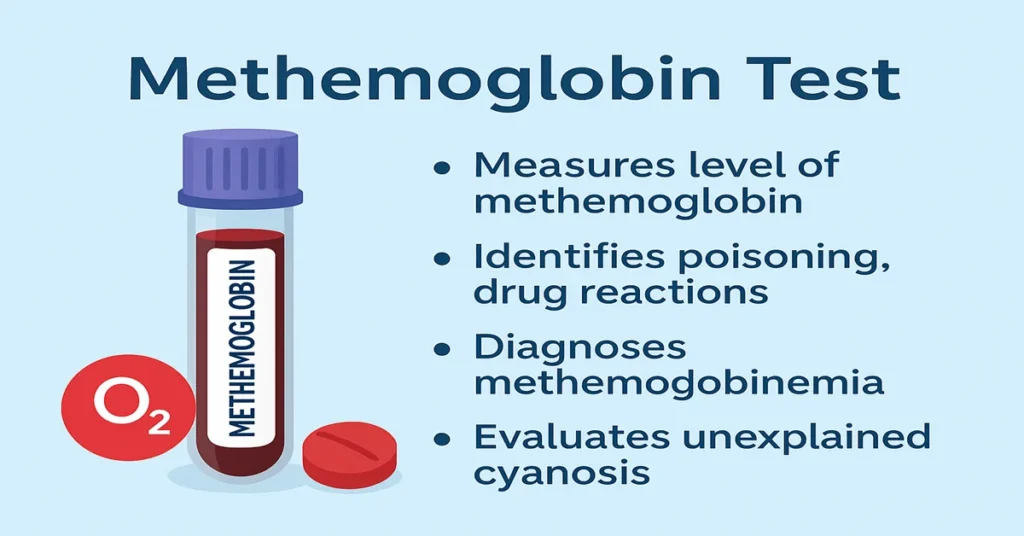
The Methemoglobin Test measures the proportion of methemoglobin in the blood. It is an important diagnostic tool when doctors suspect drug reactions, chemical exposure, inherited enzyme disorders, or unexplained cyanosis. Identifying the problem early allows prompt management and reduces the risk of serious complications.
What Is the Methemoglobin Test?
The Methemoglobin Test determines what percentage of total hemoglobin has been converted into methemoglobin. In healthy individuals, this value is usually below 1%, thanks to efficient enzyme systems that keep levels under control.
When these protective mechanisms are overwhelmed or impaired, methemoglobin accumulates and oxygen transport becomes inefficient. Clinically, this test helps doctors:
Confirm or rule out methemoglobinemia
Identify toxic or medication-related causes
Detect inherited enzyme deficiencies
Evaluate unexplained bluish discoloration of skin or lips
Support urgent decision-making in emergency settings
The test is commonly used in emergency departments, intensive care units, pediatric care, and toxicology services.
How Is Methemoglobin Formed in the Body?
Methemoglobin forms when hemoglobin undergoes oxidation.
Normal formation:
Small amounts are produced during everyday metabolic processes. An enzyme called cytochrome b5 reductase rapidly converts methemoglobin back into normal hemoglobin, keeping levels low and harmless.
Abnormal formation:
Excess oxidation can occur when the body is exposed to certain drugs, chemicals, or environmental substances, or when protective enzymes are deficient. In these situations, methemoglobin builds up faster than it can be reduced, and oxygen delivery declines.
Why Is This Test Important?
Accurate diagnosis of methemoglobinemia
Bluish skin, low oxygen readings, and breathlessness can mimic heart or lung disease. This test helps identify methemoglobinemia as the underlying cause.
Detection of drug or chemical effects
Several commonly used medications and chemicals can raise methemoglobin levels. Testing helps confirm whether symptoms are related to such exposures.
Identification of inherited conditions
Some individuals are born with enzyme deficiencies or hemoglobin variants that lead to chronically elevated methemoglobin levels.
Support for emergency care
In patients with significant elevations, timely diagnosis guides urgent treatment decisions and monitoring.
Evaluation of unexplained cyanosis
When oxygen levels appear low despite adequate breathing and oxygen therapy, this test provides a crucial explanation.
When Is the Test Recommended?
Doctors may request a Methemoglobin Test when a patient has:
Bluish discoloration of lips, nails, or skin
Symptoms suggestive of low oxygen levels
Poor response to oxygen therapy
Known or suspected exposure to oxidizing drugs or chemicals
A family history of methemoglobinemia
Symptoms in infants after consuming nitrate-contaminated water
It is particularly relevant for infants, individuals exposed to industrial chemicals, and patients receiving certain medications.
Causes of Low or Normal Levels
Normal methemoglobin levels, typically below 1%, indicate:
Effective enzyme activity
Healthy red blood cell function
No significant oxidant exposure
These values are expected and do not cause symptoms.
Causes of High Methemoglobin Levels
Elevated levels may arise from several sources.
Genetic causes:
Inherited enzyme deficiencies or specific hemoglobin variants can lead to persistent elevations from birth.
Medication-related causes:
Certain drugs can increase oxidation of hemoglobin, particularly when used in high doses or in susceptible individuals.
Chemical exposure:
Industrial chemicals and dyes may cause rapid rises in methemoglobin and require urgent medical attention.
Environmental factors:
Nitrate-contaminated well water is a known risk, especially for young infants.
Medical conditions:
Severe infections or systemic illnesses may occasionally contribute to higher levels.
Symptoms of High Methemoglobin Levels
Symptoms depend on how high the level is and how quickly it rises.
Mild elevations:
Bluish skin or lips, headache, fatigue, lightheadedness
Moderate elevations:
Shortness of breath, rapid heartbeat, confusion, weakness, nausea
Severe elevations:
Seizures, loss of consciousness, profound oxygen deprivation, and risk of cardiac complications
Very high levels can be fatal without prompt medical care.
Reference Ranges
General reference values include:
Normal: less than 1%
Mild elevation: 1–3%
Clinically significant: above 10%
Severe: above 30–50%
Interpretation always depends on symptoms, rate of rise, and clinical context.
Sample Type
The test is performed on a whole blood sample, usually collected in an EDTA or heparinized tube. Most laboratories use co-oximetry, which accurately distinguishes methemoglobin from other hemoglobin forms.
Test Preparation
No special preparation is required. Patients or caregivers should inform the healthcare provider about:
Current medications
Recent chemical or drug exposure
Use of well water
Family history of similar conditions
In emergency situations, the test is performed immediately.
When to Consult a Doctor
Immediate medical attention is needed if there is:
Sudden bluish discoloration of skin or lips
Breathing difficulty or rapid breathing
Dizziness, confusion, or unusual fatigue
Poor response to oxygen therapy
Urgent care is essential if seizures, marked drowsiness, or reduced consciousness occur. Infants with sudden bluish coloring or feeding difficulties should be evaluated promptly, especially in areas where water contamination is possible.
Important Word Explanations
- Hemoglobin: Protein in red blood cells that carries oxygen
- Oxidation: Chemical change that alters hemoglobin’s ability to bind oxygen
- Cyanosis: Bluish skin discoloration due to reduced oxygen delivery
- Hypoxia: Low oxygen levels in body tissues
- Congenital: Present from birth
- Co-oximetry: Laboratory technique that measures different forms of hemoglobin accurately
~END~
Related Posts
None found