
Methadone Test: Purpose, High/Low Levels, Symptoms & Detection Guide
Overview
Methadone is a long-acting synthetic opioid that is used for two main clinical purposes: the management of moderate to severe chronic pain, and as part of opioid substitution therapy for people recovering from heroin or other opioid dependence.
What makes methadone different from many other opioids is how long it stays in the body and how unpredictably it is cleared. In some people it accumulates slowly, even when doses appear stable. If levels fall too low, patients may experience withdrawal symptoms and cravings. If levels rise too high, the drug can suppress breathing and become life-threatening. Because of this narrow balance, laboratory testing plays an important safety role.
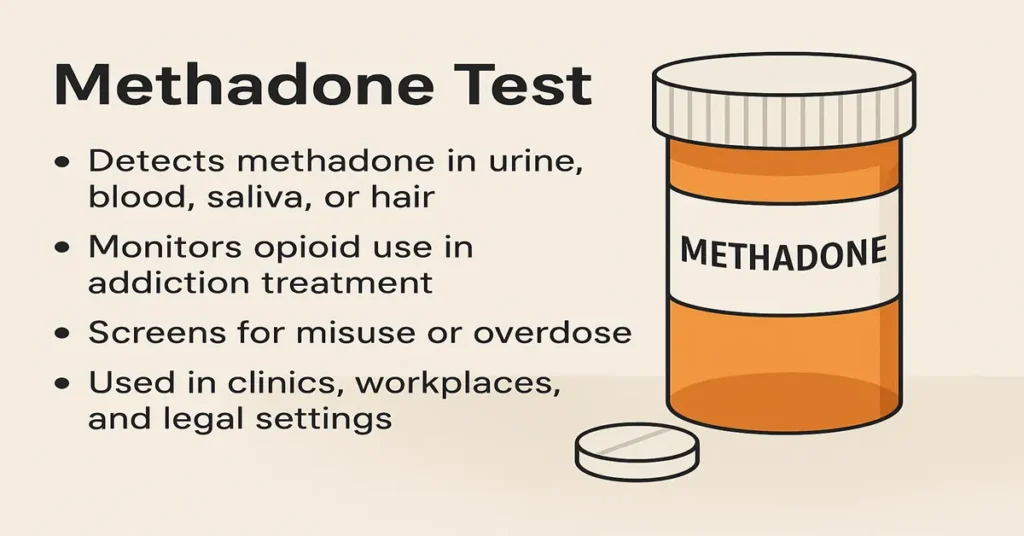
The Methadone Test is used to detect methadone or its breakdown products in the body. It is widely applied in hospitals, pain clinics, de-addiction programs, workplace screening, and legal or forensic settings. For clinicians, the test provides reassurance, confirms adherence, and helps explain symptoms when something does not fit the expected clinical picture.
What Is a Methadone Test?
A Methadone Test looks for evidence of methadone exposure in biological samples. Depending on the purpose, testing may be done on urine, blood, saliva, or hair.
Urine testing is most commonly used because it is simple and practical. Blood testing is preferred when doctors need to know the actual drug concentration circulating in the body. Saliva testing reflects more recent use, while hair testing gives a longer-term picture of exposure over weeks to months.
In addition to methadone itself, many laboratories also measure EDDP, the main metabolite. Detecting EDDP confirms that the drug was actually taken and metabolized, rather than introduced into a sample after collection.
Clinically, this test helps track therapy, identify missed or extra doses, assess overdose risk, and support documentation in occupational or legal cases.
Where Is Methadone Produced in the Body?
Methadone is not produced by the body. It is a fully synthetic medication manufactured for medical use.
After ingestion, methadone is absorbed from the gastrointestinal tract and processed primarily in the liver. Several liver enzymes are involved in its metabolism, which explains why individuals differ widely in how quickly they clear the drug. The resulting metabolites are then eliminated mainly through the urine.
This individual variability is one reason blood levels may not always match the prescribed dose, making laboratory monitoring particularly valuable.
Why Is the Methadone Test Important?
From a clinical perspective, methadone testing supports safety first. Because the drug has a long half-life, repeated dosing can lead to gradual accumulation without obvious warning signs. Testing helps clinicians recognize this early and reduce the risk of unintentional overdose.
In addiction treatment programs, testing also provides insight into treatment adherence. It helps distinguish between missed doses, adequate intake, or possible relapse to other opioids. This information guides adjustments in care while maintaining trust and safety.
The test is equally important when patients present with unexplained drowsiness, confusion, or breathing changes. In such cases, confirming methadone exposure helps clinicians quickly understand whether symptoms are drug-related.
Outside healthcare, methadone testing supports workplace policies, legal evaluations, and forensic investigations by documenting exposure patterns objectively.
Causes of Low or Negative Methadone Levels
Low or negative results can occur for several reasons. Sometimes doses are missed or taken inconsistently. In other cases, the amount taken may be below the detection threshold of the test, especially if a long time has passed since the last dose.
Some individuals metabolize methadone more rapidly than expected, particularly when other medications increase liver enzyme activity. Diluted urine samples, whether intentional or accidental, can also reduce detectable concentrations.
A negative result does not automatically mean methadone has never been used; it simply indicates that the drug or its metabolites were not detected at the time of testing.
Symptoms Related to Low or Negative Levels
In people receiving methadone therapy, low levels may be reflected clinically by the return of withdrawal symptoms rather than by the test result itself. Patients may describe restlessness, sweating, abdominal discomfort, muscle aches, anxiety, or renewed cravings. These symptoms signal that the current dose may not be providing adequate coverage and warrant medical review.
Causes of High or Positive Methadone Levels
Elevated methadone levels most often reflect recent dosing, dosing that is higher than intended, or doses taken too close together. Drug interactions are a common contributing factor, as some medications slow methadone metabolism and allow it to accumulate.
Reduced liver or kidney function can further delay clearance, even when doses remain unchanged. In some situations, high levels indicate non-prescribed use or access to methadone outside a treatment program.
Symptoms of High or Toxic Methadone Levels
Excess methadone typically affects the central nervous system and breathing. Patients may appear unusually sleepy, confused, or difficult to arouse. Breathing may become slow or shallow, and blood pressure or heart rate may drop.
In severe toxicity, respiratory arrest, coma, and death can occur. These situations are medical emergencies and require immediate intervention.
Reference Ranges
Exact reference ranges vary by laboratory and testing method. In general clinical practice, therapeutic blood concentrations are commonly reported around 0.1–1.0 µg/mL, while levels significantly above this range raise concern for toxicity. Results are always interpreted in context, rather than as isolated numbers.
Detection windows also differ by sample type. Urine may remain positive for several days, blood and saliva reflect more recent exposure, and hair testing can document use over several months.
Sample Types
Urine samples are most often used for screening and routine monitoring. Blood or serum samples are chosen when precise drug concentration matters clinically. Saliva testing reflects short-term exposure, and hair analysis is reserved mainly for forensic or legal purposes.
Test Preparation
No fasting is required for methadone testing. Patients should inform their healthcare provider about all medications, supplements, and any history of liver or kidney disease. In treatment settings, providing accurate prescription details helps ensure correct interpretation. Deliberate dilution of urine should be avoided, as it can compromise test accuracy.
When to Consult a Doctor
Medical advice should be sought if withdrawal symptoms return, cravings increase, or unusual drowsiness or confusion develops. Any signs of slowed breathing, extreme sleepiness, or difficulty waking a person require urgent medical attention.
Early evaluation helps prevent serious complications and ensures methadone therapy remains both safe and effective.
Important Word Explanations
- Opioid: A class of drugs that act on pain and reward pathways in the nervous system
- Metabolism: The body’s process of breaking down substances
- CYP enzymes: Liver enzymes involved in methadone processing
- Respiratory depression: Slowed or weakened breathing due to opioids
- Withdrawal: Physical and psychological symptoms after opioid levels fall
- Toxicity: Harm caused by excessive drug levels
- Forensic testing: Drug testing used for legal or investigative purposes
~END~
Related Posts
None found