
Overview
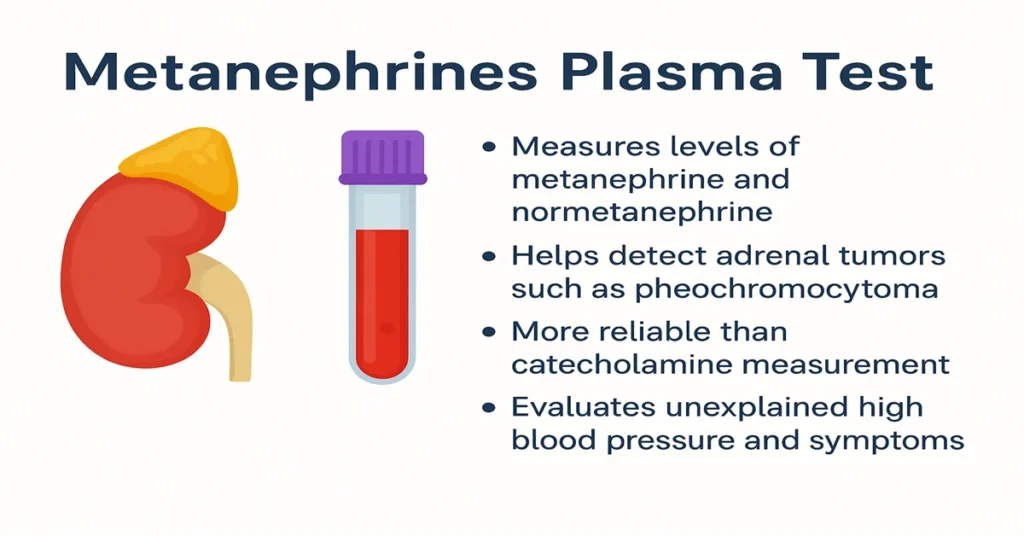
The Metanephrines Plasma Test is a specialized blood test that measures two substances—metanephrine and normetanephrine—in the bloodstream. These substances are metabolites, meaning they are formed when the body naturally breaks down catecholamines, the stress-related hormones epinephrine (adrenaline) and norepinephrine. Under normal conditions, this breakdown happens continuously at low levels.
This test is most often used when doctors are considering rare hormone-secreting tumors such as pheochromocytoma or paraganglioma. These tumors can release excess stress hormones and cause sudden spikes in blood pressure, headaches, palpitations, and other concerning symptoms. Because metanephrines remain relatively stable in the blood compared with adrenaline itself, measuring them provides a clearer and more reliable picture.
What is the Metanephrines Plasma Test?
The test measures two key metabolites:
Metanephrine, which comes from epinephrine
Normetanephrine, which comes from norepinephrine
Elevated levels suggest increased production and breakdown of stress hormones somewhere in the body, most commonly from the adrenal glands or related nerve tissue. For clinicians, this test helps narrow down whether symptoms or imaging findings may be related to a hormone-producing source rather than routine stress or common blood pressure disorders.
It is commonly used to support diagnosis, assess unexplained hypertension, evaluate episodic symptoms such as palpitations or sweating, and follow patients already known to have hormone-secreting tumors.
Where Are Metanephrines Produced in the Body?
Metanephrines are formed when catecholamines are broken down by an enzyme called catechol-O-methyltransferase (COMT). This process occurs primarily in the adrenal glands, which sit above the kidneys, and in nerve tissues throughout the body. Certain tumors can also produce large amounts of catecholamines, leading to higher metanephrine levels.
Even at rest, the body produces and breaks down small amounts of stress hormones. This is why low levels of metanephrines are normally present in healthy individuals.
Why is the Test Important?
One of the key strengths of this test is its ability to detect rare but potentially serious conditions early. Hormone-secreting tumors can cause sustained or sudden hypertension and may lead to complications affecting the heart, brain, or other organs if not recognized.
Another reason clinicians rely on this test is its relative stability. While adrenaline levels can rise and fall quickly with movement, anxiety, or pain, metanephrines reflect overall hormone production more consistently. This makes them useful when symptoms are intermittent or unclear.
The test can also help explain clusters of symptoms—such as episodic headaches, palpitations, or sweating—that do not fit common patterns. In people with known tumors, repeat testing helps track trends over time rather than relying on a single snapshot.
When is the Test Recommended?
Doctors may suggest this test when someone has persistent or episodic high blood pressure that is difficult to explain, or when symptoms such as severe headaches, palpitations, flushing, or unexplained sweating occur repeatedly. It is also considered when imaging shows an adrenal mass or when there is a family history of certain genetic conditions linked to adrenal tumors.
In some situations, testing is done before surgery or major procedures, where unexpected hormone surges could increase risk.
Causes of Low Levels
Low metanephrine levels are generally expected and usually indicate normal hormone activity. They may be seen when adrenal hormone output is low or when certain medications affect hormone metabolism. In most cases, low values are not considered clinically significant.
Symptoms of Low Levels
Low levels do not usually cause symptoms. When present, they are interpreted as a reassuring finding rather than a problem that needs correction.
Causes of High Levels
Higher levels can be associated with medical conditions such as pheochromocytoma or paraganglioma. They may also be seen during periods of significant physiological stress, severe anxiety or panic episodes, intense physical exertion, or sleep-related breathing disorders.
Certain medications and substances can influence results as well, including some antidepressants, stimulants, and common substances like nicotine or caffeine. Because of this, doctors always review test results alongside medication history and clinical context.
Symptoms of High Levels
Elevated metanephrines reflect increased stress hormone activity. Patients may report episodes of high blood pressure, rapid heartbeat, severe headaches, sweating, tremors, or anxiety-like sensations. Over time, sustained hormone excess can place strain on the heart and blood vessels.
In more serious situations, complications such as stroke or heart failure may occur, which is why persistently high results prompt further evaluation rather than being viewed in isolation.
Reference Ranges
Reference ranges vary slightly between laboratories. Commonly reported upper limits include:
- Plasma free metanephrine: below approximately 0.5 nmol/L
- Plasma free normetanephrine: below approximately 0.9 nmol/L
Values above these limits do not confirm a diagnosis on their own but signal the need for additional assessment, such as repeat testing, urine studies, or imaging.
Sample Type
The test is performed on a blood plasma sample drawn from a vein. To reduce the effect of stress on hormone levels, the sample is often collected after the patient has rested quietly for a short period.
Test Preparation
Preparation focuses on minimizing factors that can temporarily raise stress hormone levels. Patients are usually advised to rest before the test and avoid caffeine, nicotine, alcohol, and strenuous activity beforehand. It is important to inform the doctor about all medications and supplements, as some may affect results. Any changes to medication should only be made under medical guidance. Fasting is not usually required.
When to Consult a Doctor
Medical review is important if there are repeated episodes of very high blood pressure, severe headaches with sweating, palpitations, fainting, or neurological symptoms. People with a known family history of adrenal tumors or significantly elevated test results should follow up promptly. Children with unexplained hypertension or persistent headaches also warrant careful evaluation.
Important Word Explanations
- Catecholamines: Stress hormones such as adrenaline and noradrenaline
- Metabolite: A substance formed when the body breaks down another compound
- COMT: An enzyme that helps convert catecholamines into metanephrines
- Pheochromocytoma: A tumor of the adrenal gland that produces excess hormones
- Paraganglioma: A similar hormone-producing tumor outside the adrenal glands
- Hypertensive crisis: A sudden and dangerous rise in blood pressure
- Plasma: The liquid portion of blood
~END~
Related Posts
None found