
Overview
Measles, also known as rubeola, is a highly contagious viral illness that spreads through respiratory droplets during coughing, sneezing, or close contact. Although vaccination has greatly reduced its prevalence, outbreaks still occur, particularly in areas with low immunization coverage. Measles can progress beyond a simple fever-and-rash illness and, in some cases, lead to complications such as pneumonia, dehydration, seizures, or inflammation of the brain. For this reason, timely diagnosis and confirmation of immunity are clinically important.
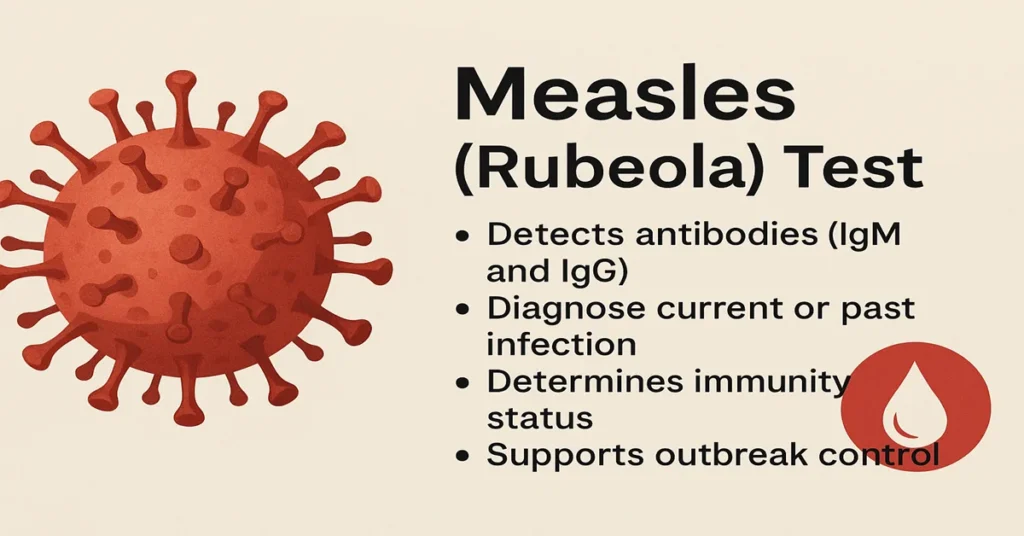
The Measles (Rubeola) Test is a blood test that looks for antibodies produced by the immune system in response to the measles virus. It helps clinicians determine whether a person has a current infection, a recent infection, past exposure, or immunity from vaccination. The test is commonly used during outbreaks, for pre-employment or healthcare screening, travel-related assessments, and in individuals with symptoms suggestive of measles.
What is the Measles (Rubeola) Test?
The test measures two types of antibodies in the blood:
IgM antibodies usually appear early in the course of infection. Their presence suggests a recent or active measles infection and they typically become detectable a few days after symptoms begin.
IgG antibodies appear later and usually persist long term. A positive IgG result indicates past infection or immunity acquired through vaccination and is generally associated with protection against future infection.
By looking at the pattern of IgM and IgG results together, doctors can assess whether a person is currently infected, previously exposed, immune, or still susceptible.
How Does Measles Affect the Body?
After inhalation of virus-containing droplets, the measles virus initially infects cells in the respiratory tract. It then enters the bloodstream and spreads to various tissues. As the infection progresses, the immune system responds by activating B lymphocytes, which produce antibodies. IgM antibodies appear first as part of the early immune response, followed by IgG antibodies that provide longer-term protection.
This sequence explains why timing of the test matters and why results are always interpreted alongside symptoms and exposure history.
Why is the Measles Test Important?
The measles test serves several important clinical and public health purposes. Detection of IgM antibodies helps confirm an active infection, allowing appropriate isolation and medical care. IgG testing clarifies immunity status, which is particularly relevant for healthcare workers, travelers, pregnant individuals, and people exposed during outbreaks.
The test is also useful for confirming whether vaccination has resulted in adequate immune protection and for supporting public health efforts to identify cases quickly and limit further spread.
When is the Measles Test Recommended?
Doctors may recommend testing when a person develops symptoms consistent with measles, such as fever with rash and respiratory symptoms, or after known exposure to a confirmed case. It is also used when immunity status is unclear, vaccination records are incomplete, or screening is required for work, travel, or outbreak investigations. In pregnancy, confirming immunity may be especially important due to the higher risk of complications.
Causes of Low or Negative Antibody Levels
Negative antibody results may indicate that a person has never been infected with measles and has not been vaccinated. In early infection, antibodies may not yet be detectable, leading to a temporary negative result. Reduced antibody production can also be seen in individuals with weakened immune systems. Recent exposure without sufficient time for an immune response is another possibility.
Symptoms When Antibodies Are Low/Negative
Low or negative antibody levels do not cause symptoms on their own. Rather, they indicate lack of immunity. A person without IgG antibodies remains at risk of infection if exposed to the virus. Any symptoms present in this setting are due to another cause or an early stage of infection that requires follow-up.
Causes of High or Positive Antibody Levels
A positive IgM result usually reflects a recent or ongoing measles infection. A positive IgG result indicates past infection or immunity following vaccination. When IgG is positive and IgM is negative, the individual is generally considered protected and not contagious.
Symptoms of Positive Results
When IgM antibodies are present, symptoms typically reflect active measles infection. These may include fever, cough, runny nose, red or watery eyes, and a characteristic rash that often begins on the face and spreads downward. In more severe cases, complications such as ear infections, pneumonia, diarrhea, seizures, or brain inflammation can occur.
When only IgG antibodies are present, there are no symptoms related to measles, as this pattern indicates immunity rather than active disease.
Reference Ranges
Results are usually reported qualitatively:
- IgM negative: No evidence of current infection
- IgM positive: Current or recent infection
- IgG negative: No immunity detected
- IgG positive: Immunity from past infection or vaccination
Exact cutoffs may vary slightly depending on the laboratory method used.
Sample Type
The test is performed on a blood sample, typically serum collected from a vein.
Test Preparation
No fasting is required. Patients should inform their doctor if they have recently received a measles-containing vaccine, are pregnant, have a weakened immune system, or have had recent exposure to measles. Testing too early after symptom onset may yield negative IgM results, so timing is important.
When to Consult a Doctor
Medical advice should be sought promptly if fever and rash develop, especially after known exposure to measles or travel to an outbreak area. Pregnant individuals and parents of unvaccinated children should seek evaluation if immunity is uncertain. Urgent care is needed if symptoms worsen, breathing becomes difficult, or neurological symptoms such as confusion or seizures appear. Infants, pregnant women, older adults, and people with compromised immunity are at higher risk of complications and should not delay assessment.
Important Word Explanations
- Antibodies: Proteins produced by the immune system to recognize and fight infections
- IgM: Antibody associated with recent or current infection
- IgG: Antibody associated with past infection or long-term immunity
- Immunity: Protection against infection due to antibodies or vaccination
- Koplik spots: Small white spots inside the mouth seen in measles
- Outbreak: A sudden increase in disease cases in a community
- Encephalitis: Inflammation of the brain
~END~
Related Posts
None found