
MCHC Test: Meaning, Normal Range, Low & High MCHC Causes, Symptoms, and Complete Medical Guide
What Is the MCHC Test?
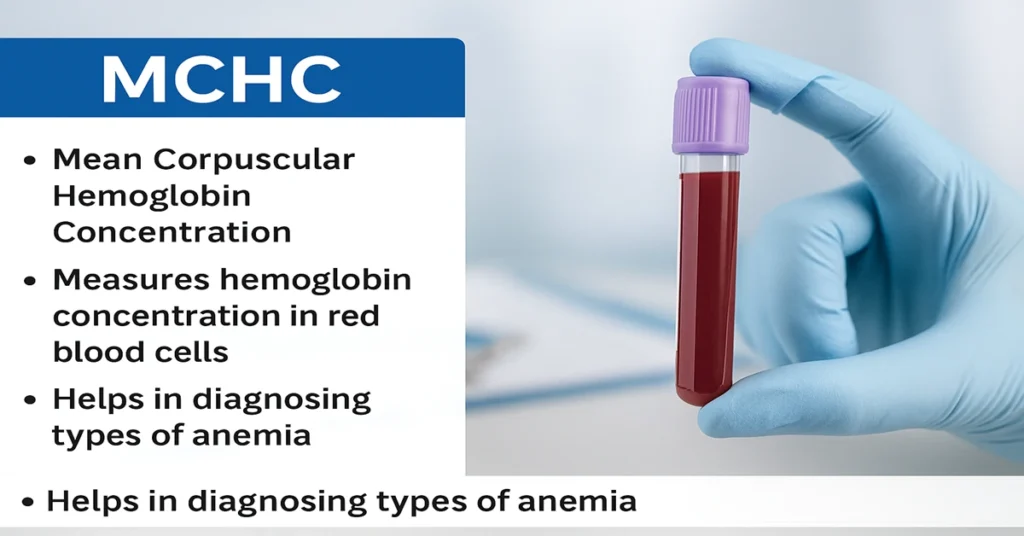
The MCHC test, or Mean Corpuscular Hemoglobin Concentration, measures how concentrated hemoglobin is inside red blood cells. In simple terms, it looks at how well each red blood cell is filled with hemoglobin rather than how many cells are present or how large they are.
Hemoglobin is the protein that carries oxygen throughout the body. While tests like hemoglobin level, RBC count, and MCV look at quantity and size, MCHC focuses on density—how tightly hemoglobin is packed inside the cells. This makes MCHC a helpful supporting value when doctors are reviewing anemia patterns.
MCHC is always reported as part of a Complete Blood Count (CBC). It is not interpreted alone but is used alongside other red cell indices to understand blood health more clearly.
How MCHC Is Determined
MCHC is not produced by the body. It is a calculated laboratory value derived from measured hemoglobin and hematocrit values. Automated analyzers perform this calculation during routine CBC testing.
Although the calculation happens in the lab, the result reflects what is happening inside the body. Red blood cell development in the bone marrow, hemoglobin formation, and normal cell structure all influence the final MCHC value. Because of this, MCHC gives insight into red blood cell quality rather than production alone.
Importance of the MCHC Value
MCHC plays a supportive but important role in clinical blood report interpretation.
Helps Assess Red Blood Cell Quality
MCHC indicates whether red blood cells are adequately filled with hemoglobin. Cells with low concentration appear paler, while normal concentration suggests proper hemoglobin distribution.
Supports Anemia Classification
Doctors use MCHC together with MCV and MCH to recognize broad anemia patterns. This helps narrow down possibilities without jumping to conclusions.
Works With Other CBC Parameters
MCHC is most meaningful when reviewed alongside hemoglobin, hematocrit, RBC count, MCV, and MCH. Together, these values provide a balanced view of oxygen-carrying capacity.
Useful in Ongoing Monitoring
In some cases, MCHC remains stable even when other values change. This stability can help clinicians understand whether changes are related to cell size, number, or hemoglobin concentration.
Causes of Low MCHC (Hypochromia)
Low MCHC means that red blood cells contain less hemoglobin concentration than expected. Under a microscope, these cells often appear paler than normal.
Clinically, this pattern is commonly associated with reduced hemoglobin formation. Iron-related issues are a frequent consideration, but inherited conditions affecting hemoglobin structure can also show low MCHC. Long-standing blood loss and certain chronic conditions may contribute as well.
Doctors focus on the overall CBC pattern rather than MCHC alone when evaluating low values.
Symptoms of Low MCHC
Symptoms linked to low MCHC usually reflect reduced oxygen delivery. People may experience tiredness, weakness, breathlessness during routine activity, dizziness, or pale skin.
From a clinical perspective, these symptoms tend to develop gradually and are evaluated alongside hemoglobin levels and other indices.
Causes of High MCHC (Hyperchromia)
High MCHC is less common than low values. It indicates that red blood cells have a higher hemoglobin concentration than usual.
This pattern may be seen when red blood cells are unusually shaped or structurally altered. Certain inherited red cell conditions and laboratory-related factors can influence MCHC readings. Because high MCHC is uncommon, doctors usually review results carefully and confirm them with the full blood picture.
Symptoms of High MCHC
Symptoms associated with high MCHC are not specific and often overlap with general anemia-related complaints. Fatigue, weakness, or mild breathlessness may be present depending on overall hemoglobin levels.
Clinically, symptoms are interpreted in context rather than attributed to MCHC alone.
Normal MCHC Reference Range
Reference ranges may vary slightly by laboratory, but commonly accepted values include:
- Normal MCHC: 32 – 36 g/dL
- Low MCHC: Below 32 g/dL
- High MCHC: Above 36 g/dL
These ranges help identify hemoglobin concentration patterns within red blood cells.
Sample Type and Collection
- Sample Required: Whole blood
- Collection Tube: Lavender-top EDTA tube
Blood is collected from a vein, usually in the arm. The test is routine and performed as part of a CBC. Results are often available the same day.
Test Preparation
No fasting is required for an MCHC test. Hydration status and recent medical history are considered during interpretation. Doctors also review medications and previous blood reports when assessing MCHC values.
MCHC is almost always evaluated together with other CBC parameters.
When to Consult a Doctor
Medical advice is recommended if blood reports repeatedly show abnormal MCHC values or if symptoms such as persistent fatigue, pallor, or breathlessness occur without a clear explanation.
People with known blood disorders or those undergoing regular monitoring may require closer follow-up to ensure accurate interpretation.
Important Word Explanations
- MCHC (Mean Corpuscular Hemoglobin Concentration): Measures how concentrated hemoglobin is inside red blood cells.
- Hypochromia: Red blood cells appear paler due to low hemoglobin concentration.
- Hyperchromia: Red blood cells appear more densely filled with hemoglobin than normal.
- Hematocrit: The percentage of blood made up of red blood cells.
- CBC (Complete Blood Count): A blood test that measures red cells, white cells, platelets, and related indices.
~END~